Palantir’s 17% Month Long Downturn: An Entry Opportunity According to This Wall Street Desk That Sees 67% Gains Ahead

This post may contain links from our sponsors and affiliates, and Flywheel Publishing may receive compensation for actions taken through them.
Palantir Technologies (NASDAQ:PLTR | PLTR Price Prediction) currently trades at $163.59, while the average Wall Street price target stands at $222.90. That gap points to upside of roughly 36%.
Palantir sells the Foundry, Ontology and AIP platforms, which let governments and companies run AI on their own data. Management now brands that pitch as Sovereign AI. The stock draws close attention from Wall Street because growth keeps accelerating. Third-quarter revenue rose 96%[1] year over year to $2.313 billion[2], beating estimates. Barclays, the most bullish firm, carries a $273.00 target, roughly 67% above the current price.
A Bookings Slowdown Turned a Blowout Quarter Into a 17% Slide
Slowing commercial bookings set off the selloff. Commercial bookings grew 11% year over year, compared with 153% in the prior quarter. Shares fell as much as 7% the day after the report. Total contract value rose just 6%[2] while revenue nearly doubled. Bears read that mismatch as a warning about future growth.
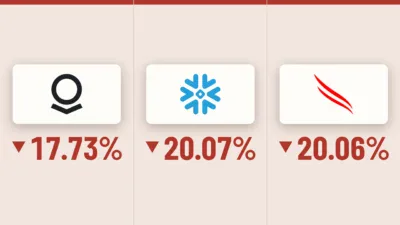
The broader market added pressure. Palantir dropped 17.73% over the past month, while the S&P 500 fell 6.36%. “These are all indications that there’s some fragility spreading across the AI-adjacent trade,” Trade Nation’s David Morrison told Business Insider. The decline is partly company-specific and partly a sector-wide reset in valuations for expensive AI software.
Analysts Raised Targets Right Into the Pullback
Analysts raised their targets after the report. Barclays lifted its target to $273.00 from $265.00 and repeated Overweight. Citigroup raised to $265.00 from $250.00 with a Buy, Rosenblatt maintained Buy at $260.00, and JPMorgan opened coverage at Overweight with a $262.00 target.
The bull thesis rests on the U.S. commercial business. That segment grew 148% to $984 million[2] and passed U.S. government revenue for the first time. Net dollar retention hit 165%[1], and the Rule of 40 score reached 158%[2]. Management raised full-year revenue guidance to $8.530 billion to $8.534 billion[2] and guided adjusted free cash flow to $4.8 billion to $5.0 billion.
On the bookings slowdown, the CFO said multiple eight-figure deals were “shorter in duration than usual”[1]. He expects both duration and size to increase. The explanation is reasonable, but it stays unproven until the next earnings report backs it up. Of the 33 analysts covering the stock, 3 rate it Strong Buy, 19 Buy, 9 Hold, 1 Sell and 1 Strong Sell.
Snowflake and CrowdStrike Fell Even Harder
Palantir sold off with its software peers, and two close rivals dropped further.
Snowflake (NYSE:SNOW) lost 20.07% over the past month. It trades at $267.67 against an average target of $428.55, which implies 60.1% upside. Its 52 analysts lean heavily bullish, with 10 Strong Buy, 36 Buy, 5 Hold and 1 Sell ratings. Wall Street sees more room to recover here than at Palantir.
CrowdStrike (NASDAQ:CRWD) fell 20.06% over the month to $209.30. Its average target of $249.11 implies 19% upside. Among 53 analysts, 10 rate it Strong Buy, 30 Buy, 12 Hold and 1 Strong Sell. That implied upside is the smallest of the three.
Snowflake has the largest consensus upside in the group. Palantir lands in the middle on consensus, though its Barclays target implies a bigger gain than Snowflake’s average target. All of these targets are estimates and can change.
Palantir Lags the S&P 500 at 66 Times Forward Earnings
Palantir’s current share price of $163.59 compares with a consensus target of $222.90 from 33 analysts, which implies 36% upside. Targets often follow the stock price, so treat them as one input among many.
Palantir has trailed the market and is down 7.97% year to date, while the S&P 500 is up 5.1%. The stock sits between a 52-week low of $106.37 and a high of $212.94, and it still trades at 66 times forward earnings (riding an AI mania at that multiple is fine as long as the exit is planned, which is what our free bubble survivor’s handbook covers).
Palantir’s Rebound Hinges on Bookings Catching Up to Revenue
The optimists’ argument beefs up if the shorter Sovereign AI contracts grow as management expects and bookings pick up alongside 91%[2] full-year revenue growth. Co-founder Peter Thiel bought shares during the pullback, a sign that at least one longtime investor sees value at this price.
Skeptics gain more ammunition if total contract value keeps growing in the single digits. Stock-based compensation rose to $318.9 million from $172.3 million[2], accounts receivable rose to $1.883 billion from $1.042 billion, and customers can still end contracts for convenience. At 66 times forward earnings, more weakness in bookings would leave little room for error.
The evidence leans carefully positive. Fundamentals are speeding up and analysts are raising targets into the drop, so the gap looks real, but the next earnings report needs to show bookings recovering before the Barclays target looks realistic.
Contact [email protected] for any questions or corrections.
Alex Sirois is a financial writer with experience spanning both retail and institutional investing. He has written for InvestorPlace and held roles at BNY Mellon and Bernstein, giving him a perspective that bridges Main Street portfolios and Wall Street analysis.
Alex holds an MBA from George Washington University and has built his career across multiple industries, including e-commerce, education, and translation — a breadth of experience that informs how he breaks down complex financial topics for everyday investors. His writing is conversational, actionable, and grounded in long-term, buy-and-hold investing principles.
At 247 Wall St., Alex focuses on delivering analysis that is both accessible and useful, with a clear emphasis on helping readers make more informed decisions with their money.