3 Overlooked Dividend Stocks Behind America’s Restaurants and Grocery Stores

This post may contain links from our sponsors and affiliates, and Flywheel Publishing may receive compensation for actions taken through them.
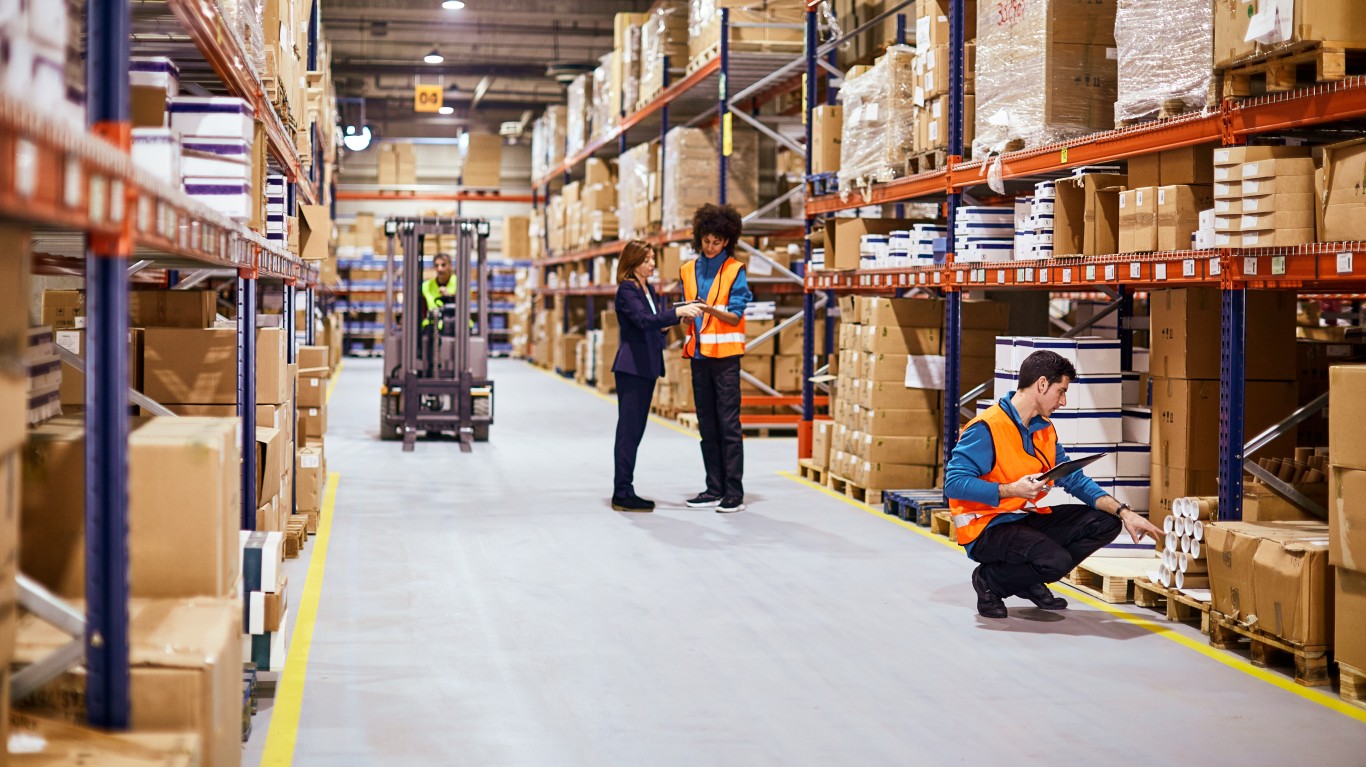
People eat every day, and the companies that move food into restaurant kitchens, hospital cafeterias, and grocery coolers earn a thin margin on enormous volume. It’s a dull business, and that’s what makes it attractive for retirement income: demand barely changes from year to year, and scale keeps rivals out. The three dividend payers below sit upstream of the brands on the shelf. One distributes food, one processes protein, and one supplies French fries. For a sense of how big these networks get, Sysco (NYSE:SYY | SYY Price Prediction) alone serves approximately 670,000 customer locations.
| Company | Annualized Dividend | Forward Yield | Trailing Dividend vs. FY26 Adjusted EPS |
|---|---|---|---|
| Sysco | $2.20 | 2.6% | 47% |
| Tyson Foods | $2.08 | 3.3% | 59% |
| Lamb Weston | $1.52 | 2.9% | 50% |
Sysco
Sysco is the backbone of America’s eating-out industry. It runs 333 distribution centers in 10 countries and supplies restaurants, healthcare and educational facilities, hotels and entertainment venues. Its annualized dividend of $2.20 per share against a recent price of $83.36 works out to a forward yield of about 2.6%.
Dividend safety: Sysco paid $2.18 per share over the trailing 12 months, which is roughly 47% of fiscal 2026 adjusted EPS of $4.61[1]. That leaves plenty of earnings behind each dividend dollar. Cash flow backs it up: fiscal 2026 free cash flow rose 18.7%[1] to $2.114 billion on operating cash flow of $2.638 billion, after capital spending of $700 million. The company ended its latest quarter with $3.171 billion[2] in cash and equivalents. On the track record, the dividend data shows quarterly payments running continuously from September 29, 1999, through October 2, 2026, with the quarterly rate climbing from $0.39 in 2019 to $0.55 today.
What drives the business: Restaurant traffic and food inflation. In the first quarter of fiscal 2027, U.S. Foodservice case volume grew 2.6%,[2] and local case volume grew 2.7%. Gross margin expanded 18 bps to 18.6%[2] as the higher-margin Sysco Brand reached 46.6% of local cases. Product cost inflation across the company was only 0.3%, so sales growth is now expected to come in toward the bottom of the 6%-7%[2] range. CEO Kevin Hourican called the quarter a “strong start to fiscal 2027… positive volume growth, expanding gross margins, and disciplined expense control.”[2]
Bull case: Management reiterated fiscal 2027 adjusted EPS growth of 9%-11%[2], helped by about $100 million of AI-driven cost savings. The pending Jetro Restaurant Depot acquisition adds a cash-and-carry channel used by independent restaurants. Shares are up 16.32% year to date.
Risk: Paying for that deal is costly. A $90 million bridge loan amortization lifted GAAP interest expense to $261 million last quarter, and acquisition costs contributed to a 10.4% decline in GAAP operating income. Higher leverage leaves less room if restaurant traffic slows.
Tyson Foods
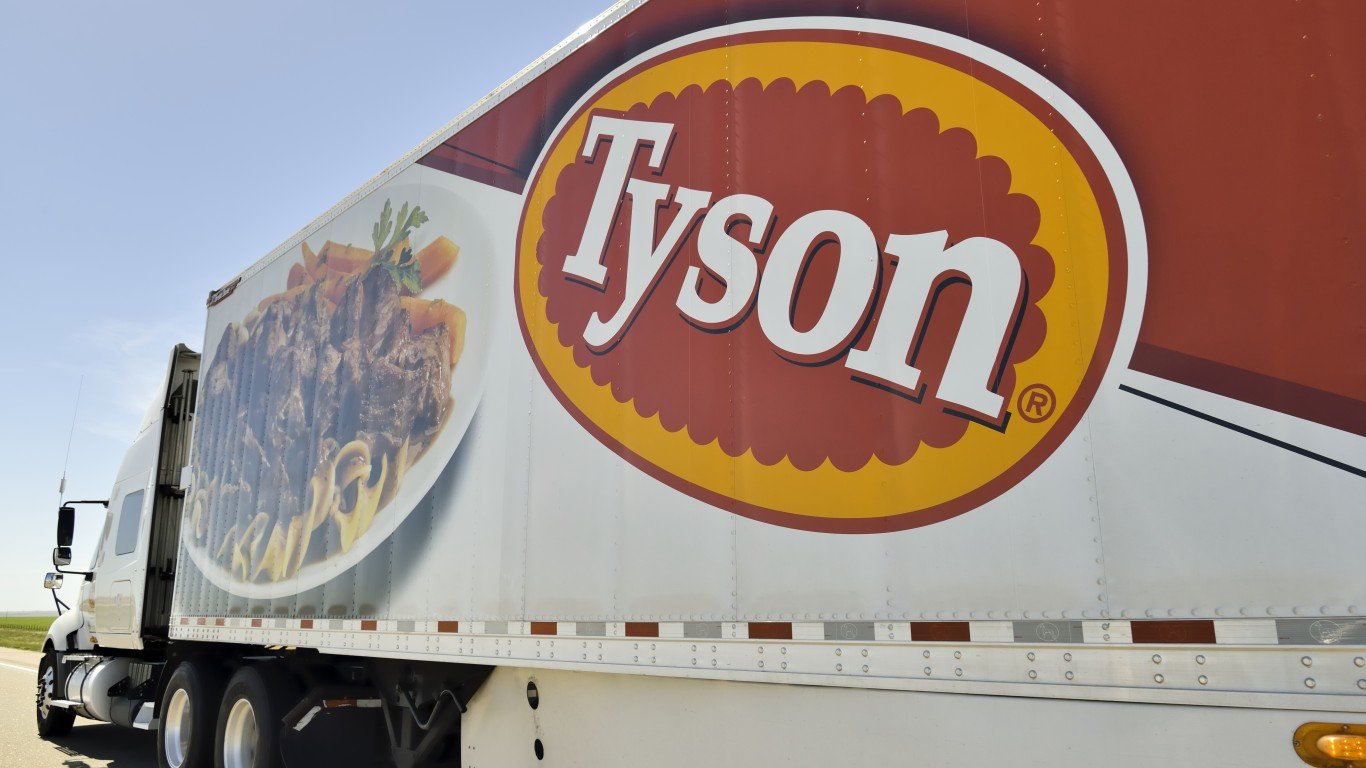
Tyson Foods (NYSE:TSN) processes the beef, pork, and chicken that ends up in grocery meat cases and on restaurant menus, including customers’ own store brands. Roughly $32 billion of its sales come from fresh and commodity protein. The quarterly Class A dividend was raised to $0.52[3] on November 13, 2026, putting the annual rate at $2.08, a 2% increase. At $63.25, that’s a forward yield of about 3.3%, the highest in this group.
Dividend safety: Trailing dividends of $2.04 equal about 59% of fiscal 2026 adjusted EPS of $3.44[3]. Free cash flow rose 41.3%[3] to $1.663 billion on operating cash flow of $2.433 billion, and the company found room to buy back 7.8 million shares for $427 million. Tyson cut debt by $824 million[4] in the first nine months of fiscal 2026 and expects liquidity to stay well above its $1.0 billion minimum. Tyson has paid a dividend since 1999, and every change to the quarterly rate since it was $0.05 in 2013 has been an increase.
What drives the business: Protein spreads, livestock costs, and how much consumers spend on food. Chicken posted its eighth consecutive quarter of year-over-year volume growth, and Prepared Foods adjusted operating income rose 5.5% to $1,332 million for the year. Incoming CEO Jeff Schomburger said, “Performance in fiscal 2026 reflects the strength of our diversified multiprotein model.”[3]
Bull case: Because Tyson sells several proteins, a weak year in one can be offset by strength in another. For fiscal 2027, management guides Chicken to $1.3–$1.6 billion and Prepared Foods to $1.25–$1.4 billion of adjusted segment operating income. Free cash flow is expected to be $ 0.8- $ 1.3 billion, even with capital spending rising to $ 1.1- $ billion. Shares are up 14.16% over the past month.
Risk: Beef. Tight U.S. cattle supplies pushed the segment’s fourth-quarter adjusted loss to $(171) million, and fiscal 2027 guidance runs from a $(300) million loss to $100 million of profit. A cattle shortage that lasts longer than expected could eat into the cash that funds the payout.
Lamb Weston
Lamb Weston (NYSE:LW) makes the frozen fries and hash browns sold by quick-service chains, other restaurants, and grocery retailers. It pays $0.38 per quarter, with the next payment due December 4, 2026. The annualized $1.52 against a $52.47 share price gives a forward yield of about 2.9%.
Dividend safety: The payout equals about 50% of fiscal 2026 adjusted EPS of $3.01[5]. Operating cash flow of $942.9 million[5] less capital spending of $402.7 million left roughly $540.2 million of free cash flow. For fiscal 2027, management guides operating cash flow of $750–$800 million and capital spending of $380–$410 million. Interest expense of about $185–$190 million is a real but manageable cost, and $245 million[6] of buyback authorization remains. The dividend history begins only after the spinoff, but the quarterly rate has risen every year, from $0.1875 in 2017 to $0.38 in 2026.
What drives the business: Restaurant traffic and potato costs. North America sales rose 5% to $1.141 billion[6] last quarter on 7% volume growth, the 7th consecutive quarter of growth. Capacity usage there rose about 10 percentage points[6]. CEO Mike Smith described a “solid start to the year… continued momentum in North America.”[6]
Bull case: Management raised fiscal 2027 adjusted EPS guidance to $3.05-$3.35[6] and adjusted EBITDA guidance to $1.125-$1.215 billion. A cost savings program targets $250 million[5] in annualized savings by the end of fiscal 2028. The stock is up 29.07% year-to-date, though it’s still down 9.3% over the past year.
Risk: International. Segment sales fell 8% to $528.9 million[6], and International EBITDA dropped 54% on tough EMEA competition, higher potato costs carried over from the prior year, and underused factories. Until Europe steadies, North America has to carry the dividend on its own.
Why the Food Supply Chain Pays Retirees Steadily
Sysco, Tyson and Lamb Weston each pay out roughly half to three-fifths of adjusted earnings and generate free cash flow that covers the dividend. Each has also kept raising its payout through cattle shortages, slow food inflation, and swings in restaurant traffic. These companies earn their money moving huge volumes of food at thin margins. That model makes reliable checks for income investors as long as people keep eating (we walked through how to build a dividend ladder that lets you live on the checks without ever selling a share in a free guide here).
Contact [email protected] for any questions or corrections.
Chris Lange is a financial and geopolitical writer with more than a decade of experience covering a myriad of topics. He has published thousands of articles for 24/7 Wall St., with past coverage focused heavily on stocks, IPOs, healthcare, defense, global affairs, and technology.
His work has been quoted, or referenced by a number of outlets including Business Insider, USA Today, Yahoo Finance, MSN, The Motley Fool, and many other publications. A graduate of Southwestern University, he studied business with a focus on investments and has previous experience in banking and startups.
When not reading or writing the news, he is following his passion for Lacrosse, playing chess, or building solar projects with his dad.