AI-Driven Hedge Fund Spends $49,315 a Day On Claude — and Still Lost 65% Last Quarter

This post may contain links from our sponsors and affiliates, and Flywheel Publishing may receive compensation for actions taken through them.
Leopold Aschenbrenner’s Situational Awareness was the best-known AI-focused hedge fund of this cycle, and it is still paying heavily for AI after AI stocks broke it. The fund recently reported spending $18 million a year on Anthropic’s Claude to help pick stocks. That works out to $49,315 a day. Last quarter it lost 65% of its value. Anyone who owns the AI infrastructure stocks the fund held can learn from what happened: leverage decided how this ended, even though the underlying companies kept growing.
How a Former OpenAI Researcher Built a $20 Billion Fund
Aschenbrenner was a researcher on OpenAI’s Superalignment team and left the company in 2024. He then published a 165-page essay, also called Situational Awareness. In it he argued that artificial general intelligence could come much sooner than most people expected and that investors should prepare for a huge expansion of AI infrastructure. The fund reportedly started with about $225 million from backers including Stripe co-founders Patrick and John Collison, Nat Friedman and Daniel Gross. It posted cumulative gains of more than 1,000%. The Wall Street Journal reported that it built up well over $20 billion in assets in about two years.
Leverage Forced a Sale to Citadel
The fund borrowed heavily to build its stock portfolio, with leverage reaching as much as four times its equity. When tech stocks corrected, margin calls forced it to liquidate, and it sold the bulk of its stock portfolio to Ken Griffin’s Citadel after suffering deep losses. Positions in CoreWeave (NASDAQ:CRWV), SanDisk (NASDAQ:SNDK | SNDK Price Prediction) and IREN (NASDAQ:IREN) made up three-quarters of the portfolio. The margin call wiped out effectively all of their value, which cut 75% from overall returns.
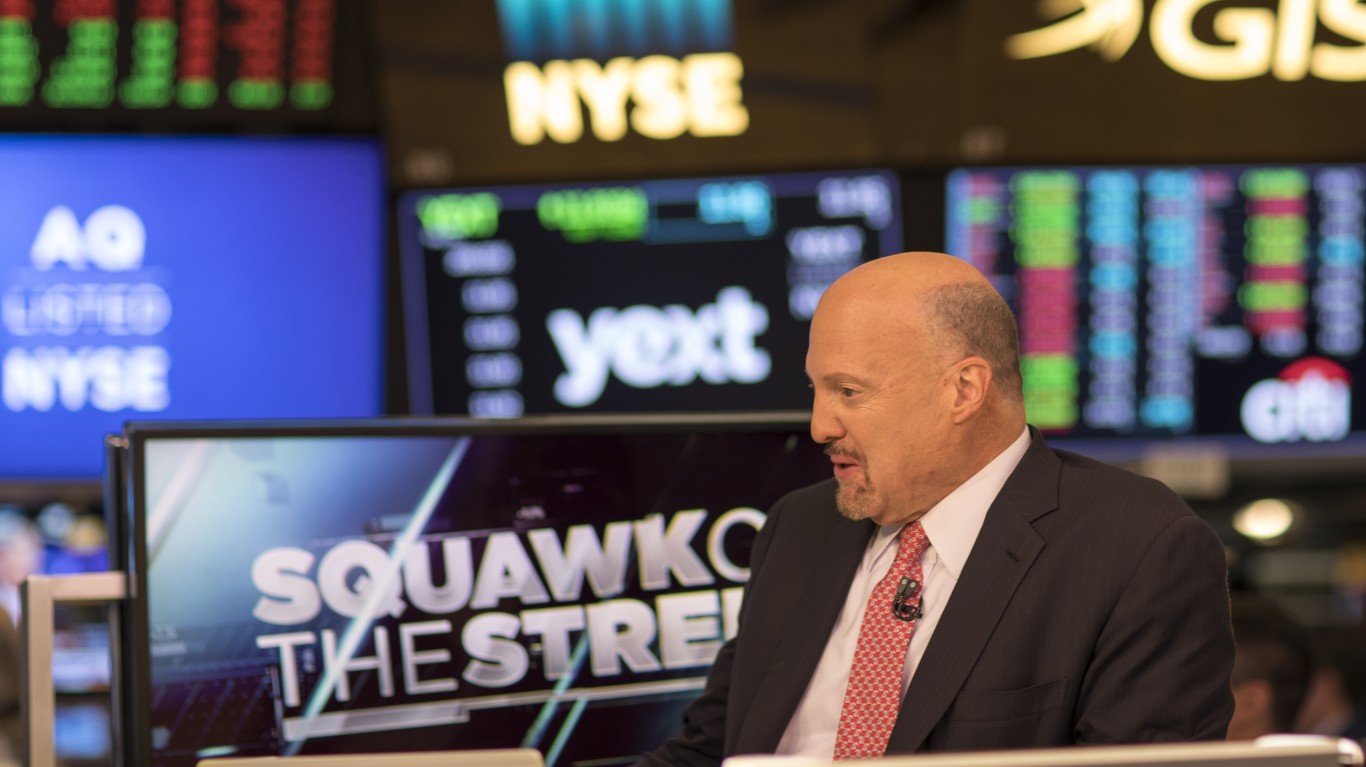
On Mad Money, Jim Cramer argued that the forced sale actually helped fuel the market rally that followed: “We all owe Leopold Aschenbrenner a gigantic ocean of thanks. This is his rally. Too bad he didn’t get to enjoy it.”
Situational Awareness Still Pays a Hefty Claude Bill
As of Oct. 30, the fund was spending $23 million a year on Claude, or $63,013 a day. The newer $18 million figure shows a cut. Even so, the fund is still paying for model-driven research after losing most of its asset base. AI research tools can help pick the right sector, but how much a fund borrows decides whether it lasts a sharp drop.
Fund’s Former Holdings Fell Sharply in the Past Month
Here is how the fund’s former holdings and peers Nebius Group (NASDAQ:NBIS) and SK hynix (NASDAQ:SKHY) traded through Nov. 27:
| Stock | 1-Month Change | 1-Week Change |
|---|---|---|
| CoreWeave | -30.94% | +11.74% |
| SanDisk | -51.39% | +7.72% |
| IREN | -52.81% | +15.14% |
| Nebius | -50.94% | +10.02% |
| SK hynix | -27.44% | +15.38% |
Latest Earnings Reports Show AI Demand Still Rising
- CoreWeave: Q3 revenue rose 168.3%[1] from a year earlier to $3.66 billion, and the revenue backlog reached about $132.5 billion. Net interest expense was $846 million[1], according to its Form 8-K on SEC EDGAR.
- Nebius: Revenue was $980.8 million[2], up 571.3%, including about $325 million of one-time revenue. Management expects 2027 revenue of $12 billion to $13 billion[2].
- IREN: AI Cloud revenue rose 182%[3] from the prior quarter to $200 million. The company still posted a GAAP net loss of $263 million[3].
- SanDisk: Datacenter revenue rose 61%[4] from the prior quarter to $4.80 billion. Guidance for the next fiscal quarter is revenue of $12.2 billion to $12.6 billion[4].
- SK hynix: Q3 revenue rose 327.9%[5] and operating profit rose 632.1% from a year earlier.
Deadlines to Watch Into Early 2027
IREN is plans to have more than $4 billion of annual recurring revenue (ARR) up and running by Jan. 31, 2027[3], a target that has already been pushed back once. Nebius now expects ARR above $7 billion in February[2] instead of December. CoreWeave has guided to Q4 interest expense of $1.05 billion to $1.15 billion. For more on the recent drop in AI cloud stocks, see our coverage of the neocloud selloff. The thesis behind Situational Awareness still shows up in these companies’ revenue growth. The fund’s collapse shows that leverage can turn a market decline into a permanent loss.
Contact [email protected] for any questions or corrections.
After two decades of patrolling the dark corners of suburbia as a police officer, Rich Duprey hung up his badge and gun to begin writing full time about stocks and investing. For the past 20 years, he’s been cruising the markets looking for companies to lock up as long-term holdings in a portfolio while writing extensively on the broad sectors of consumer goods, technology, and industrials. Because his experience isn’t from the typical financial analyst track, Rich is able to break down complex topics into understandable and useful action points for the average investor. His writings have appeared on The Motley Fool, InvestorPlace, Yahoo! Finance, Money Morning, and, of course, 24/7 Wall St. He has been featured in both U.S. and international publications, including MarketWatch, Financial Times, Forbes, Fast Company, and USA Today.