Here’s How Much You Need in Dividend Stocks to Cover $5,000 or $10,000 in Annual Property Taxes

This post may contain links from our sponsors and affiliates, and Flywheel Publishing may receive compensation for actions taken through them.
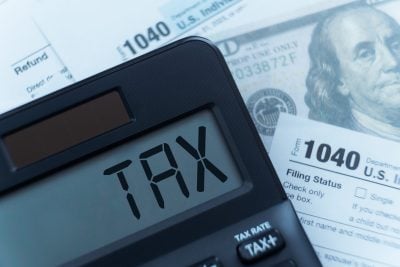
Paying off the mortgage leaves one bill. Retirees who own their homes outright still owe property tax every year, and the amount depends a lot on where they live. One measure from Tax Foundation data covers all state and local taxes per person (property, income, and sales), adjusted for income, for 2024. It runs from $10,828 in New York down to $5,041 in South Dakota. Your own county bill is the number that matters. This article uses two round planning targets: $5,000 a year, and $10,000 for high-tax counties.
How Much Capital Each Yield Tier Needs
Divide the annual bill by the yield to see how much capital you must invest.
| Tier | Yield | $5,000 Bill | $10,000 Bill |
|---|---|---|---|
| Conservative | 3.5% | About $143,000 | About $286,000 |
| Moderate | 6% | About $83,000 | About $167,000 |
| Aggressive | 10% | $50,000 | $100,000 |
Conservative Tier: Where Safety Pays the Bill
Each yield below is the forward annual dividend divided by the November 27 end price. The capital figure is what it would take for that one stock to cover a $5,000 bill on its own.
- PepsiCo (NASDAQ:PEP | PEP Price Prediction): 4.09% yield, so about $122,000. The $5.92 forward dividend is covered by $7.99 in trailing EPS. Risk: free cash flow yield of 3.89% roughly matches the dividend yield, and management cut 2026 core EPS growth to +2.5% to +3.5%[1].
- Duke Energy (NYSE:DUK) delivers a 3.29% yield, so about $152,000. Guidance of $6.70 to $6.80[2] in adjusted EPS covers the $4.34 dividend. Risk: dividend growth is slow. The quarterly payout has risen only about 15% since 2019, and the plan to add 16 GW[2] of capacity by 2031 needs heavy funding.
Four dividend growers yield less than 3.5% right now, which drives the required investment higher:
- Procter & Gamble (NYSE:PG): 2.52% yield, so about $199,000. It has raised its dividend for 65+ consecutive years, and fiscal 2027 core EPS guidance of $6.89 to $7.11[3] covers the payout. Risk: guidance calls for organic sales growth of only 1% to 3%[3].
- Exxon Mobil (NYSE:XOM) pays a 2.67% yield, so about $187,000. It has 44 straight years of increases and produced $19.10B[4] of free cash flow in the third quarter. Risk: commodity swings. The stock fell 11.43% over the past month.
- JPMorgan Chase (NYSE:JPM) offers a 2.04% yield, so about $245,000. It just raised the quarterly dividend from $1.50 to $1.65. Risk: banks cut dividends in a crisis. JPMorgan cut from $0.38 to $0.05 in 2009.
- Johnson & Johnson (NYSE:JNJ) carries a 1.94% yield, so about $257,000. Guidance of $11.60 to $11.75[5] in adjusted EPS more than doubles the dividend. Risk: after a 35.93% rise this year, the yield is low, and the capital requirement is the highest in this group.
Moderate and Aggressive Tiers: Lower Cost, Weaker Footing
Stocks yielding 5% to 7% include tobacco, telecom, and higher-yield REITs. They cut the investment required for a $5,000 bill to about $83,000, but their dividends usually grow slowly or not at all. Stocks yielding 8% to 14%, such as BDCs and mortgage REITs, get the figure down to $50,000. In exchange, the balance sheets are weaker, and cuts are common. If an aggressive holding cuts its dividend by 25%, a $5,000 income stream falls to $3,750. The county bill remains the same.
Dividend Growth Can Outrun a Higher Yield
Property tax bills tend to rise over time, so a fixed income stream falls behind. Procter & Gamble’s quarterly dividend grew from $0.7459 in 2019 to $1.0885, a gain of about 46%. A $5,000 dividend stream that grew at that pace would now pay about $7,297. Johnson & Johnson’s quarterly payout rose about 41% over the same period. That 50-plus-year increase is why we screened for it in our free Dividend Kings report, which ranks ten of them by valuation right now. Even a stock yielding 10% with flat payouts would still pay $5,000.
How Qualified Dividend Taxes Shrink the Payout
Qualified dividends get the 0%, 15%, or 20% capital gains rates. You must hold the stock for more than 60 days during the 121-day period that starts 60 days before the ex-dividend date. For 2026, joint filers pay 0% on qualified dividends up to $98,900 of taxable income. Many states also offer property tax relief for seniors, such as exemptions, freezes, or deferrals. Check your state’s program before you size the portfolio.
What to Do Before You Build This Portfolio
- Get the exact figure from your latest property tax statement and run the math at today’s yields. Yields change every time the stock price moves.
- Check how your income would hold up if your highest-yielding holding cut its dividend by 25% before you rely on it.
- Look up your state’s senior property tax relief rules. A lower bill means less capital to invest at every tier.
Contact [email protected] for any questions or corrections.
Chris Lange is a financial and geopolitical writer with more than a decade of experience covering a myriad of topics. He has published thousands of articles for 24/7 Wall St., with past coverage focused heavily on stocks, IPOs, healthcare, defense, global affairs, and technology.
His work has been quoted, or referenced by a number of outlets including Business Insider, USA Today, Yahoo Finance, MSN, The Motley Fool, and many other publications. A graduate of Southwestern University, he studied business with a focus on investments and has previous experience in banking and startups.
When not reading or writing the news, he is following his passion for Lacrosse, playing chess, or building solar projects with his dad.