Invest in the Rail Lines Moving Your Holiday Packages for Passive Income: $90,000 Across These 3 Railroads Pays More Than $1,300 a Year

This post may contain links from our sponsors and affiliates, and Flywheel Publishing may receive compensation for actions taken through them.

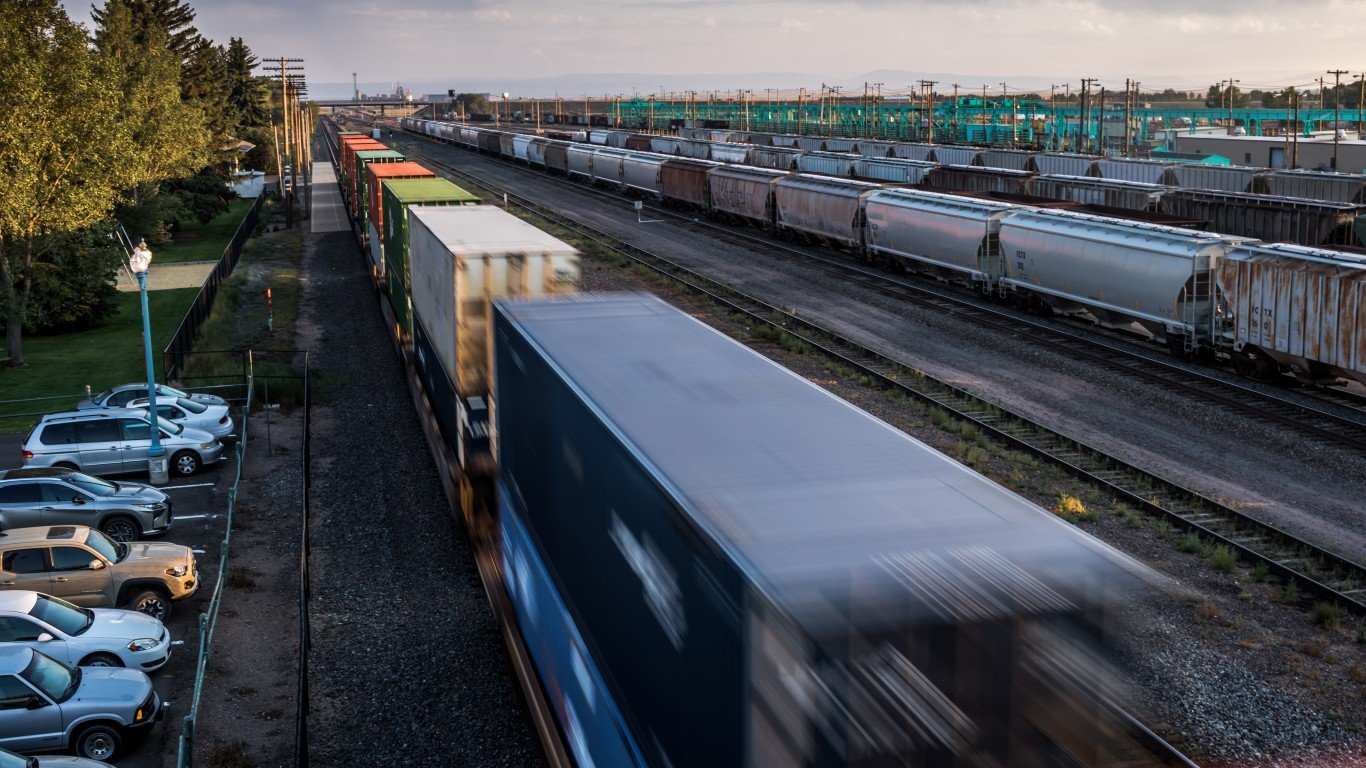
Between August and October, intermodal rail traffic typically peaks as retailers stock up for the holiday shopping season. Containers of holiday merchandise moving from ports to distribution centers often travel part of the way on intermodal trains, and the three largest US-listed Class I railroads all reported strong intermodal growth in the third quarter of 2026. Rail carriers also say a tighter trucking market is moving more freight back onto their networks.
Splitting $90,000 evenly across these three railroads, with $30,000 in each, would produce about $1,392 in annual dividend income, which is more than $1,300 a year. Each of these yields is below 2%. The income case for railroads depends on dividend strength and growth over time, supported by low payout ratios and steady cash generation (the same compounding setup behind the dividend ladder we outlined in a free guide to building lifelong income without selling shares).
Here is the annual income a $30,000 stake in each of these three rail operators would generate. The figures use forward yields based on Nov. 27, 2026 closing prices and each company’s current annualized dividend, ordered from lowest yield to highest.
CSX
- Stock #3: CSX (NASDAQ:CSX | CSX Price Prediction)
- Yield: 1.09%
- Shares for $30,000: 583.88
- Annual Passive Income: ~$327
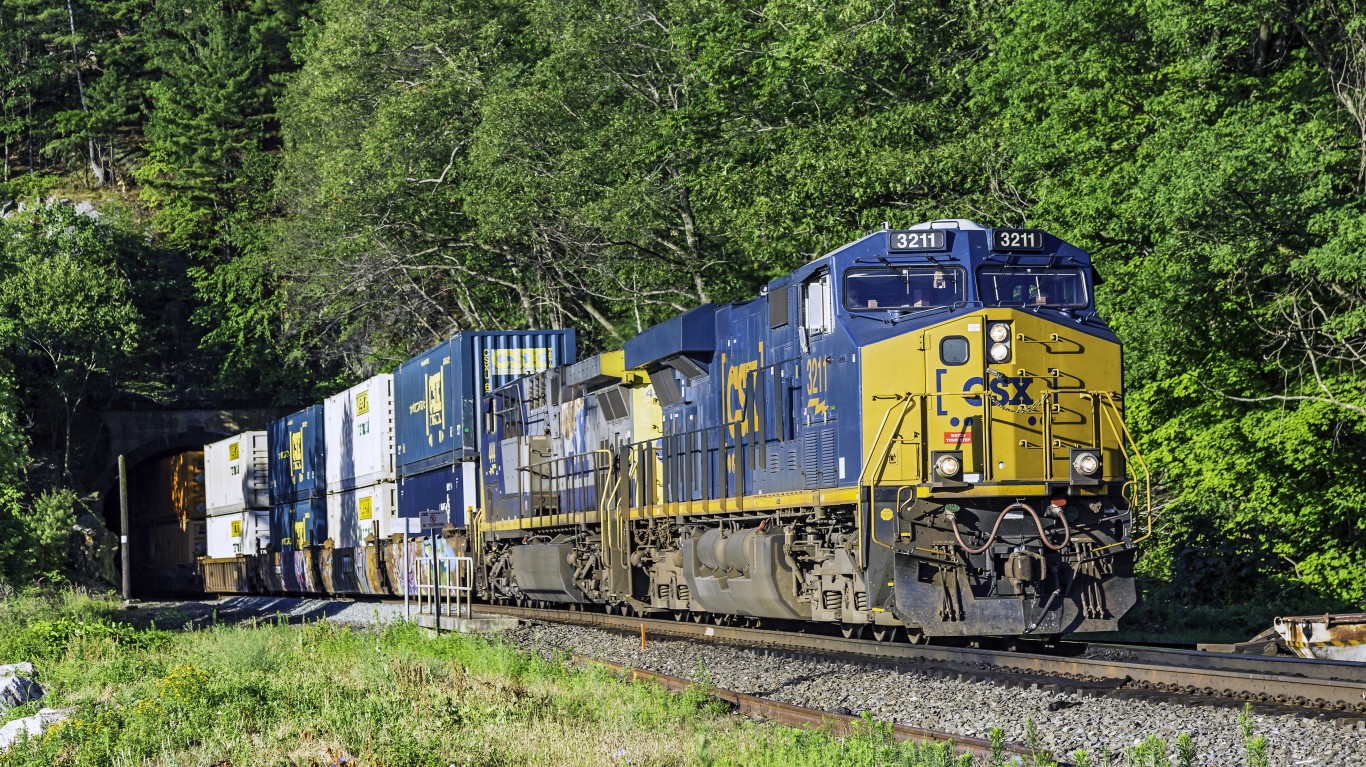
CSX runs about 20,000 route miles across 23 states in the eastern US and connects with roughly 250 short-line railroads and more than 70 ports. Its revenue comes from merchandise, intermodal, coal, and trucking through Quality Carriers. Intermodal revenue rose 20%[1] during the quarter, and operating margin reached 39.1%.
The yield is the lowest of the three because CSX sends most of its shareholder returns through buybacks. It bought back 23M shares for $1.049B[1] through the third quarter. The stock has also gained 43.04% year-to-date, which lowers the yield. The quarterly dividend of $0.14 equals about 25% of third-quarter diluted EPS of $0.57[1]. The payout has gone up every year, from $0.10 in 2022 to $0.14 in 2026. Fuel surcharge revenue nearly doubled to $466M, but falling fuel prices would reduce both surcharge revenue and fuel expenses.
Norfolk Southern
- Stock #2: Norfolk Southern (NYSE:NSC)
- Yield: 1.65%
- Shares for $30,000: 91.46
- Annual Passive Income: ~$494
Norfolk Southern operates a 22-state network east of the Mississippi with links to every major Atlantic container port. Third-quarter revenue hit a record $3.526B[2], and adjusted EPS came in at $3.62. The company’s CEO said, “A tighter trucking market highlighted rail’s competitive advantages.”[2]
The quarterly dividend has stayed at $1.35 since February 2023. Before that, it rose from $0.99 in early 2021. The payout uses about 37% of third-quarter adjusted EPS. Buybacks stopped in 2026, compared with $533M[2] in the prior-year period, as cash is held during review of the pending merger with Union Pacific (NYSE:UNP). Risks include Surface Transportation Board approval of the deal and ongoing Eastern Ohio incident costs, which totaled $28M[2] in the quarter.
Union Pacific
- Stock #1: Union Pacific
- Yield: 1.9%
- Shares for $30,000: 100.59
- Annual Passive Income: ~$571
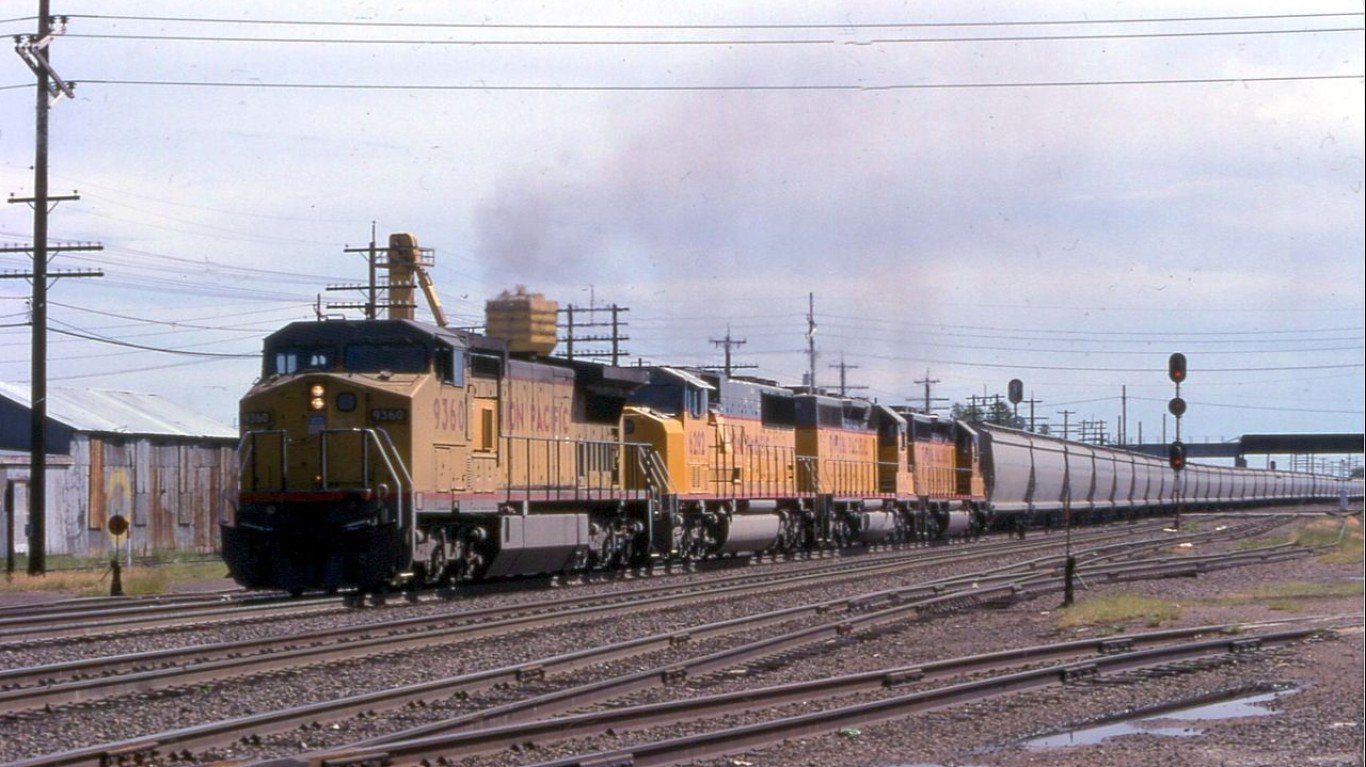
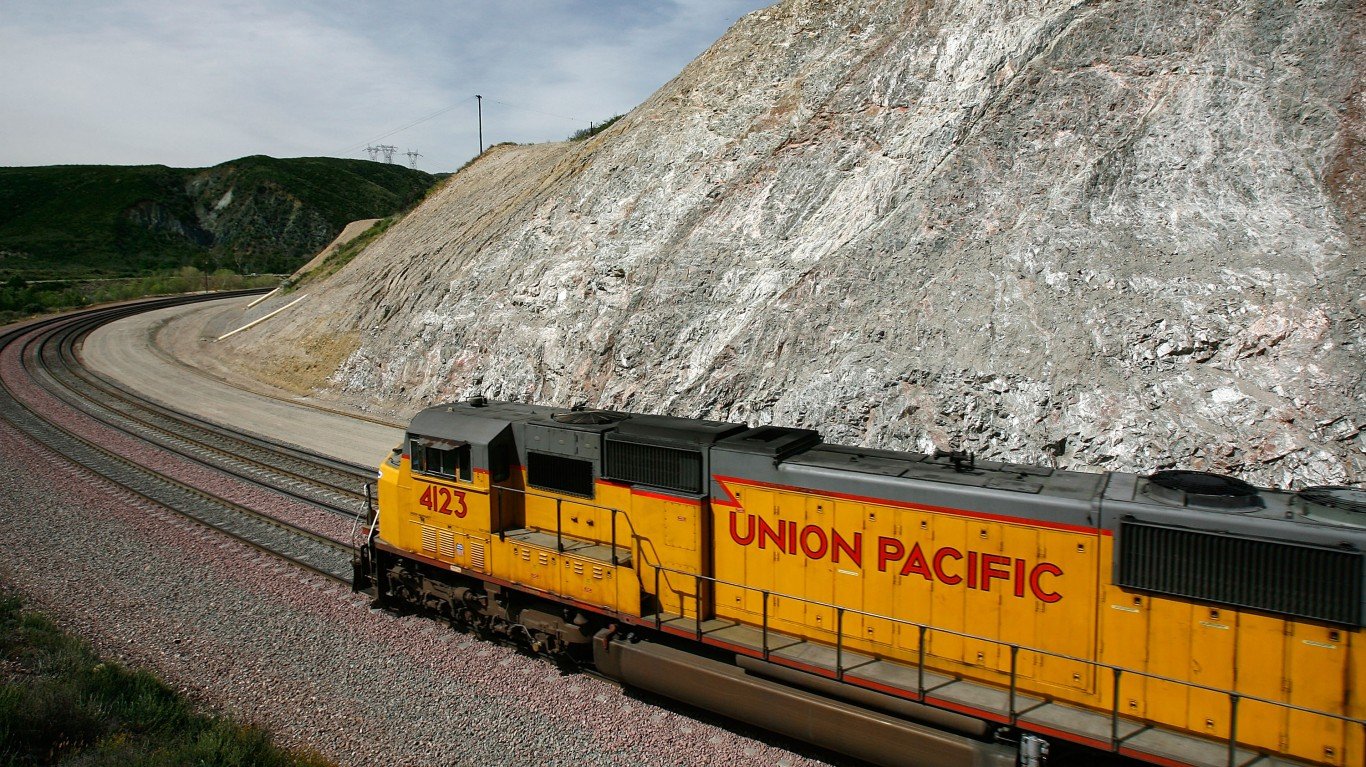
Union Pacific connects 23 western states and carries bulk, industrial, and premium freight, including intermodal. Third-quarter revenue grew 15.26%[3] to $7.197B, and adjusted diluted EPS was $3.53. Its pending acquisition of Norfolk Southern would form the first US transcontinental railroad.
The quarterly dividend went from $1.38 to $1.42 in 2026 and uses about 40% of third-quarter adjusted EPS. Management has renewed a commitment to “consistent annual dividend increases.”[3] Buybacks fell to $26M year-to-date as capital went toward the merger. Fuel expense roughly doubled to $1.04B[3], and regulatory review of the deal adds uncertainty. The next payment is scheduled for December 30, 2026.
Railroad Income Summary Table
| Name | Yield | Annual Dividend Income |
|---|---|---|
| CSX | 1.09% | $327 |
| Norfolk Southern | 1.65% | $494 |
| Union Pacific | 1.9% | $571 |
| Total | 1.55% | $1,392 |
What $90,000 in Rail Stocks Produces Each Year
Taken together, these three positions generate $1,392 in annual passive income on a $90,000 investment, a blended yield of 1.55%. Union Pacific contributes $571, Norfolk Southern adds $494, and CSX completes the set with $327.
What to watch next: the Surface Transportation Board’s review of the Union Pacific and Norfolk Southern merger, which could shape how both companies split cash between dividends and buybacks, along with each railroad’s next dividend declaration and whether a tighter trucking market keeps pushing freight back onto rail.
Contact [email protected] for any questions or corrections.
David Beren has been a Flywheel Publishing contributor since 2022. Writing for 24/7 Wall St. since 2023, David loves to write about topics of all shapes and sizes. As a technology expert, David focuses heavily on consumer electronics brands, automobiles, and general technology. He has previously written for LifeWire, formerly About.com. As a part-time freelance writer, David’s “day job” has been working on and leading social media for multiple Fortune 100 brands. David loves the flexibility of this field and its ability to reach customers exactly where they like to spend their time. Additionally, David previously published his own blog, TmoNews.com, which reached 3 million readers in its first year. In addition to freelance and social media work, David loves to spend time with his family and children and relive the glory days of video game consoles by playing any retro game console he can get his hands on.