What if You Invested $1,000 in Bitcoin and XRP 5 Years Ago?
Five years ago, XRP (CRYPTO:XRP) was the problem child of crypto. The SEC had just sued Ripple, exchanges were dropping the token, and it traded for 23 cents with a high chance the lawsuit could sink it for good. Bitcoin…

This post may contain links from our sponsors and affiliates, and Flywheel Publishing may receive compensation for actions taken through them.

Five years ago, XRP (CRYPTO:XRP) was the problem child of crypto. The SEC had just sued Ripple, exchanges were dropping the token, and it traded for 23 cents with a high chance the lawsuit could sink it for good. Bitcoin (CRYPTO:BTC), meanwhile, was the golden child—it traded around $29,000 and pulled in big names like Tesla and MicroStrategy (now Strategy) as it started its biggest run yet.
So imagine you ignored the noise and put $1,000 into each crypto back then. One was a bet on a coin fighting for its life, and the other a bet on the safest crypto asset. Five years later, the results aren’t what most people would guess.
How XRP and Bitcoin Traded in 2021
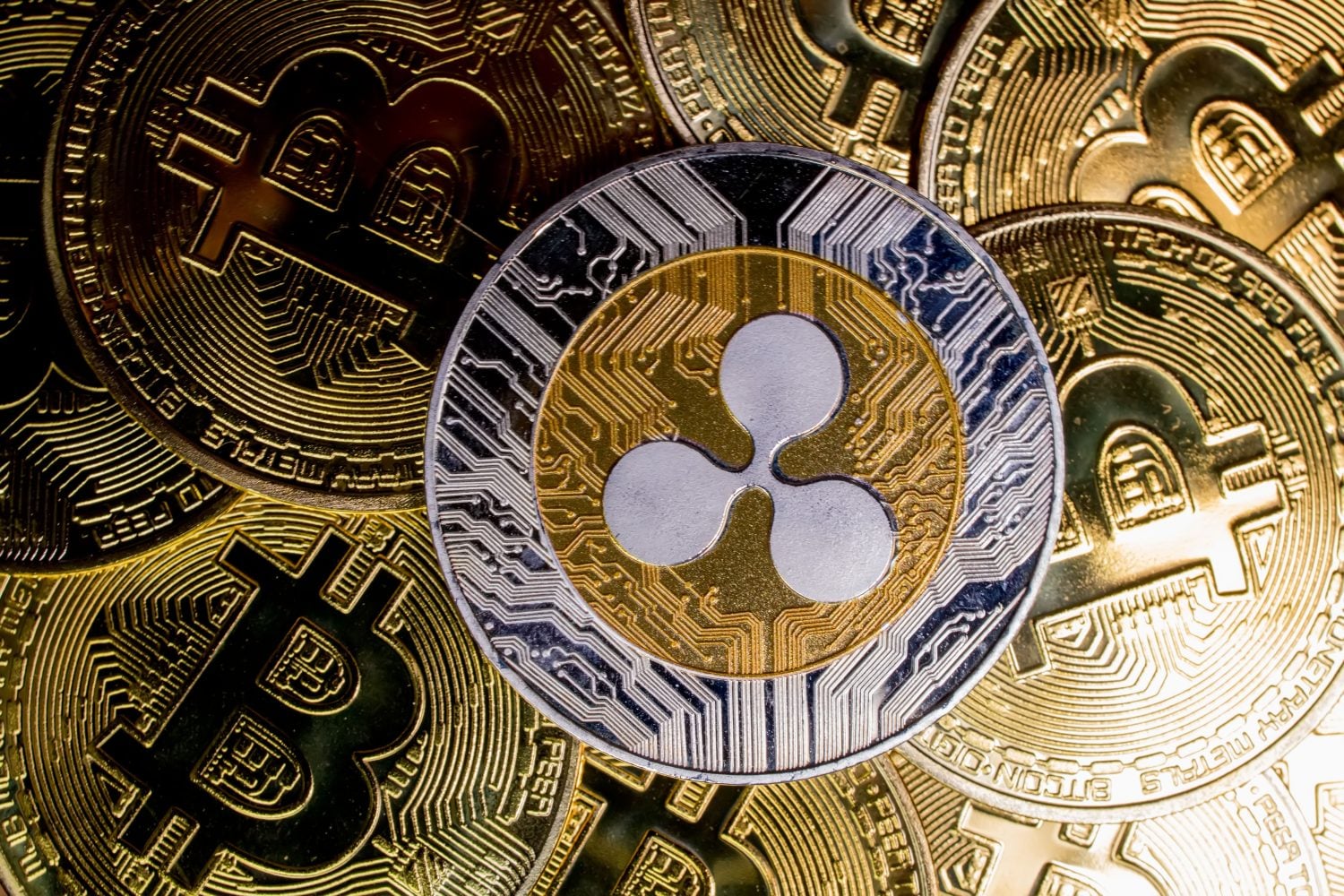
Say an investor split $2,000 evenly back in early 2021, putting $1,000 into Bitcoin and XRP. The two stakes bought wildly different piles. At around 23 cents, the $1,000 in XRP bought roughly 4,350 tokens. At around $29,000, the $1,000 in Bitcoin bought about 0.034 BTC.
Buying XRP then took a strong stomach as the SEC had sued Ripple in December 2020, claiming XRP was an unregistered security. Days after the lawsuit, Coinbase and Kraken pulled the token from their platforms. So, buying XRP back then meant buying a coin half the market had written off. Meanwhile, Bitcoin was the easy pick, riding a wave of corporate buying that carried it to a high near $68,700 by November 2021.
However, even the written-off coin caught the crypto wave. XRP climbed to $1.96 by April 2021, a near 8x from its low, with the lawsuit still hanging over it. But the two coins were rising for completely different reasons. Bitcoin had real money behind it, from companies and funds treating it as a serious asset, but XRP had something far shakier—the hope that Ripple would beat the SEC in court. That single difference went on to shape the next five years.
How XRP and Bitcoin Moved Year by Year From 2021 to 2026
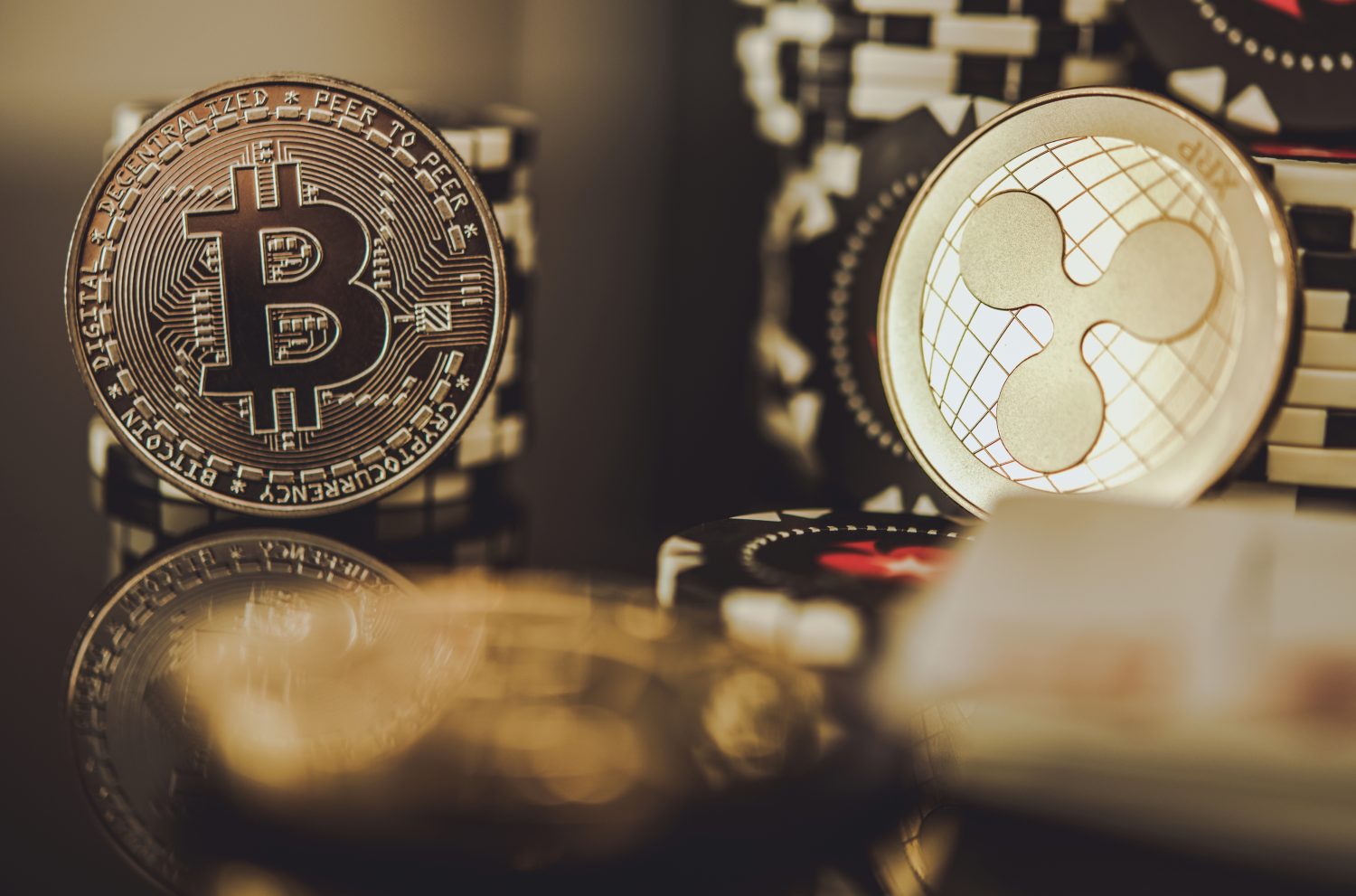
Over five years from 2021, both coins went through massive swings, up and down, but they didn’t always move at the same time or for the same reasons. The table below shows how far each one traveled every year.
| Year | XRP Low – High | Bitcoin Low – High |
|---|---|---|
| 2021 | $0.21 – $1.96 | $29,000 – $68,700 |
| 2022 | $0.29 – $0.92 | $16,000 – $47,000 |
| 2023 | $0.30 – $0.95 | $16,500 – $42,000 |
| 2024 | $0.38 – $2.90 | $42,000 – $106,000 |
| 2025 | $1.40 – $3.65 | $87,000 – $126,198 |
| 2026 (today) | $1.12 | $63,730 |
In 2022, the collapse of Terra/LUNA and the FTX exchange wiped out huge parts of the market. XRP fell under 30 cents and Bitcoin dropped to $16,000, and the $1K stake in both coins lost most of its value on paper that year.
In July 2023, a judge ruled that XRP sold on public exchanges wasn’t a security. It was a partial win against the SEC, and XRP jumped on the news while Bitcoin traded flat, still waiting on its ETFs. Bitcoin got them in 2024, and the spot ETF launch plus the post-election rally pushed it to its $126,000 ATH in 2025. Meanwhile, XRP’s rally took longer. It settled its lawsuit for good in 2025, got its own ETFs, and climbed to $3.65 in July.
At $3.65, the XRP stake was worth about $15,870. At Bitcoin’s $126K peak, its stake was worth about $4,345. The coin everyone was scared to touch became the bigger prize. Buying XRP at 23 cents while it was under legal fire meant getting it cheap, so when it finally ran, it climbed much higher.
What the Next Five Years Could Hold for XRP and Bitcoin
XRP now trades at $1.12 and Bitcoin at $63,730, with both well below their peaks. The $1,000 in XRP is worth about $4,870 today, a 387% gain, or nearly five times the original stake. The $1,000 in Bitcoin is worth about $2,198, a 120% gain, which is a little more than double. Even after XRP plunged from its high, the scary bet still beat the safe one by a wide margin.
However, those two numbers hide how different the rides for both cryptos were. XRP paid more, but it came with a lawsuit, an 80% crash, and a peak near $16,000 that came and went for anyone who didn’t sell. Bitcoin paid less, but it never once put the whole position in doubt as it was steady for most of the five years.
XRP still carries the bigger upside potential over the next five years, the same way it did over the last five. Most analysts see it reaching roughly $7 to $12 by then if Ripple’s banking business and the 2028 Bitcoin halving pay off. The middle of that would turn today’s 4,350 XRP into somewhere around $30,000 to $52,000, and if XRP hits higher levels like $20, it would push it past $80,000. But if Ripple’s wins never turn into real demand for the token, XRP could still sink back under a dollar.
On the other hand, Bitcoin’s range runs higher and steadier. Standard Chartered and other major forecasters see it reaching $225,000 to $270,000 over the next five years, which would turn today’s 0.034 Bitcoin into roughly $7,800 to $9,300.
BTC’s upside potential is lower than XRP’s, but the investment is safer. ETFs, company treasuries, and the 2028 halving keep tightening supply against steady demand, which would help the price. So, XRP offers the bigger jackpot, while Bitcoin is the surer footing.
Which $1,000 Bet Looks Better?
Looking back, XRP turned out to be the better bet over the last five years. It turned $1,000 into nearly $5,000, while Bitcoin only doubled it. But XRP only paid that much because the lawsuit made it cheap, and it took holding through an 80% crash and a $16,000 peak that slipped away to earn it.
Looking forward, the same situation could unfold. XRP offers the bigger swing, with a shot at life-changing money and a real risk of falling flat, while Bitcoin offers the steadier climb, with less upside but a much steadier price.
The last five years already showed what each coin is: XRP pays more but makes you sweat, and Bitcoin pays a bit less—as it’s already bigger—but lets you sleep. Neither one is the wrong pick, but different bets for different stomachs, and the next five years seems set to rhyme with the last.
Contact [email protected] for any questions or corrections.
Sam Daodu is a crypto analyst who's spent nearly a decade making blockchain understandable—no easy task when most whitepapers read like fever dreams. He writes for 24/7 Wall St., covering Bitcoin, altcoins, and crypto market analysis for investors. Before crypto, he was a tech writer (back when explaining "the cloud" was peak innovation). Since 2018, he's written for CoinTelegraph, Yahoo Finance, The Block, Cryptonews, Zypto, Rain, and more—basically anywhere people want crypto news without the headache. Sam runs MacLabs Marketing, a content agency for crypto brands tired of sounding like AI wrote their website. He also publishes free crypto education on his site for Web3 enthusiasts who think "gas fees" is a typo. When he's not writing or staring at charts, Sam's either: - Watching anime (currently convinced One Piece has better tokenomics than most altcoins) - At the gym sculpting himself into a Greek god - Listening to the music your mum warned you only bad boys listen to Connect: LinkedIn | Email | MacLabs Marketing