“That Ain’t Okay:” Dave Ramsey Blasts Couple With $150,000 in Cash and a $60,000 Car Loan
A caller with a paid-off house, a six-figure salary, and six figures in savings thought he was doing everything right. Dave Ramsey told him that kind of financial comfort can quietly cost a fortune.

This post may contain links from our sponsors and affiliates, and Flywheel Publishing may receive compensation for actions taken through them.
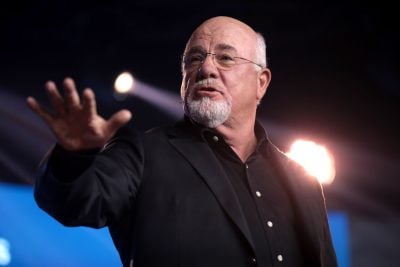
A caller on The Ramsey Show brought Dave Ramsey a disagreement between himself and his wife. The couple had a setup most households would envy: a paid-off house, a $150,000 salary, and $150,000 sitting in savings. Their only remaining debt was a $60,000 car loan.
The caller wanted to use part of those savings to wipe out the loan. His wife worried about surrendering a six-figure cash cushion. Ramsey sided firmly with the husband: “You’ve lost $50,000 for screwing around with a stupid savings account,“ he told the caller. “That’s expensive. That ain’t okay.”
How $150,000 in Savings Became an Expensive Mistake
When Ramsey said the couple had lost $50,000, he meant the returns they forfeited by parking an extra $50,000 in cash for years rather than putting it to work in the market.
The math is straightforward. As of September 21, 2026, the FDIC reports the national average interest rate on savings accounts stands at 0.37% APY. Traditional brick-and-mortar banks typically offer the lowest rates, with big banks often paying something close to 0.01% APY on basic savings accounts. Even moving up the safety ladder, the 10-year Treasury note yielded 5.19% as of October 14, 2026, and the benchmark has been trading near a 24-year high above 5.2% in recent weeks. Meanwhile, the S&P 500 has returned roughly 13% per year over the past five years on an annualized basis, and its cumulative 10-year total return (with dividends reinvested) stands at approximately 317%.
The car loan only deepens the problem. According to Experian’s State of the Automotive Finance Market report for Q2 2026, the average interest rate for a new car loan was 6.35%, while the average rate for used cars was 11.19%. Either figure towers over the 0.37% a typical savings account pays, which means holding $60,000 in cash while carrying that debt is a straightforward losing trade, regardless of how safe it feels.
How Much You Should Keep in an Emergency Fund
The second lesson in Ramsey’s response is that emergency funds are not a “more is always better” category. He told the caller: “Your emergency fund should be about $30,000, maybe $40,000. And you should have $50,000 in investments and no car payment. That’s where you should be.”
The standard rule of thumb calls for keeping about 3 to 6 months of essential expenses in easily accessible cash, and most Americans still fall short of that benchmark. The FINRA Foundation’s sixth wave of the National Financial Capability Study found that only 46% of U.S. adults have set aside three months of living expenses, down from 53% in 2021. For this couple, the goal was straightforward: hold roughly $30,000 to $40,000 as a true emergency cushion, pay off the $60,000 car loan with the freed-up cash, and invest the remaining $50,000.
What Is the Scenario You’re Afraid Of?
Ramsey’s advice to the husband was direct: ask his wife to name the specific catastrophe she is actually guarding against. “What is the scenario that you’re worried about, that you’ve dreamed up, catastrophized in your head? Let’s talk that through.”
The caller had already offered a clue. Earlier hesitation had been tied to infertility costs and concerns about medical bills with a second child. Those fears may have been entirely rational at an earlier point. The question Ramsey pressed was whether they still warranted a six-figure cash reserve, or whether anxiety had quietly calcified into policy. As he put it, “just because your body is reacting doesn’t mean that those are facts.”
The Real Cost of Playing It Too Safe
Ramsey’s prescription was concrete: keep $30,000 to $40,000 as a true emergency fund, retire the $60,000 car loan, and put the remaining $50,000 into investments. The broader point is that holding excess cash is not a conservative strategy. At a 0.37% savings rate against an opportunity cost of more than 5% in Treasuries, or the double-digit annualized gains equities have delivered over the past decade, the gap between “safe” and “invested” is not theoretical. It is real money left on the table every single year, and it compounds.
Editor’s note: This pass updates the FDIC national average savings rate from 0.38% to 0.37% per the most recent data (September 21, 2026), revises the 10-year Treasury yield upward to approximately 5.19% to reflect current levels near a 24-year high, and confirms the Experian Q2 2026 auto loan averages of 6.35% for new cars and 11.19% for used cars, as well as the S&P 500 five-year annualized return of roughly 13% and cumulative 10-year total return of approximately 317%.
Contact [email protected] for any questions or corrections.
Thomas Richmond is a financial writer and content strategist with 5+ years of experience covering stocks and financial markets. He has published over 500 articles focused on individual stock analysis, helping investors better understand business fundamentals, stock valuations, and long-term opportunities.
Thomas previously served as a Content Lead at TIKR, a stock research platform, where he helped scale the company’s blog to hundreds of articles per month and contributed to a weekly newsletter reaching more than 100,000 investors.
Outside of work, Thomas enjoys weight lifting and soccer.