Why Is XRP (Ripple) Underperforming the Crypto Market?
XRP sat frozen near $1.08 while Bitcoin climbed and Solana led the market higher, and the reason it keeps getting left behind points to a single make-or-break moment working its way through the U.S. Senate right now.

This post may contain links from our sponsors and affiliates, and Flywheel Publishing may receive compensation for actions taken through them.

The crypto market has had a rough 2026, down about 30% on the year with most major coins deep underwater. There’s been some sort of relief this month, as a soft inflation report cooled fears of more rate hikes and sent money back into crypto. Bitcoin (CRYPTO:BTC) pushed back above $64,000, Ethereum (CRYPTO:ETH) climbed toward $1,850, and Solana (CRYPTO:SOL) led the major cryptos higher on the week.
XRP (CRYPTO:XRP) got left behind. While the rest of the market bounced, XRP barely moved, stuck near $1.08 and still down on the month. It has been one of the worst-performing major coins all year, and this latest rally passed it by. Here’s why XRP keeps missing these moves, and what it would take to change that.
XRP Has Already Crashed, Now It’s Stalling

XRP peaked at $3.65 in July 2025, riding high on Ripple’s courtroom win over the SEC. Then the whole market turned in October when a surprise round of U.S. tariffs on China set off the biggest liquidation crypto has ever seen. XRP fell with the broader market, sliding about 45% to around $2.00 by December.
Meanwhile, XRP’s first set of spot ETFs launched in mid-November, right into the downturn, and they were a hit. They pulled in $1.3 billion in their first 50 days, went more than a month without a single day of outflows, and became the second-fastest crypto ETF ever to cross a billion dollars. Yet the XRP price kept falling through all of it and ended the year near $1.85.
XRP got one more push in early January, surging 25% to bounce back to around $2.41 as the ETF excitement and Ripple’s conditional approval of a national bank charter in December sparked what seemed like a recovery. However, that was the last good moment. From then on, the XRP price has been steadily dropping for six straight months, giving back everything and more, until it closed June at $1.03 with the weakest monthly momentum reading in its history.
So the crash is old news, and it’s not just XRP, as the whole market has been falling as well. What should worry holders is what has happened since. The market has started to find its feet, and some of the majors have edged back up a little, but XRP hasn’t moved with them. It has been stuck near $1.08 for weeks while the coins around it recover, and that stalling is the real problem now.
Why Money Is Skipping XRP Right Now

When money flows back into crypto, it goes into Bitcoin first, and then traders look for the next move—the coins with something happening right now that could run before the rest of the market catches up. Nobody chases a coin that has been quiet for months when there are others with a fresh reason to move. That is exactly where XRP keeps losing out.
The theme pulling in money this year is tokenization, which is the push to put real-world assets like stocks and bonds directly on the blockchain, and the coins tied to it are the ones getting bought. Solana handles most of the tokenized-stock trading, Ethereum holds the most tokenized assets, and even a small player like Ondo jumped more than 14% this month riding that wave. Each gave traders a reason to buy them, but XRP, in the same stretch, barely moved.
XRP’s last main catalyst was in March, when the SEC and CFTC jointly classified it as a digital commodity, settling years of legal doubt about its status. The XRP price jumped to around $1.60 on the news, but the move lasted barely a week before broader market weakness pulled it back down. Since then, XRP has given up all of that gain, slipped below its key moving averages, and lost the support levels that had been holding it up.
Four months on, nothing new has come along to replace that catalyst, so when this month’s rally arrived after soft inflation reports, traders had no fresh reason to choose XRP and bought other coins instead.
That leaves XRP in an odd spot. It isn’t being dumped, it’s being overlooked, and those are two very different problems. A coin that is being sold has to convince people to stop. A coin that is being skipped just has to give them a reason to look again.
The Catalyst XRP Is Waiting On
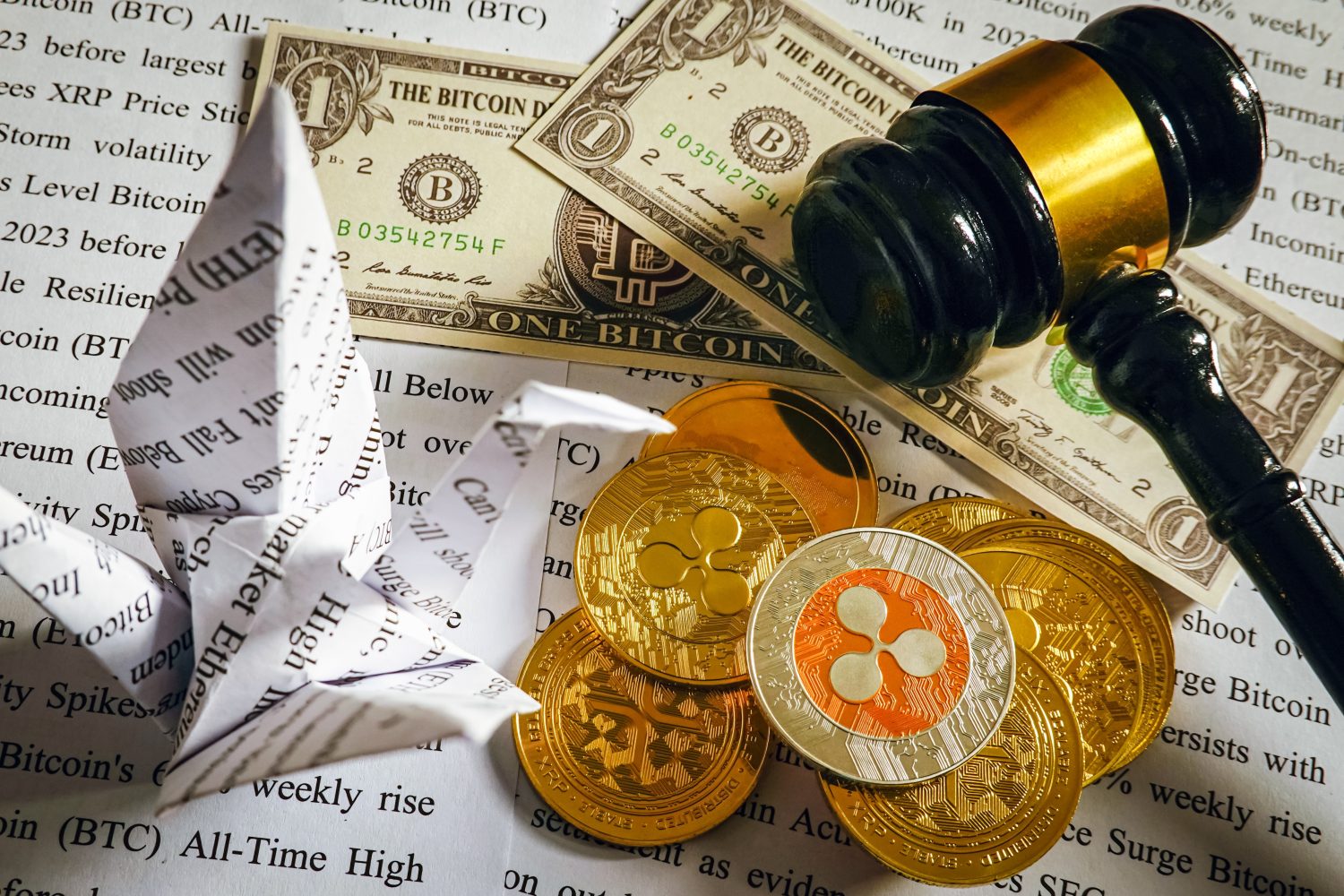
There is one thing that could change all of this for XRP, and it is moving through the U.S. Senate right now. The CLARITY Act is the crypto market structure bill that would write XRP’s status as a commodity into federal law, turning the SEC and CFTC’s March ruling into something permanent that a future administration couldn’t undo.
If it passes, the big institutions still holding back would finally have the legal cover they need to buy XRP in size. That is the fresh reason to own it that the coin has been missing all year. But the problem is that the bill is stuck in the Senate.
Lawmakers have spent months fighting over the fine print, mainly a set of ethics rules governing how much crypto politicians and their families can hold while voting on crypto law. The Senate is expected to take the bill up this week, but it has to pass before lawmakers leave for their August 7 recess. If it misses that window, the fall election campaign takes over the calendar, and the whole thing could be delayed into next year.
Since XRP fell from its high, it has been trapped under a death cross—a bearish pattern where the short-term trend line crosses below the long-term one and starts acting as a ceiling on the price. Every attempt to rally has stalled around $1.18 to $1.20 and turned back. Without a catalyst to force a break, XRP has no reason to climb, and so far nothing has given it one.
What Would Turn XRP Around
XRP isn’t underperforming because anything is wrong with it. It is underperforming because the reason to own it went stale, in a market that only pays for a fresh one. Every time XRP has had a new catalyst, from the January bounce to the March commodity ruling, it moved. Each time that catalyst aged, it stalled. So what turns XRP around is simple enough to name: it needs a new one.
The CLARITY Act could clear the Senate and hand XRP its own catalyst again, giving institutions the reason they have been waiting to buy. Or the broader market could rotate out of Bitcoin and Ethereum into a full altcoin season that lifts the whole group, XRP included. Until one of those happens, XRP will most likely keep drifting while the coins with something to offer keep taking in the money.
Contact [email protected] for any questions or corrections.
Sam Daodu is a crypto analyst who's spent nearly a decade making blockchain understandable—no easy task when most whitepapers read like fever dreams. He writes for 24/7 Wall St., covering Bitcoin, altcoins, and crypto market analysis for investors. Before crypto, he was a tech writer (back when explaining "the cloud" was peak innovation). Since 2018, he's written for CoinTelegraph, Yahoo Finance, The Block, Cryptonews, Zypto, Rain, and more—basically anywhere people want crypto news without the headache. Sam runs MacLabs Marketing, a content agency for crypto brands tired of sounding like AI wrote their website. He also publishes free crypto education on his site for Web3 enthusiasts who think "gas fees" is a typo. When he's not writing or staring at charts, Sam's either: - Watching anime (currently convinced One Piece has better tokenomics than most altcoins) - At the gym sculpting himself into a Greek god - Listening to the music your mum warned you only bad boys listen to Connect: LinkedIn | Email | MacLabs Marketing