Congress Is Taking the CLARITY Act to New York: What It Changes for Bitcoin, Ethereum, and XRP
This July, lawmakers are taking the CLARITY Act to New York for a hearing, and it’s being billed like the day U.S. crypto rules finally arrive. The CLARITY Act is the big market-structure bill, the one meant to settle which…

This post may contain links from our sponsors and affiliates, and Flywheel Publishing may receive compensation for actions taken through them.

This July, lawmakers are taking the CLARITY Act to New York for a hearing, and it’s being billed like the day U.S. crypto rules finally arrive. The CLARITY Act is the big market-structure bill, the one meant to settle which regulator is in charge of crypto and whether a token counts as a commodity or a security.
But for three of the biggest names in crypto, that question was settled months ago. Bitcoin (CRYPTO:BTC), Ethereum (CRYPTO:ETH), and XRP (CRYPTO:XRP) already count as digital commodities, and Congress has even done part of the work. For these three cryptos, the New York hearing isn’t where anything gets decided, but a stop along the way while the bill waits on the Senate.
So, what would the CLARITY Act actually change for the three of them?
Where the CLARITY Act Stands Right Now

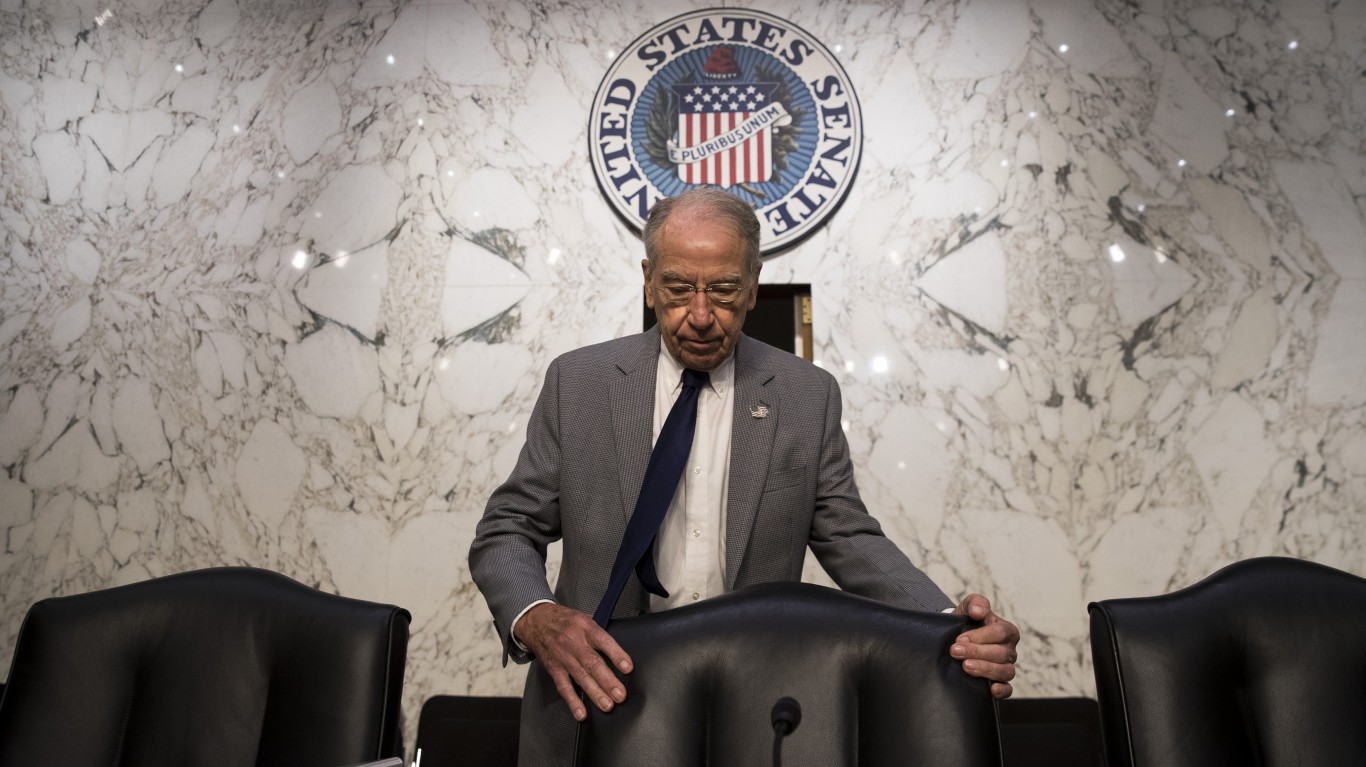
The New York hearing on July 17 is the one drawing attention. It’s a field hearing run by the House subcommittee on digital assets, and its title reveals everything: “Building the Future of Finance: How the CLARITY Act Unlocks Innovation.” It’s built to argue for the bill and take testimony from the industry, not to vote on anything.
The hearing also won’t change much because the House already passed the CLARITY Act back in July 2025, by a wide 294-134 margin with dozens of Democrats on board. New York is mostly a stage to keep up the pressure, while the decision that counts plays out in the Senate.
In the Senate, the bill cleared the Banking Committee on a 15-9 vote and has been parked on the calendar since June 1, ready for a floor vote that hasn’t been scheduled, and that’s the holdup. To pass, it needs 60 votes. Republicans hold around 53 seats, so even with every Republican on board, the bill is about seven Democratic votes short, and only two have publicly supported it so far.
The timeline that matters is the August recess, and if the bill slips past that, the fight runs into the midterms and could stall into 2027. Prediction markets currently put its chances of passing in 2026 at somewhere around 60% to 70%, so the odds lean toward passage, but they hinge entirely on the Senate finding those last votes in time.
Bitcoin, Ethereum, and XRP Are Already Commodities

None of that Senate back-and-forth changes what Bitcoin, Ethereum, and XRP already are. Back on March 17, the SEC and the CFTC put out a joint interpretation that named 16 crypto assets as digital commodities, and all three were on the list. So, they’re now commodities in the government’s eyes, not securities, which puts them in the same legal bucket as gold or oil.
That single decision did a lot of the heavy lifting. It handed day-to-day oversight to the CFTC, lifted the cloud of being treated as an unregistered security, and cleared the way for the spot ETFs that now trade on all three coins.
But that ruling is only an interpretation, not a law. A future SEC and CFTC could read the rules differently and walk it back, which is why the agencies themselves said only Congress can make the framework permanent. The classification holds today, but it’s written in pencil, and a future administration could reach for the eraser.
What the CLARITY Act Would Unlock for Each Coin

The CLARITY Act would take the classification and write it into federal law that a future administration can’t undo on its own. Though the value of that permanence looks a little different for each of the three coins.
Bitcoin
Bitcoin never had a security problem to begin with. Regulators have treated it as a commodity for years. It’s had CFTC-regulated futures since 2017, and a spot Bitcoin ETF has been trading since early 2024.
So, the CLARITY Act isn’t about settling what Bitcoin is. It adds a permanent rulebook for everything around Bitcoin, including the exchanges, the custody arrangements, and the products built on top, which is the legal certainty big institutions want before they put serious money in. Bitcoin’s identity was never the question, so the bill mostly firms up the market around it.
Ethereum
For years Ethereum lived in a gray zone, and the puzzling question was about staking—the process where holders lock up ETH to help run the network and earn rewards for it. Under the previous SEC, ETF issuers were told to strip staking out of their filings.
However, the March interpretation reversed that and treated staking rewards as non-securities, which opened the door to staking ETFs that pass that yield to investors. BlackRock and Grayscale already run them, and Morgan Stanley has filed for one this June. So, the CLARITY Act would lock that in. For Ethereum, the prize is staking certainty, and the yield those products can pay, currently around 3% a year, which is something a plain Bitcoin fund can’t offer.
XRP
The SEC sued Ripple back in December 2020, arguing XRP was an unregistered security. The fight dragged on for nearly five years before it finally wrapped up in 2025. A 2023 court ruling had already found that XRP isn’t a security when it trades on the open market, and the March interpretation backed that up.
The CLARITY Act would close the question for good, since a law can’t be undone by the next SEC chair the way an agency call can. Still, XRP’s demand depends on whether Ripple’s payment business actually uses the token, and that usage moves XRP’s long-term price more than any label does.
What It Means for Crypto Holders
For Bitcoin, Ethereum, and XRP holders, the CLARITY Act changes less in the short term than the New York hearing suggests. The big win is already banked: these coins are treated as commodities, the ETFs are trading, and the security question is gone. The bill mainly adds permanence. It would lock that classification into federal law, where a future SEC can’t simply reverse it. That matters for the long-term health of these assets, even if it isn’t a fresh reason for the price to jump.
So if you’re tracking this, keep your eyes on the Senate rather than the New York hearing. The question that matters is whether senators can schedule a floor vote and find the votes before their summer break, because that’s the step that would make the current setup permanent. If they do, the long-term picture for all three coins gets a lot more solid. If they don’t, not much changes, and Bitcoin, Ethereum, and XRP stay commodities on paper, still waiting on the law that makes it stick.
Contact [email protected] for any questions or corrections.
Sam Daodu is a crypto analyst who's spent nearly a decade making blockchain understandable—no easy task when most whitepapers read like fever dreams. He writes for 24/7 Wall St., covering Bitcoin, altcoins, and crypto market analysis for investors. Before crypto, he was a tech writer (back when explaining "the cloud" was peak innovation). Since 2018, he's written for CoinTelegraph, Yahoo Finance, The Block, Cryptonews, Zypto, Rain, and more—basically anywhere people want crypto news without the headache. Sam runs MacLabs Marketing, a content agency for crypto brands tired of sounding like AI wrote their website. He also publishes free crypto education on his site for Web3 enthusiasts who think "gas fees" is a typo. When he's not writing or staring at charts, Sam's either: - Watching anime (currently convinced One Piece has better tokenomics than most altcoins) - At the gym sculpting himself into a Greek god - Listening to the music your mum warned you only bad boys listen to Connect: LinkedIn | Email | MacLabs Marketing