Will XRP Fall Below $1 as the CLARITY Act Stalls in the Senate?
XRP has shed 40% this year and now clings to a dollar-level floor that one stalled Senate bill could either rescue or abandon entirely. The clock is running out faster than most investors realize.

This post may contain links from our sponsors and affiliates, and Flywheel Publishing may receive compensation for actions taken through them.

XRP (CRYPTO:XRP) has fallen about 40% this year, caught in a crypto selloff that has dragged on for months. Much of the pressure now comes from the Iran war, which has investors dumping crypto for safer assets. The XRP price is currently clinging to $1 and is barely holding above it.
One thing could still turn the downturn around, for crypto broadly and XRP especially, and that’s the CLARITY Act—the market structure bill that would settle how tokens like XRP are regulated in the U.S. The bill is stuck in the Senate with an August deadline closing in, and there isn’t much holding XRP up if the $1 support gives way.
Why XRP Is Stuck at $1

XRP started the year up near $2.40 and slid through the first quarter, dropping to $1.27 when the Iran war broke out in late February. The decline continued through the second quarter, and after another 20% drop in June, XRP now trades near $1.08, down about 40% on the year.
XRP’s lackluster price performance comes at a time when Ripple has been winning. The company won a license to operate across Europe and keeps signing new banking and payment partners, and spot ETFs have pulled in about $1.48 billion in steady demand. But a market-wide downturn has drowned all of it out.
Two forces are driving that downturn, and they’re weighing on the whole market, XRP included. The Federal Reserve is now expected to raise interest rates instead of cutting them, with inflation back at a three-year high, which pulls money out of crypto and into safer assets that pay a yield. The Iran war piles on, with each escalation driving up oil prices, stoking inflation, and sending nervous investors toward safer ground.
Bitcoin has dropped toward $60,000 and dragged the whole market down with it. Altcoins like XRP tend to fall when Bitcoin is dropping, and that adds more insult to injury, contributing to why XRP is now pinned just above $1.
The Bill That Could Save XRP Is Stalling in the Senate
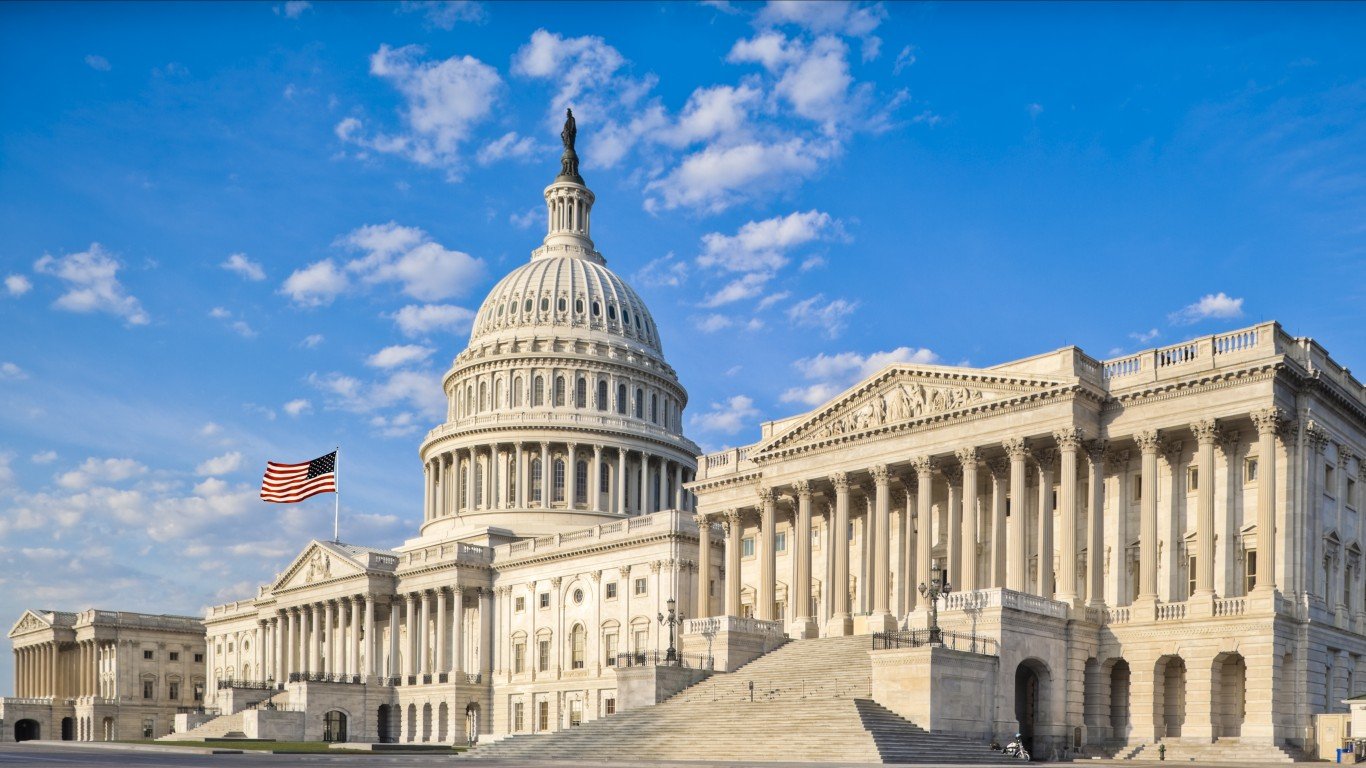
The CLARITY Act would lock XRP’s status as a commodity into U.S. law for good. XRP is already treated as a commodity through a court ruling, but a ruling can be undone by a future administration. A bank won’t build a business on an asset whose legal footing could flip in a few years, so the custody deals and partnerships Ripple keeps signing only turn into steady demand for the token once that status is permanent. The bill is what would make it permanent.
The trouble is that the bill is stuck, and passing it takes 60 votes in the Senate. Republicans hold 53, but two of them, Josh Hawley and Rand Paul, are expected to vote no, which drops the number closer to 51. That means the bill needs seven to nine Democrats to cross over, and right now only two have.
What’s keeping the rest away is three separate fights. The first is President Trump’s own crypto money. A disclosure this month showed he earned roughly $1.4 billion from crypto in 2025, and Democrats want language barring officials from cashing in on the assets they regulate, which the White House won’t accept when the rule is aimed at the president.
The second is a section that shields DeFi developers from money-laundering rules, which prosecutors say would cripple their ability to chase criminals using crypto. The third is a money brawl between Coinbase and the big banks over stablecoin rewards, with each side fighting to protect billions in revenue. Senate staff have at least merged the two committee versions into one draft, so the paperwork is moving, but until those three fights are settled, the votes aren’t there.
Even a win in the Senate might not settle things properly. The agency meant to police crypto under the new law, the CFTC, has just one commissioner and four empty seats. Some Democrats want those filled before the rules can take effect, since a regulator that thin would struggle to write rules that hold up in court. So the settled framework XRP is waiting on could still be a way off, even on a good day in the Senate.
Time Is Running Out for the CLARITY Act

The Senate is back at work this week, but the crypto bill isn’t first in line. Leadership has put the must-pass defense bill ahead of it, and a floor vote isn’t expected until later in July, if the final text and the votes come together in time.
The Senate leaves for its August recess around August 7, which gives the bill roughly 20 working days to get everything done. If it doesn’t pass before then, the coming midterm elections take over the agenda, and senators tend to avoid votes on complicated financial bills that opponents can turn into attack ads. A delay past August could stretch from weeks into years, pushing crypto rules to 2027 or beyond. Senator Cynthia Lummis, one of the bill’s biggest backers, has warned it could be shelved as far as 2030.
On Polymarket, the odds of the bill passing this year have fallen to around 40%, down from the mid-70s a month ago, and they keep swinging with every twist in the talks. For a bill its own supporters call the closest crypto has ever come to federal law, that is a lot of confidence to lose in a few weeks, with the August recess only weeks away and the three fights still unsettled.
Will XRP Fall Below $1?
The CLARITY Act is the one thing big enough to turn the market around, and right now it’s stuck in the Senate. XRP needs that bill more than ever, because the supports that held it up all year are giving way. XRP ETF funds just posted their first weekly outflow in nine weeks, about $7 million, and the big holders who bought through the drop have gone quiet.
That leaves the bill as close to the only thing that could pull XRP back up. Bitcoin holding above $60,000 is also vital, because if it drops below that level, it could drag the whole market lower and pull XRP under $1. So, XRP’s $1 support only holds if the bill passes in time or Bitcoin steadies, and with the clock running down, neither looks likely right now.
Contact [email protected] for any questions or corrections.
Sam Daodu is a crypto analyst and the editor of 24/7 Wall St.'s Crypto Desk, where he covers Bitcoin, XRP, Ethereum, Solana and the altcoins investors search for most. His work focuses on price levels, spot ETF flows, on-chain data and the regulatory decisions that move crypto markets, written so a first-time buyer and a seasoned trader can both use it.
Sam has written about crypto professionally since 2019 and has published more than 2,000 articles. Before joining 24/7 Wall St., he wrote for crypto media outlets and Web3 companies and ghostwrote for crypto founders and token launches. His analysis is syndicated on Yahoo Finance, MSN and AOL and has been cited by other crypto news sites. He also founded MacLabs Marketing, a content and personal branding agency for crypto founders and executives.
When he isn't reading charts, Sam is usually at the gym or watching One Piece, a series he maintains has better tokenomics than most altcoins.