Strive Added 1,375 Bitcoin While Strategy Added None. Their Preferred Shares Explain Why.
Both Strive and Strategy use the same floating-rate preferred stock structure to fund their Bitcoin ambitions, yet one just bought 1,375 coins while the other spent $176 million buying back its own shares. The reason comes down to where each…

This post may contain links from our sponsors and affiliates, and Flywheel Publishing may receive compensation for actions taken through them.

Strive (NASDAQ:ASST) bought 1,375 Bitcoin (CRYPTO:BTC) between August 31 and September 4, 2026, paying an average of $79,281 per coin and about $109 million in total, lifting its Bitcoin holdings to 24,531 BTC. Strategy (NASDAQ:MSTR | MSTR Price Prediction), meanwhile, bought no Bitcoin during the same period and spent $176.3 million buying back its own preferred stock.
Strive’s SATA trades around its $100 par value, giving it room to raise more money and buy Bitcoin. Strategy’s STRC trades near $98, making buybacks more attractive than new issuance. Both companies use variable-rate perpetual preferred stock to fund their Bitcoin strategies, which is equity with no maturity date, a floating dividend, and a claim that ranks above common stock. So why is the same funding model pushing the two companies in opposite directions?
Strive Keeps Buying Because SATA Still Sells at $100

Strive’s SATA pays cash dividends every business day starting June 16, 2026, at an annualized rate of 13.00%, which CEO Matt Cole describes as the first listed U.S. security to make daily payments. The stated face value of the shares issued, or notional outstanding, reached $999 million.
Cole said 70% of the capital Strive raised last week came from SATA, with the remaining 30% coming from common stock sales. That mix shows how the company is funding its Bitcoin purchases, with preferred stock providing most of the capital while common stock sales account for the smaller share of the financing.
SATA does not require anyone to use Bitcoin as a settlement asset, but Strive must keep paying its 13% annualized dividend for as long as the preferred stock remains outstanding. With $999 million of SATA already issued, that dividend obligation is becoming a significant part of the financing structure that allows Strive to keep raising money for Bitcoin.
Strategy Stopped Buying Because STRC Fell Below $100
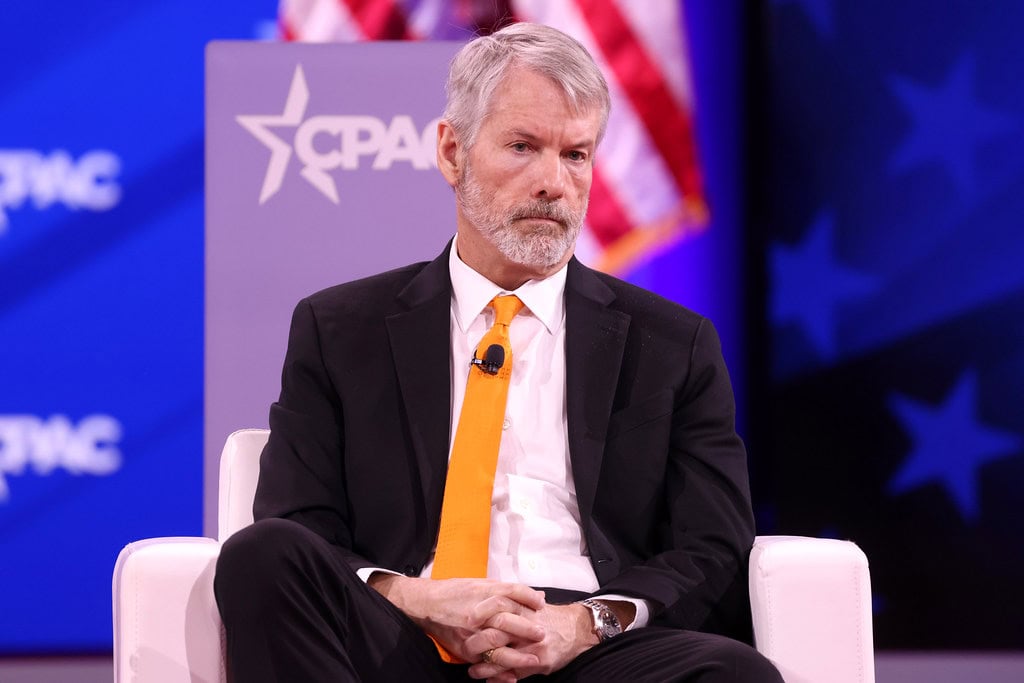
Strategy’s board has authorized up to $2.0 billion for its Digital Credit Securities Repurchase Program, allowing the company to buy STRC when it trades below its $100 par value. The authorization was doubled from $1.0 billion on September 8, 2026, after Strategy had already repurchased $25.0 million of STRC in late July at an average 13.47% discount to par.
The buybacks have since picked up, with Strategy purchasing 1,810,885 STRC shares for $176.3 million between August 31 and September 7, or roughly $97 per share. After that purchase, about $1.19 billion remained available under the expanded program.
CEO Phong Le explained the logic behind this that “Our objective is for STRC to trade over time at $99 to $100. If STRC trades below $100, we intend to repurchase STRC shares in a regular and disciplined manner. These repurchases are an attractive use of capital that reduces our future preferred dividend requirements at a discount.”
If Strategy can retire STRC below its $100 par value, it reduces the amount of preferred stock outstanding and the dividends it will have to pay on those shares. At the same time, buying back STRC below par makes issuing new shares less attractive, which helps explain why Strategy spent $176.3 million on buybacks and doubled its repurchase authorization instead of raising fresh capital for another Bitcoin purchase.
Strategy Holds 845,050 Bitcoin and Strive Holds 24,531

Strategy grew its Bitcoin holdings to about 846,000 BTC during the second quarter of 2026, with a $63.9 billion cost basis against a $49.7 billion carrying value as of June 30, 2026. Bitcoin was trading near $58,700 at the quarter-end, well below the roughly $78,800 price it has since recovered to. Strategy also paid $400.7 million in preferred dividends during Q2, while its S&P B- credit rating remains firmly in speculative-grade territory.
By its September 8 weekly disclosure, Strategy held 845,050 BTC acquired for $63.73 billion, with the slight reduction from the Q2 figure reflecting small Bitcoin sales used to fund preferred dividends and buybacks.
Strive is much smaller and carries no debt, but it is paying a higher coupon to fund its Bitcoin strategy. The company went public in September 2025 through its merger with Asset Entities and later added roughly 5,048 BTC through its acquisition of Semler Scientific. With 24,531 BTC now in its treasury, Strive ranks fifth among listed corporate Bitcoin holders, behind Strategy, Twenty One Capital, Metaplanet and MARA Holdings.
The two companies also look different when you compare their Bitcoin holdings with their average acquisition costs. Strive has made 31 purchases at an average of about $91,467 per coin, compared with Bitcoin at $78,800, leaving its overall position below cost. Strategy, by comparison, has an average cost of roughly $75,412 per coin based on its $63.73 billion cost basis across 845,050 BTC as of September 7. With Bitcoin around $78,800, Strategy’s holdings are therefore above its average purchase price.
Strive Has Outrun Strategy on Every Window but One
The two stocks have moved very differently over the past year, even though both are closely tied to Bitcoin’s performance. The table below shows how that performance gap has developed across different time frames.
| Period | Strive (ASST) | Strategy (MSTR) |
| 1 day | -2.21% | -1.72% |
| 5 days | +5.48% | -2.32% |
| 1 month | +116.82% | +34.90% |
| 6 months | +183.76% | -6.74% |
| Year to date | +74.94% | -13.21% |
| 1 year | -75.41% | -59.37% |
Strive has delivered the stronger recent run, gaining 116.82% over the past month and 183.76% over six months, while Strategy gained 34.90% over one month and remains down 6.74% over six months. Both are still deeply below their levels from a year ago, with Strive down 75.41% and Strategy down 59.37%.
Bitcoin has gained 21.88% over the past 30 days but remains down 29.48% over 12 months. That gap is important because neither stock has simply followed Bitcoin, with Strive’s recent surge far exceeding the cryptocurrency’s gain while Strategy’s shares have recovered more modestly.
Does This Move Bitcoin, or Just These Two Stocks?
Strive has a funding channel that is still working, allowing it to raise capital through SATA and keep buying Bitcoin without relying as heavily on common-stock sales. Strategy is doing the opposite, using cash to retire STRC below par and reduce its future preferred dividend obligations instead of issuing more preferred stock to buy Bitcoin. Both moves can benefit shareholders, but they leave the two companies with very different funding positions.
Strive needs to keep issuing SATA at its 13% coupon, Strategy needs to decide when to resume Bitcoin purchases, STRC needs to move back toward its $100 par value, and SATA needs to keep trading around par as its notional value moves past $1 billion.
If SATA keeps helping Strive raise money while STRC stays below $100, the gap between Strive’s Bitcoin buying and Strategy’s pause could widen to more than a week. It could show that the two companies are taking very different approaches to buying and funding Bitcoin.
Contact [email protected] for any questions or corrections.
Sam Daodu is a crypto analyst and the editor of 24/7 Wall St.'s Crypto Desk, where he covers Bitcoin, XRP, Ethereum, Solana and the altcoins investors search for most. His work focuses on price levels, spot ETF flows, on-chain data and the regulatory decisions that move crypto markets, written so a first-time buyer and a seasoned trader can both use it.
Sam has written about crypto professionally since 2019 and has published more than 2,000 articles. Before joining 24/7 Wall St., he wrote for crypto media outlets and Web3 companies and ghostwrote for crypto founders and token launches. His analysis is syndicated on Yahoo Finance, MSN and AOL and has been cited by other crypto news sites. He also founded MacLabs Marketing, a content and personal branding agency for crypto founders and executives.
When he isn't reading charts, Sam is usually at the gym or watching One Piece, a series he maintains has better tokenomics than most altcoins.