The CLARITY Act Could Face Another Hurdle Over an Ethics Dispute. Why XRP Could Be Hit Harder Than Bitcoin
Senator Tillis just issued a warning that could derail the CLARITY Act before September 15, and if negotiations collapse, XRP holders face a very different kind of fallout than Bitcoin investors.

This post may contain links from our sponsors and affiliates, and Flywheel Publishing may receive compensation for actions taken through them.

XRP (CRYPTO:XRP) trades around $1.42 today, while Bitcoin (CRYPTO:BTC) trades around $78,600. Senator Thom Tillis, a North Carolina Republican, said the Senate crypto market structure bill will fail if the White House doesn’t try to bridge a gap over ethics provisions. Other Republican senators are now warning that the bill could run out of time around the week of September 14.
The key date is September 15, when the Senate is scheduled to vote on cloture. The bill needs 60 votes to move forward to a full debate, meaning Republicans will need Democratic support. With negotiations still stuck on the ethics language, that 60-vote threshold suddenly looks much harder to reach. So what changed, and why would XRP carry more of this risk than Bitcoin?
Why This Hurdle Is Different From the Last Few
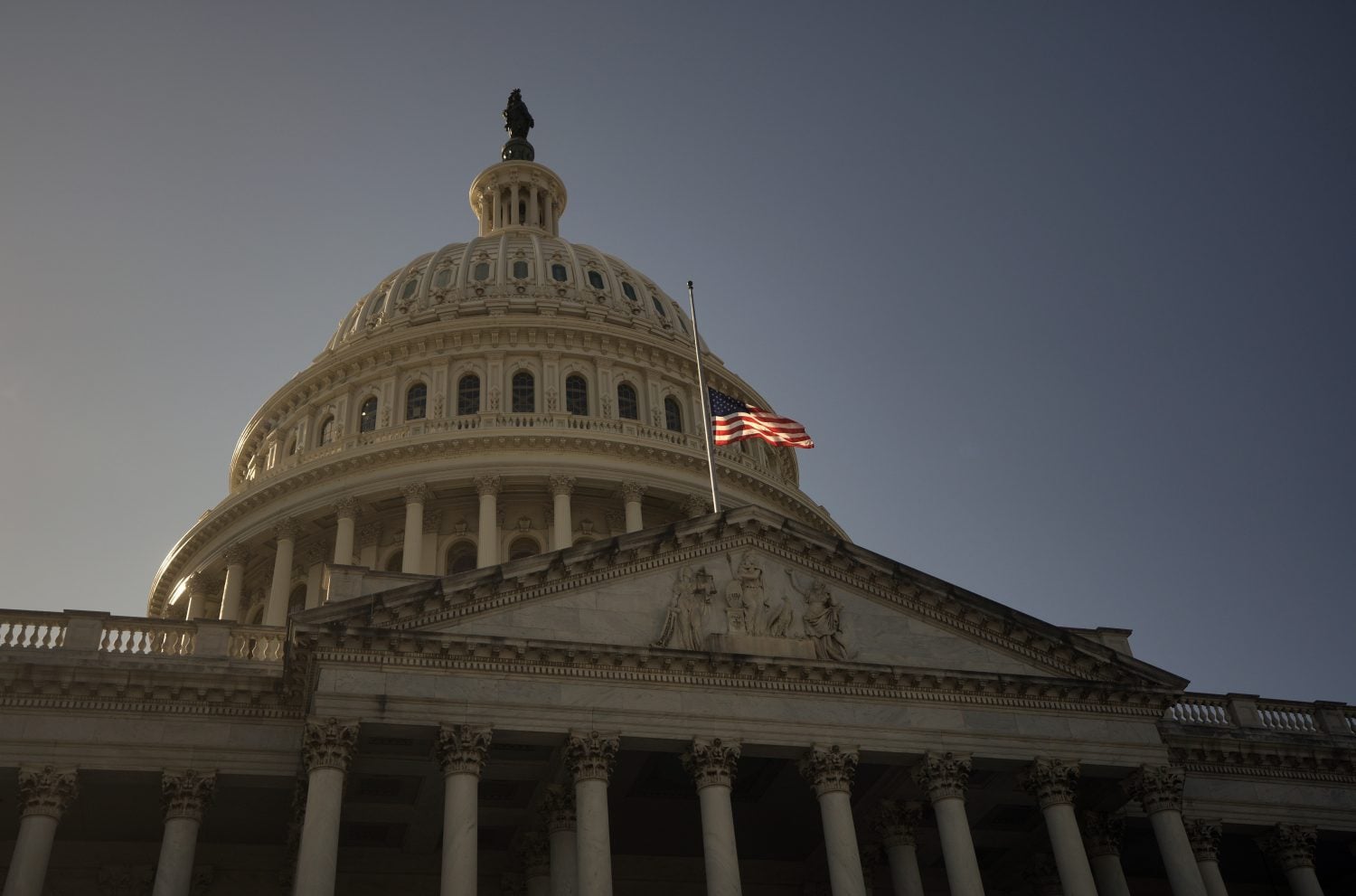
The CLARITY Act is market structure legislation designed to divide crypto oversight between the SEC and CFTC, while establishing clearer rules for exchanges, brokers and token issuers.
Since January, the bill has faced one hurdle after another, from finding floor time and navigating congressional recesses to counting votes and maintaining enough support. Each delay was frustrating, but none necessarily threatened the bill itself because lawmakers could always look for another opening on the calendar. This time, the problem is different because the disagreement is over what the bill contains, and lawmakers can’t solve that simply by finding another week to vote.
Tillis has now put the ball in the White House’s court, saying the administration needs to help bridge the remaining gap over the ethics provisions. However, a warning that the bill could fail is not the same as the bill failing. The bigger concern is what happens if September’s window closes without a deal. A comprehensive crypto framework could then move from something lawmakers might resolve in the coming months to an issue that takes years to revisit.
The market is already pricing in that possibility, with Polymarket now putting the odds of the bill becoming law in 2026 at roughly 16%, down sharply from over 80% in February. For XRP holders, that collapse in expectations could matter as much as the final Senate vote.
Why XRP Carries More Exposure Than Bitcoin

XRP’s investment case leans more directly on U.S. regulatory treatment than Bitcoin’s does. The SEC and CFTC classified XRP as a commodity in March 2026, removing much of the regulatory uncertainty that followed the coin through the Ripple litigation. But a future administration can still change an agency ruling. The CLARITY Act would turn that status into law and provide the market structure rules XRP needs as institutional adoption expands.
Bitcoin has other catalysts that ensure that the coin doesn’t depend on regulatory developments like XRP. The biggest is its established institutional channel through U.S. spot exchange-traded funds, which give investors exposure to Bitcoin without requiring the CLARITY Act to pass. Bitcoin spot ETFs took in $3.8 billion over the three weeks to September 4, showing that institutional demand can continue even as lawmakers struggle to reach a deal. Bitcoin also has settled commodity status and growing corporate treasury adoption working in its favor.
That does not mean Bitcoin would simply shrug off a failed market structure bill. The setback would hit the broader crypto market, where correlations among large-cap tokens remain high, and Bitcoin itself has already failed twice to hold above $82,000 since May. If investors sell risk across the sector, XRP could fall alongside Bitcoin rather than underperform it.
XRP Leads BTC in the Short Term, But Trails Long Term

Market data across several windows show that XRP leads short-term performance but lags Bitcoin over the long term. Over the past day, XRP gained roughly 1% versus Bitcoin’s 0.5%, while the difference grows over the week, with XRP up 5.83% compared with Bitcoin’s 1.83%. Over the past month, XRP has climbed roughly 39%, almost twice Bitcoin’s 22%.
Despite this bullish performance, XRP is still down 22% year to date, compared with Bitcoin’s 10% decline, while its 12-month loss sits at about 52% versus Bitcoin’s 30%. XRP is gaining faster now, but it also has a much bigger hole to climb out of.
That leaves XRP with more room to recover if the regulatory catalyst arrives. A market structure bill moving forward could give the token another leg higher, especially after such a deep drawdown. But if the bill falls apart, XRP has more downside to absorb than Bitcoin, making the regulatory outcome especially important.
Can XRP Outperform Bitcoin If the CLARITY Act Fails?
XRP can still outperform Bitcoin if CLARITY fails, but it would have to prove that its recent strength comes from more than expectations around the bill. XRP has already gained much faster than Bitcoin over the past month, yet it remains further below its recent highs and deeper in the red on longer time frames. That gives XRP more room to rebound, but it also means the token has more to lose if the regulatory narrative breaks down.
A failed vote would test that strength, with XRP breaking below $1.35 and Bitcoin potentially retesting support between $76,000 and $77,000. This would suggest that investors are pulling the regulatory premium from XRP while broader crypto markets also come under pressure, rather than simply reducing exposure to XRP alone.
If XRP stays firm while Bitcoin weakens, it would instead show that buyers see enough strength beyond CLARITY to keep the rally going, making Bitcoin the key benchmark for judging whether XRP can maintain its recent lead or if the rally was driven mainly by expectations around the bill.
Contact [email protected] for any questions or corrections.
Sam Daodu is a crypto analyst who's spent nearly a decade making blockchain understandable—no easy task when most whitepapers read like fever dreams. He writes for 24/7 Wall St., covering Bitcoin, altcoins, and crypto market analysis for investors. Before crypto, he was a tech writer (back when explaining "the cloud" was peak innovation). Since 2018, he's written for CoinTelegraph, Yahoo Finance, The Block, Cryptonews, Zypto, Rain, and more—basically anywhere people want crypto news without the headache. Sam runs MacLabs Marketing, a content agency for crypto brands tired of sounding like AI wrote their website. He also publishes free crypto education on his site for Web3 enthusiasts who think "gas fees" is a typo. When he's not writing or staring at charts, Sam's either: - Watching anime (currently convinced One Piece has better tokenomics than most altcoins) - At the gym sculpting himself into a Greek god - Listening to the music your mum warned you only bad boys listen to Connect: LinkedIn | Email | MacLabs Marketing