What Happens to Bitcoin if Democrats Win the House and Senate in November?
Senate Democrats just blocked the crypto bill, yet Bitcoin surged 11% the following week. Before assuming a Democratic sweep spells doom or glory for Bitcoin holders, consider what actually moved the price in 2024 and why 2026 looks nothing like…

This post may contain links from our sponsors and affiliates, and Flywheel Publishing may receive compensation for actions taken through them.

As of September 21, 2026, Bitcoin (CRYPTO:BTC) is trading at $84,702, reflecting a 10% price gain over the past 30 days, but down 3% for the year since closing at $87,498 on December 31, 2025. Six weeks ahead of the November 3 midterms, traders on Polymarket are pricing Democratic control of the House at 90.5% and the Senate at 60.5%. This expected outcome means a sweep is not a surprise waiting to happen.
The main question among Bitcoin holders is whether a Democratic sweep will affect the Bitcoin price similarly to the November 2024 election, when Bitcoin surpassed $100,000 just two months later. However, recent votes show how Senate Democrats view crypto, and in 2026, Bitcoin has largely ignored Congress’s actions. So, what could a Democratic majority mean for Bitcoin’s price, and what has already been accounted for?
Every Senate Democrat Voted Against the Crypto Bill, Yet Bitcoin Climbed 11%\

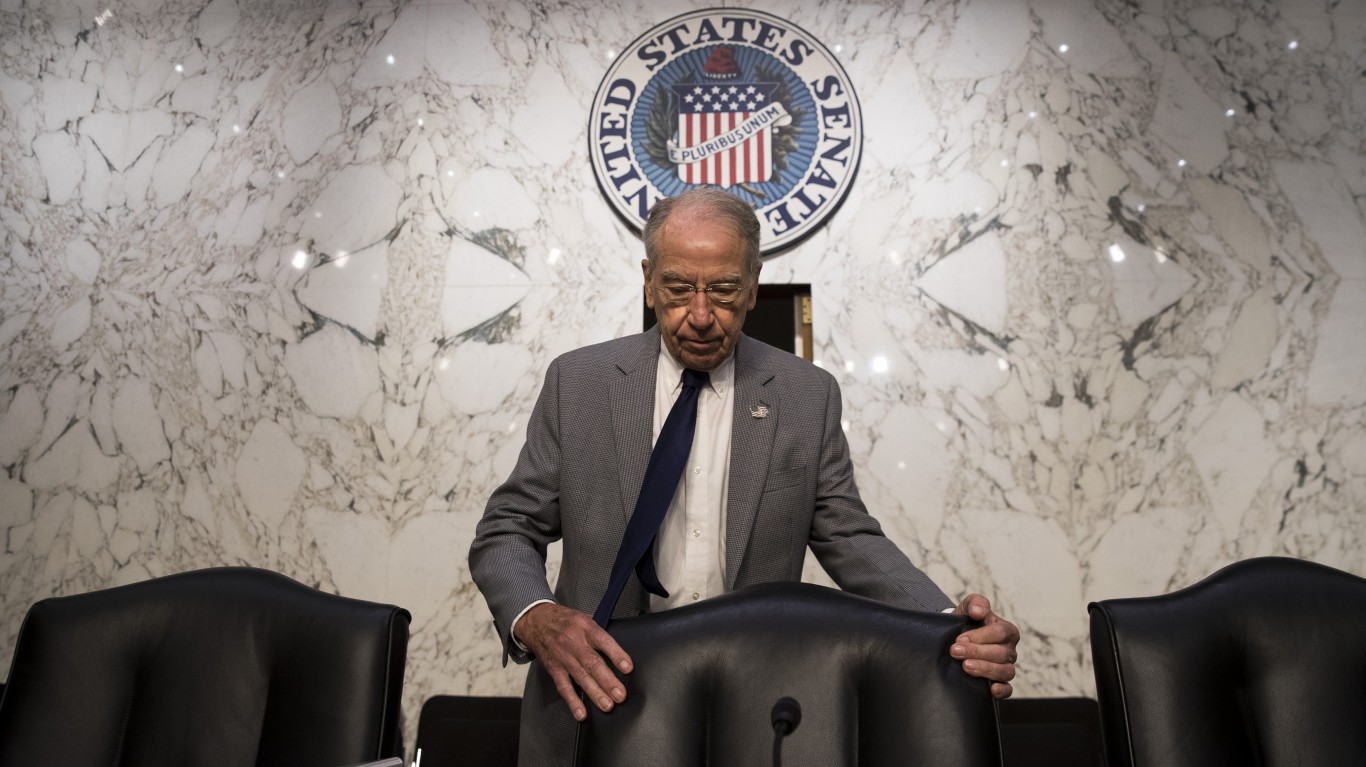
On September 15, the Senate voted 49 to 50 against opening debate on the CLARITY Act, a key bill that would determine whether the SEC or CFTC oversees different tokens. It needed 60 votes to proceed. Every Senate Democrat, along with four Republicans, voted against it after discussions about ethics rules fell through.
This vote clearly demonstrates how a Democratic-controlled Senate may handle crypto laws. Elizabeth Warren, who argued the bill favored the president’s crypto interests, is in line to chair the Banking Committee if Democrats take control. Therefore, a larger Democratic majority is less likely to pass the industry’s preferred bill. Instead, it might lead to stricter regulations or delays in decisions by relevant agencies.
Interestingly, despite this setback for the crypto bill, Bitcoin’s price rose. It closed at $76,145 on September 16, just one day after the vote and the day the Federal Reserve raised interest rates for the first time since 2023. By September 21, Bitcoin surged to $84,702, marking an 11% increase in just five days. This suggests Bitcoin’s price may not depend solely on legislative developments.
Congress Influences Three Key Areas for Bitcoin, but Regulators Drive Change

Congress controls three important factors that impact Bitcoin holders: the tax treatment of digital assets, which agency regulates which tokens, and the rules for stablecoins used in transactions. A Democratic majority could revisit stablecoin regulations or propose stricter market rules, while tax reform often follows its own path and usually does not target specific cryptocurrencies.
Notably, recent movements in Bitcoin’s price have come from regulatory agencies, not from new laws. For example, the SEC approved spot Bitcoin ETFs in January 2024, banking regulators allowed banks to hold cryptocurrencies, and the SEC dropped many of its crypto lawsuits in 2025. Just three days after the Senate vote, the CFTC sent new crypto regulations to the White House, while the SEC continues to accept public comments on its framework until October 20.
In practical terms, what would a Democratic sweep change for Bitcoin? The effects would be limited. It would mainly impact committee leadership and reduce the chances of passing a market-structure bill that aligns with the industry’s goals. However, major drivers like ETF approvals, custody regulations, and how agencies enforce rules will not be affected by which party controls Congress.
The 2024 Rally Had Three Drivers, and the Election Was Just One

The belief that a Democratic sweep will boost Bitcoin prices largely relies on a single memory. Bitcoin crossed $100,000 in January 2025—two months after the November 2024 election. Many holders linked this increase to the election outcome. However, the rally had three key drivers, and the election was just one factor.
The introduction of spot Bitcoin ETFs attracted institutional investment, the April 2024 halving reduced Bitcoin supply, and Donald Trump’s campaign focused on a strategic Bitcoin reserve. The election was the least significant of these factors, arriving after the first two had already begun pushing prices up throughout the year.
None of these drivers are present in 2026. The ETFs are already available and cannot be launched again, the next halving will not happen until 2028, and the expected market-structure bill, similar to the previous support for Bitcoin, failed to pass after the September 15 vote. Therefore, trying to replicate 2024’s success by focusing solely on this election overlooks the essential elements that truly drove the price surge.
What Happens to the Bitcoin Price if Democrats Win Both Chambers?
Bitcoin dropped to $57,718 on July 1 but then climbed back to $84,702 by September 21, all under the same Congress. It even gained 11% in the week after Senate Democrats blocked the crypto bill. This year, Bitcoin’s price has been more influenced by the Fed’s interest rates, which are between 3.75% and 4.00%, and the 10-year Treasury yield, which was 4.94% on September 17, than by any legislative vote.
A Democratic sweep would only delay creating the industry’s rulebook. A Senate led by Warren may push for stricter regulations or let agencies take control, but Bitcoin will continue to trade without clear rules either way. If no crypto bill passes by January 15, 2027, the election didn’t have a major influence. Likewise, if Bitcoin hasn’t exceeded its all-time high of $126,000 by May 2027, the primary factors to watch will be the Fed’s actions and ETF inflows.
Contact [email protected] for any questions or corrections.
Sam Daodu is a crypto analyst who's spent nearly a decade making blockchain understandable—no easy task when most whitepapers read like fever dreams. He writes for 24/7 Wall St., covering Bitcoin, altcoins, and crypto market analysis for investors. Before crypto, he was a tech writer (back when explaining "the cloud" was peak innovation). Since 2018, he's written for CoinTelegraph, Yahoo Finance, The Block, Cryptonews, Zypto, Rain, and more—basically anywhere people want crypto news without the headache. Sam runs MacLabs Marketing, a content agency for crypto brands tired of sounding like AI wrote their website. He also publishes free crypto education on his site for Web3 enthusiasts who think "gas fees" is a typo. When he's not writing or staring at charts, Sam's either: - Watching anime (currently convinced One Piece has better tokenomics than most altcoins) - At the gym sculpting himself into a Greek god - Listening to the music your mum warned you only bad boys listen to Connect: LinkedIn | Email | MacLabs Marketing