Dogecoin Reclaims $0.10 Amidst $12.7 Million Short Squeeze: Can It Maintain This Level in October?
A $12.7 million short squeeze briefly pushed Dogecoin back to a psychologically critical price level, but the buying pressure vanished within two sessions. Whether organic demand can fill that void before sellers retake control is the question every DOGE holder…

This post may contain links from our sponsors and affiliates, and Flywheel Publishing may receive compensation for actions taken through them.

On September 22, 2026, Dogecoin (CRYPTO: DOGE) rose above $0.10 for the first time in a month. This surge was largely driven by a significant $12.7 million worth of short positions being forced to close. As the price climbed, those short positions were liquidated, creating a chain reaction that pushed the price even higher.
However, this boost was short-lived. By the end of September 23, Dogecoin had fallen back to $0.093 and is currently trading just under $0.10, reflecting a 10% increase for the week. While the recent gains are encouraging, Dogecoin remains down 18% for the year and has fallen 57% over the past 12 months. Investors who bought in five years ago are still down about 53%.
The critical question now is whether Dogecoin can sustain this $0.10 level through October. The answer largely depends on who steps in next to buy.
A Short Squeeze Is Forced Buying, and Dogecoin’s Ran Out in Two Sessions

A short position is a strategy where traders take a position that profits from a price drop. They borrow a coin, sell it, and aim to buy it back at a lower price. If the price unexpectedly rises, exchanges close their trades by buying the coin back, resulting in a forced purchase called liquidation. This process can trigger a “short squeeze,” where the price escalates as more positions are closed.
The recent data highlights the short squeeze in Dogecoin. On September 21, trading volume reached about 653 million DOGE, worth roughly $65 million. Volume rose to 662 million DOGE on September 22, but plummeted to 242 million DOGE (about $24 million) by September 24. This drop suggests the buying momentum behind the surge had largely dissipated by the third day.
Part of Dogecoin’s recent gains can be attributed to the broader market, as Bitcoin (CRYPTO:BTC) also rose about 5%, reaching $87,397 on September 21, the same day Dogecoin closed near $0.10.
The August Attempt at $0.10 Failed on Bigger Volume Than This One

Dogecoin has attempted to breach the $0.10 mark earlier this year. On August 22, it reached $0.101, supported by trading volume of around 888 million DOGE, higher than any volume seen during September’s short squeeze. Still, it closed that day at $0.092, and by September 15, the price had dipped to $0.080.
The argument for this recent attempt being different hinges on two key indicators. First, Dogecoin has broken above a weekly trendline, indicating that sellers may be losing their grip on the market.
Second, the cryptocurrency is testing its 200-day exponential moving average, which often serves as a resistance point where sellers typically step back in. For a true trend reversal, Dogecoin needs to close above this average for more than one session.
Dogecoin Mints About 5 Billion New Coins a Year, So Holding a Level Needs Buyers Every Week
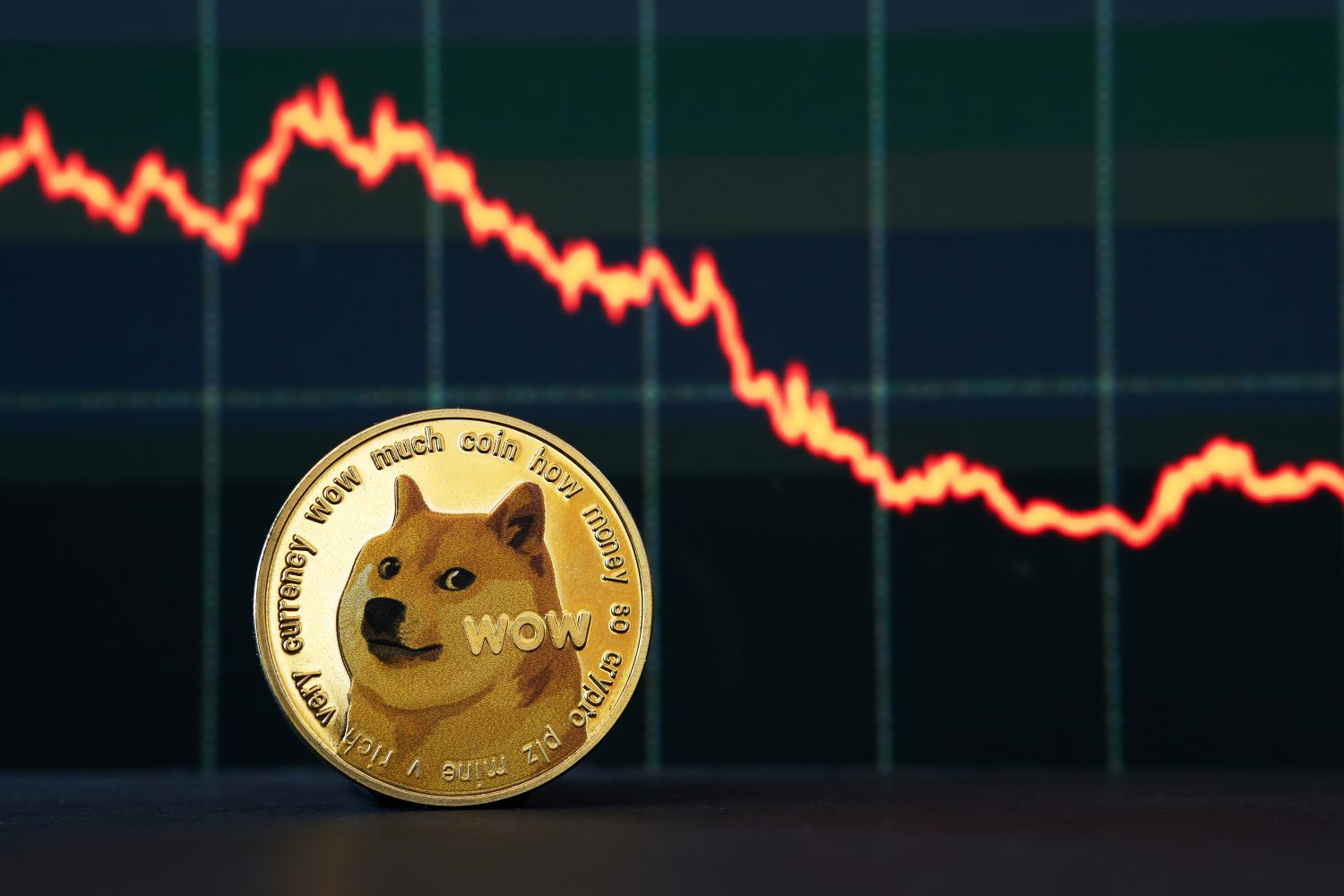
One thing to note about Dogecoin is that it has no maximum supply. Miners generate approximately 5.3 billion coins each year, which translates to around $500 million at current prices. As these miners sell a portion of their earnings to cover costs, buyers must also absorb about $10 million of new supply weekly for the price to stabilize.
A one-off short squeeze alone can’t support the price; consistent buyers are essential for Dogecoin to stay above $0.10 through October. So far, demand since the squeeze has come mainly from leveraged long positions, which can lead to selling if the price starts to drop.
Can Dogecoin Sustain Its Position Above $0.10 This October?
Overall, the outlook for Dogecoin holding above $0.10 on a closing basis through October appears low. The rally was driven by forced buying, which has now ended, and the 200-day average is acting as resistance. The earlier attempt in August failed despite having higher volume than this recent surge.
To shift this outlook, Dogecoin must close back above $0.10 (around 4% up) and surpass the September 22 high of $0.106 (approximately 10% up) before any significant targets can be discussed. If selling pressure continues without new demand, the first support level is the September 23 close of $0.093, followed by the $0.087 range from September 20 and 21, where the recent short squeeze began.
Contact [email protected] for any questions or corrections.
Sam Daodu is a crypto analyst who's spent nearly a decade making blockchain understandable—no easy task when most whitepapers read like fever dreams. He writes for 24/7 Wall St., covering Bitcoin, altcoins, and crypto market analysis for investors. Before crypto, he was a tech writer (back when explaining "the cloud" was peak innovation). Since 2018, he's written for CoinTelegraph, Yahoo Finance, The Block, Cryptonews, Zypto, Rain, and more—basically anywhere people want crypto news without the headache. Sam runs MacLabs Marketing, a content agency for crypto brands tired of sounding like AI wrote their website. He also publishes free crypto education on his site for Web3 enthusiasts who think "gas fees" is a typo. When he's not writing or staring at charts, Sam's either: - Watching anime (currently convinced One Piece has better tokenomics than most altcoins) - At the gym sculpting himself into a Greek god - Listening to the music your mum warned you only bad boys listen to Connect: LinkedIn | Email | MacLabs Marketing