Is StoneX or Bitwise Right About Bitcoin and Gold?
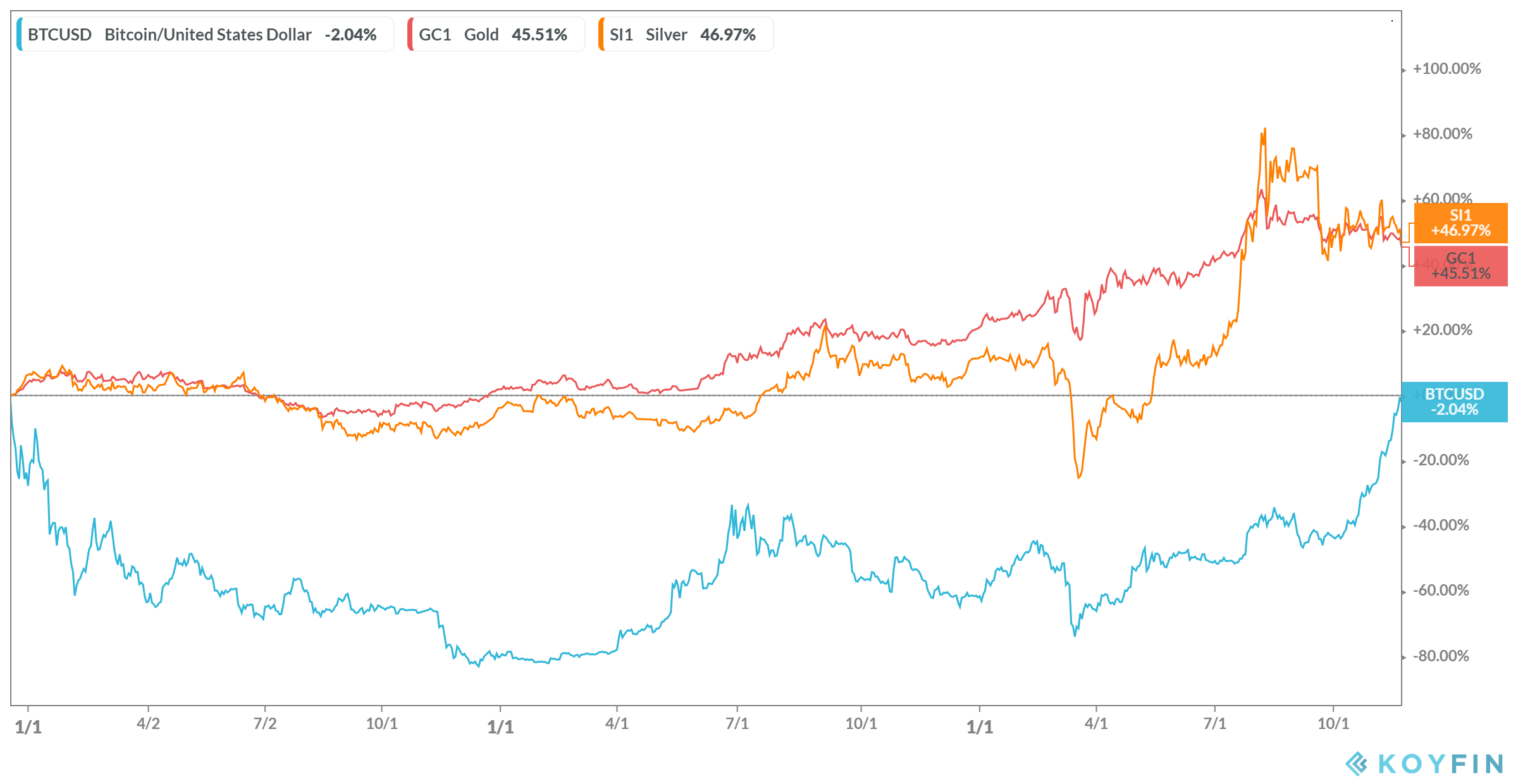
StoneX sees Bitcoin outrunning gold right now, while Bitwise data reveals the two assets moving in lockstep at a six-year high. Both camps make compelling cases, and the difference between them could reshape how you position your portfolio.

This post may contain links from our sponsors and affiliates, and Flywheel Publishing may receive compensation for actions taken through them.

StoneX analyst Fiona Cincotta says current economic conditions favor Bitcoin (CRYPTO:BTC) over gold, while Bitwise data shows these two assets have moved more closely together than at any time in six years. With Bitcoin’s 90-day correlation to gold hitting 0.50—a six-year high—investors are left wondering whose viewpoint is more accurate.
As of September 25, 2026, Bitcoin is trading at $84,362, up 7.1% over the past month. Gold, meanwhile, is priced at around $4,294 per ounce, meaning one Bitcoin can buy approximately 20 ounces of gold. So, which perspective should Bitcoin and gold investors trust?
StoneX Says the Same Trade Is Moving Bitcoin Further Than Gold

According to Cincotta, the breakout in Bitcoin’s price can be traced back to August 19, when the U.S. Treasury announced plans to increase its buybacks of long-term bonds. Bitcoin surged past $65,000 that day and climbed to about $87,000 by the week of September 21—an impressive gain of roughly 34%. During this period, Bitcoin exchange-traded funds (ETFs) attracted about $4.6 billion, and Cincotta estimates Bitcoin’s quarterly gain at 44%.
However, Cincotta emphasizes that this does not mean Bitcoin is replacing gold. In a recent video analysis, she pointed out that while Bitcoin is moving more because of the same macroeconomic factors affecting both assets, it is not a direct replacement for gold. High interest rates are keeping gold prices in check, while Bitcoin is bouncing back from a relatively lower starting point.
Bitcoin and Gold Both Rise on Fears the Dollar Will Buy Less

The “debasement trade” suggests currencies will lose value over time, prompting investors to seek assets not subject to government-driven supply increases. For instance, the M2 money supply, which includes cash, deposits, and money market funds, reached around $23.3 trillion in August—its highest level in a year—while consumer prices rose about 3.4% compared to August 2025.
Gold has historically filled this role, as new gold mining each year only adds incrementally to the existing supply, and central banks actively hold gold as a reserve asset. Bitcoin mirrors this theory through its coded cap of 21 million coins and its continuous trading.
Despite their value as inflation hedges, both Bitcoin and gold struggle against better-yielding bonds, which often redirect investor funds away from them. As of September 24, the inflation-adjusted yield of 10-year Treasuries climbed to 2.9% from 2.4% earlier in the month. From August 25 to September 24, gold’s price fell about 8% from $4,684 to around $4,288, while Bitcoin peaked at $87,397 on September 21.
Bitwise’s 0.50 Correlation Measures Direction, Not Size

Bitwise’s 0.50 correlation rating shows how much Bitcoin and gold tend to move in the same direction at the same time. A score of 1 means they always move together, while -1 means they always move in opposite directions. A correlation of 0.50 indicates that Bitcoin and gold often rise and fall together, but each can still fluctuate substantially.
Correlation doesn’t capture the size of price changes; Bitcoin tends to swing more than gold. As a result, Bitcoin might outperform gold in a rally, but both could also be influenced by external factors, like shifts in the value of the dollar.
The timeline matters: over just the past month, Bitcoin has appreciated by 7.1%, while SPDR Gold Shares (NYSEARCA:GLD), the leading gold ETF, has dropped by 8%. However, over the year, the gold fund has gained 14.7%, while Bitcoin has declined 22.4%. Gold has also performed better in 2026, with the fund down 0.6% against Bitcoin’s 3.3% drop.
Which Is Right About Bitcoin and Gold, StoneX or Bitwise?
Ultimately, both StoneX and Bitwise present valid arguments because they measure different aspects of Bitcoin and gold. They often move in sync, as Bitwise suggests, but Bitcoin tends to move more when they do, which aligns with StoneX’s viewpoint. Additionally, gold has been the stronger performer over the past year.
However, this does mean gold may not provide the same level of protection for Bitcoin holders, as both assets have been moving downward together more frequently. If spot Bitcoin ETFs continue attracting money while gold funds see outflows, and if Bitcoin holds above $87,397—around 4% higher—it would reinforce StoneX’s case. Conversely, if Bitcoin falls below its September 15 low of $74,888—about an 11% drop—much of the recent rally could unravel, keeping gold in its role as a default hedge.
Contact [email protected] for any questions or corrections.
Sam Daodu is a crypto analyst who's spent nearly a decade making blockchain understandable—no easy task when most whitepapers read like fever dreams. He writes for 24/7 Wall St., covering Bitcoin, altcoins, and crypto market analysis for investors. Before crypto, he was a tech writer (back when explaining "the cloud" was peak innovation). Since 2018, he's written for CoinTelegraph, Yahoo Finance, The Block, Cryptonews, Zypto, Rain, and more—basically anywhere people want crypto news without the headache. Sam runs MacLabs Marketing, a content agency for crypto brands tired of sounding like AI wrote their website. He also publishes free crypto education on his site for Web3 enthusiasts who think "gas fees" is a typo. When he's not writing or staring at charts, Sam's either: - Watching anime (currently convinced One Piece has better tokenomics than most altcoins) - At the gym sculpting himself into a Greek god - Listening to the music your mum warned you only bad boys listen to Connect: LinkedIn | Email | MacLabs Marketing