A Former BlackRock Executive Calls Bitcoin an “Exit Asset” and Ethereum “the New Rails.” Bitwise Says the Opposite.
A former BlackRock executive with two decades of experience sees Ethereum as the backbone of a new financial system, while a major crypto asset manager says institutions are ready to dump it if growth stalls. The ETF data from last…


SharpLink CEO Joseph Chalom, a former BlackRock executive with two decades of experience, recently described Bitcoin (CRYPTO:BTC) as an “exit asset” and Ethereum (CRYPTO:ETH) as “the new rails” for the financial system. His podcast comments were reported on September 25, 2026.
Just two days earlier, a report from Bitwise revealed that large institutions treat Bitcoin as their main holding but view Ethereum and Solana (CRYPTO:SOL) more as speculative investments that they might sell if growth fails to materialize.
While both perspectives agree on Bitcoin’s role as a store of value, they differ significantly on Ethereum. So, who has the better argument about Bitcoin and Ethereum, and what do the latest trends in ETF flows suggest?
Joseph Chalom Says Ethereum Will Carry a New Financial System

Chalom argued on “The Wolf of All Streets” podcast that Ethereum will enable a new financial system that integrates stablecoins, tokenized funds, bonds, decentralized finance (DeFi), and AI-powered financial agents. He believes this could put approximately $4 trillion of financial-services fees at risk over the next decade.
To illustrate his point, he pointed to the approximately $15 trillion that Americans keep in checking and savings accounts, which earn minimal interest and cost them about $180 billion a year in lost potential earnings. Chalom suggests that software agents could help move that cash into better-paying investments seamlessly, similar to how credit card payments operate over established networks.
He likened this upcoming financial shift to the SEC’s 1975 decision to abolish fixed brokerage commissions, a change that took nearly three decades to drive trading costs down to near zero. However, it’s worth noting that Chalom has a vested interest in this viewpoint—SharpLink is what’s known as an Ethereum treasury company, meaning it holds ETH as its primary asset. A more bullish outlook on Ethereum would likely benefit his company.
Bitwise Found Institutions Hold Ethereum as a Position They Will Sell If It Fails

Bitwise conducted research by interviewing investment leaders from 15 of the world’s largest institutions, which include pension funds, endowments, and sovereign wealth funds. Their findings revealed that every institution holding cryptocurrency has invested in Bitcoin, often their first and largest position, frequently alongside gold.
In contrast, these institutions typically hold Ethereum and Solana in smaller amounts and for shorter durations, viewing them more as venture investments. Institutions have made it clear that they will sell their holdings in Ethereum or Solana if network growth fails to lift the tokens. As one long-term crypto investor noted, “Something has to work. At some point, if this stuff doesn’t work, we’ll be out.”
Bitwise is also involved in this discussion, as they manage the Bitwise Bitcoin ETF (BITB). Nevertheless, their report documents institutions’ actual behavior during crypto’s roughly 50% decline between October 2025 and April 2026, with all 15 maintaining or increasing their allocations.
Bitcoin Funds Took In More Money, but Ethereum Funds Finished the Week Stronger
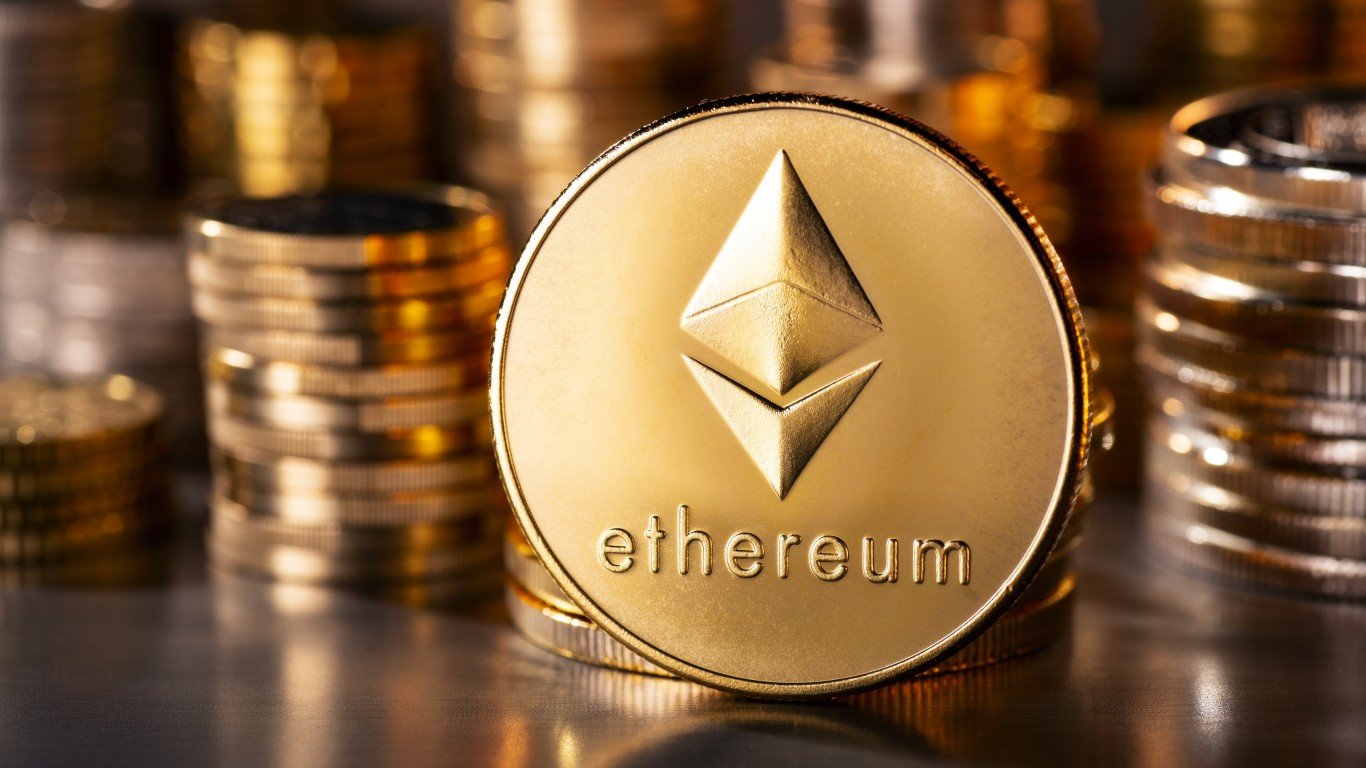
Between September 21 and 25, U.S. spot Bitcoin ETFs saw an influx of about $2.4 billion, significantly higher than the $690 million that flowed into Ethereum ETFs. However, Bitcoin’s daily inflows fell throughout the week, while Ethereum’s dipped early but rose on September 25.
This data suggests a clear discrepancy: while overall inflows favor Bitwise’s position, the trend appears to support Chalom’s argument. Ethereum also outperformed Bitcoin over the past month, gaining 6.9% compared to Bitcoin’s 4.6%. However, Ethereum has fallen more over the past year, down 33.4%, compared to Bitcoin’s 23.5% decline. So far in 2026, Ethereum is down 9.5% while Bitcoin has dropped 4.1%.
Given that just five trading days can’t settle the debate, it’s important to acknowledge that large orders and end-of-quarter rebalancing can significantly sway daily fund flows.
Who Is Right About Bitcoin and Ethereum, Chalom or Bitwise?
Both sides are correct regarding Bitcoin, as they agree on its position as a store of value. However, Bitwise presents stronger evidence on Ethereum right now, detailing how institutions currently treat their investments. Chalom’s perspective relies on Ethereum’s potential if broader adoption occurs.
One key distinction is that many institutions hold Ethereum with contingencies for selling, whereas they hold Bitcoin without such conditions. This means that institutions could exit Ethereum more quickly if growth stalls. If Ethereum ETF inflows continue to rise through the week of September 28 while Bitcoin’s inflows decline, Chalom’s narrative may gain traction. Conversely, if Ethereum funds experience outflows due to disappointing adoption news, Bitwise’s caution will seem more justified.
Contact [email protected] for any questions or corrections.
Sam Daodu is a crypto analyst who's spent nearly a decade making blockchain understandable—no easy task when most whitepapers read like fever dreams. He writes for 24/7 Wall St., covering Bitcoin, altcoins, and crypto market analysis for investors. Before crypto, he was a tech writer (back when explaining "the cloud" was peak innovation). Since 2018, he's written for CoinTelegraph, Yahoo Finance, The Block, Cryptonews, Zypto, Rain, and more—basically anywhere people want crypto news without the headache. Sam runs MacLabs Marketing, a content agency for crypto brands tired of sounding like AI wrote their website. He also publishes free crypto education on his site for Web3 enthusiasts who think "gas fees" is a typo. When he's not writing or staring at charts, Sam's either: - Watching anime (currently convinced One Piece has better tokenomics than most altcoins) - At the gym sculpting himself into a Greek god - Listening to the music your mum warned you only bad boys listen to Connect: LinkedIn | Email | MacLabs Marketing