Did XRP Holders Benefit from Ripple’s Buyback?
Ripple's $750 million buyback pushed the company's valuation to $50 billion, but XRP tumbled while private shareholders cashed out. Whether XRP holders received any slice of that corporate windfall depends on how Ripple actually structures its business.

This post may contain links from our sponsors and affiliates, and Flywheel Publishing may receive compensation for actions taken through them.

On March 11, 2026, Ripple, the company behind the digital asset XRP (CRYPTO:XRP), launched a buyback program to purchase up to $750 million in its own shares. This buyback valued the company at $50 billion, about 25% higher than the $40 billion valuation set in November 2025.
However, during this time, XRP fell 30% to 40%, trading at $1.55 as of September 25, 2026—down roughly 16% for the year.
Ripple CEO Brad Garlinghouse made it clear in a video shared on September 24 that he does not identify solely as an XRP supporter. He indicated that he would even consider offering customers a stablecoin if it better served their needs. Given this context, the question arises: what benefits, if any, did XRP holders derive from Ripple’s buyback?
Ripple Bought Back Shares at a $50 Billion Valuation While XRP Fell
Ripple carried out the buyback as a tender offer, inviting its employees and early investors to sell back their shares until April. The $50 billion valuation marked an increase from the amount set in November, following a $500 million fundraising that involved affiliates of Citadel Securities and Fortress Investment Group.
Ripple has previously conducted share buybacks, including a $285 million repurchase at an $11 billion valuation in January 2024. A prior attempt to buy back $1 billion at a $40 billion valuation in late 2025 didn’t attract much interest, as many employees chose to keep their shares. However, the March buyback, which offered more attractive prices, aimed to draw more sellers.
The Buyback Paid Ripple’s Shareholders, Not XRP Holders
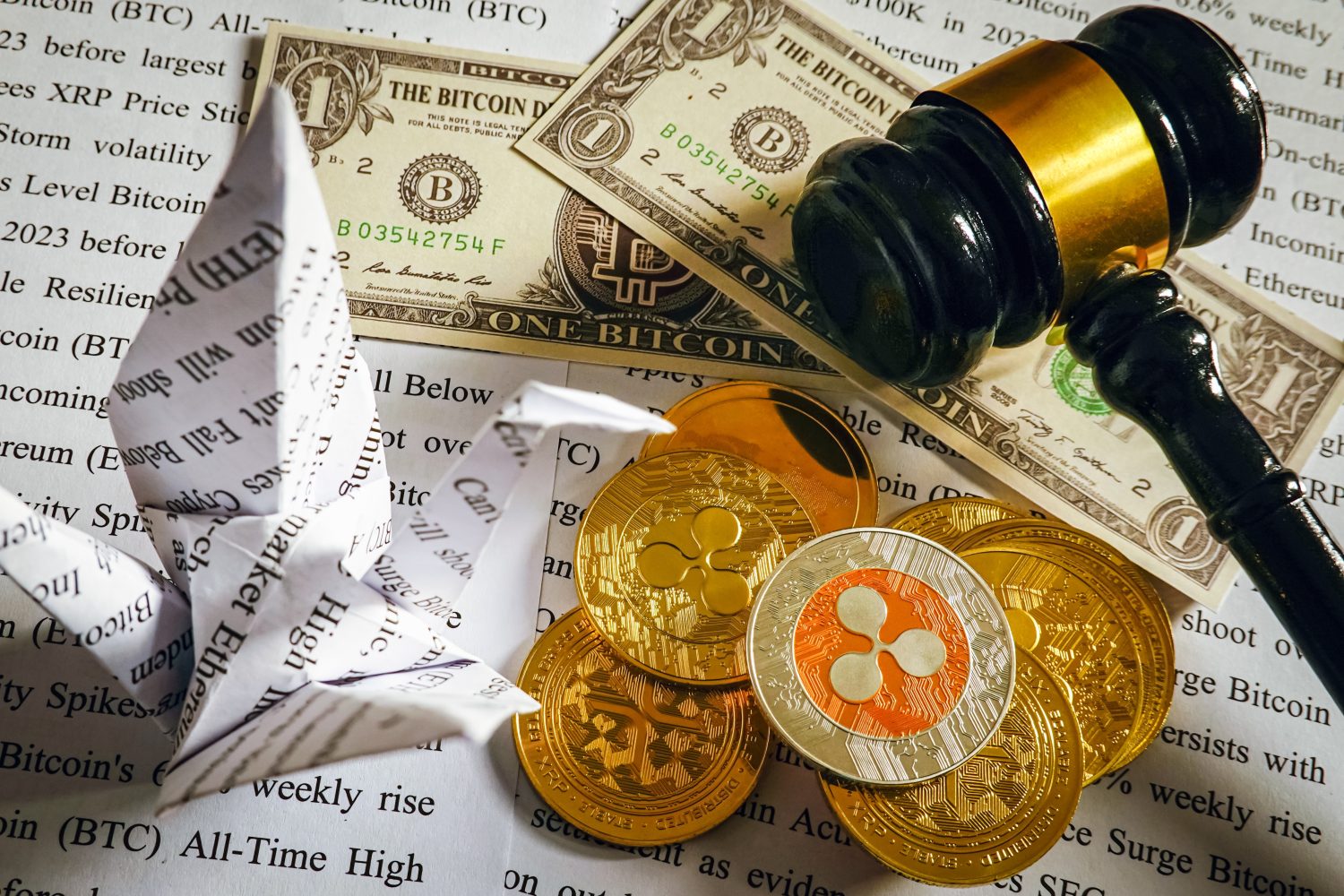
Ripple is a private company, meaning its shares are not traded on any public exchange. Only employees and investors listed on the company’s shareholder register could sell into the buyback. Those who chose to retain their shares now hold a slightly larger ownership stake in a company valued more than before.
For private companies like Ripple, buybacks offer a way for employees and early investors to cash out without going public and launching an initial public offering (IPO). Ripple has chosen this approach over an IPO, and because it doesn’t disclose public financial statements, outsiders can’t verify the revenue behind the $50 billion valuation.
In contrast, XRP holders are left out of this equation. The XRP token exists independently on the XRP Ledger, and it offers no voting rights, dividends, or claims on Ripple’s profits or equity.
Ripple’s Growth Businesses Run Without XRP
Ripple has aggressively expanded its business, spending approximately $2.45 billion on acquisitions in 2025. This included acquiring the prime brokerage Hidden Road for $1.25 billion, treasury software firm GTreasury for $1 billion, and payments firm Rail for $200 million. These businesses primarily serve customers using dollars and other currencies and can operate without any reliance on XRP.
Additionally, Ripple’s stablecoin, Ripple USD (RLUSD), has a circulation of about $2.4 billion. This stablecoin is pegged to the dollar and exists on both the XRP Ledger and Ethereum. Customers generally prefer RLUSD for its dollar equivalence, while transactions on the XRP Ledger incur minimal fees paid in XRP.
Furthermore, Ripple generates revenue by selling XRP from its reserves, which it can release from escrow at a rate of up to 1 billion XRP, equivalent to around $1.55 billion, each month. This practice increases the supply of XRP in circulation, meaning that demand must come from other buyers, such as spot XRP ETFs.
Did XRP Holders Get Anything From Ripple’s Buyback?
So, did XRP holders gain anything from Ripple’s buyback? The answer is no. The buyback primarily benefited employees and early investors who sold their shares at the $50 billion valuation. It also increased the ownership percentage for those who chose to remain shareholders. In contrast, XRP holders received no cash, shares, or representation in Ripple’s gains.
The outcome raises concerns that Ripple’s successes and XRP’s price may continue to diverge, as shown between November and March. For XRP to benefit from Ripple’s growth, the company might need to incorporate XRP as the settlement asset in its products or reveal customer transaction volumes involving XRP. Until then, those who invested in XRP at higher prices may have to wait for signs of upward movement.
Contact [email protected] for any questions or corrections.
Sam Daodu is a crypto analyst who's spent nearly a decade making blockchain understandable—no easy task when most whitepapers read like fever dreams. He writes for 24/7 Wall St., covering Bitcoin, altcoins, and crypto market analysis for investors. Before crypto, he was a tech writer (back when explaining "the cloud" was peak innovation). Since 2018, he's written for CoinTelegraph, Yahoo Finance, The Block, Cryptonews, Zypto, Rain, and more—basically anywhere people want crypto news without the headache. Sam runs MacLabs Marketing, a content agency for crypto brands tired of sounding like AI wrote their website. He also publishes free crypto education on his site for Web3 enthusiasts who think "gas fees" is a typo. When he's not writing or staring at charts, Sam's either: - Watching anime (currently convinced One Piece has better tokenomics than most altcoins) - At the gym sculpting himself into a Greek god - Listening to the music your mum warned you only bad boys listen to Connect: LinkedIn | Email | MacLabs Marketing