Where Will Bitcoin and Solana Be in 2 Years?
Bitcoin faces a halving event while Solana quietly offers something Bitcoin funds simply cannot, and the next two years will determine whether either coin can claw back to its former glory before the window closes.

This post may contain links from our sponsors and affiliates, and Flywheel Publishing may receive compensation for actions taken through them.
The next two years present a significant moment for both Bitcoin (CRYPTO:BTC) and Solana (CRYPTO:SOL). For Bitcoin, the upcoming fifth halving in April 2028 will cut the supply of new coins in half. Meanwhile, Solana is positioned to benefit from a staking yield that Bitcoin’s funds do not offer.
Both Bitcoin and Solana are currently trading below their all-time highs. Bitcoin is priced at $86,276, about 32% below its peak of $126,000 last October. Solana is trading at $118, about 60% below its all-time high of $293 in January 2025. So, what can we expect for Bitcoin and Solana in the next two years?
Both Coins Need to Rebound Before They Rise
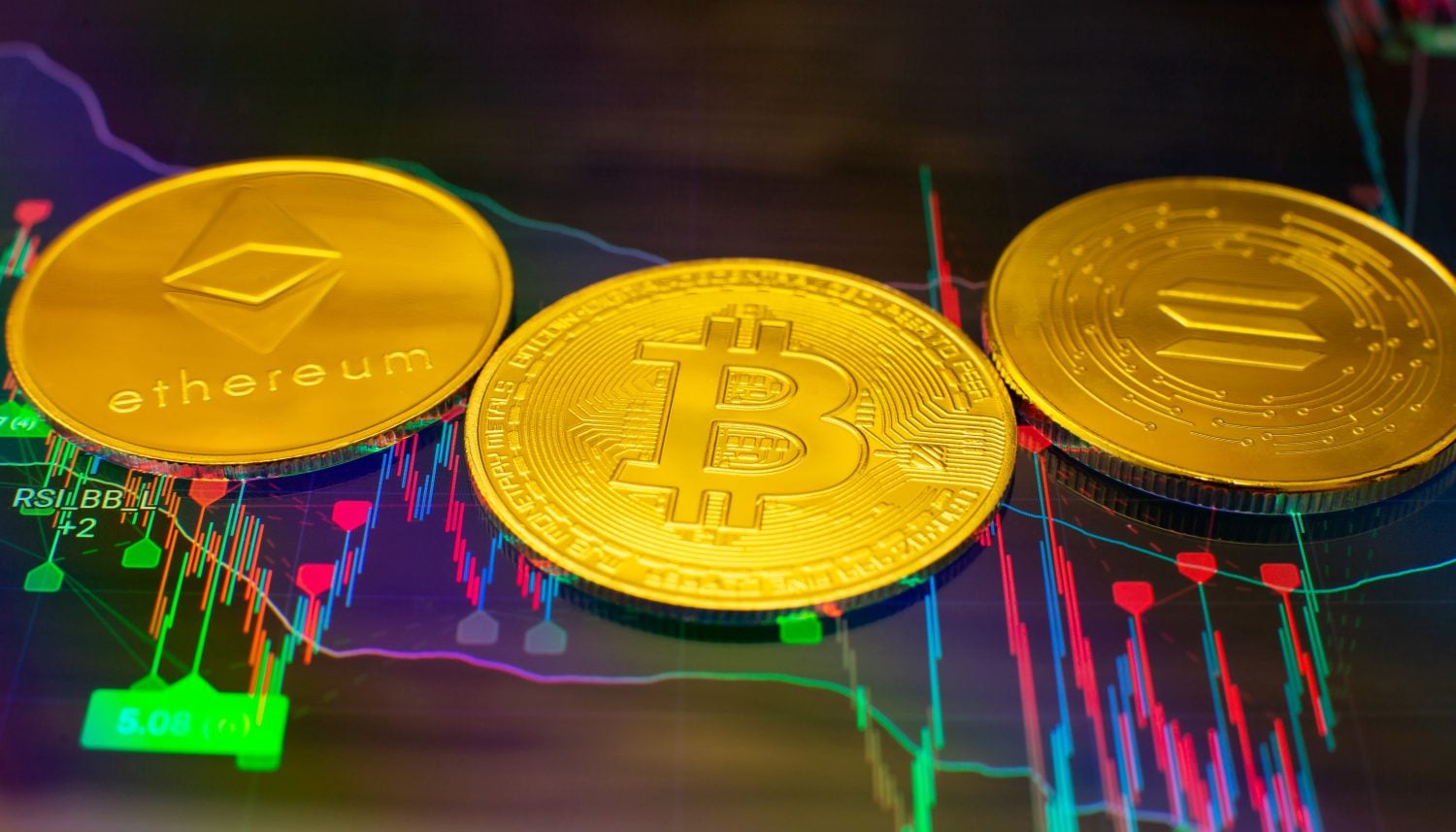
To recover their previous highs, both cryptocurrencies must first climb back up, but their paths differ. Bitcoin needs a 46% gain to reach its old high again, which it could achieve in a strong year. In contrast, Solana needs to increase by 148%, a target that may take two solid years to reach while maintaining that growth.
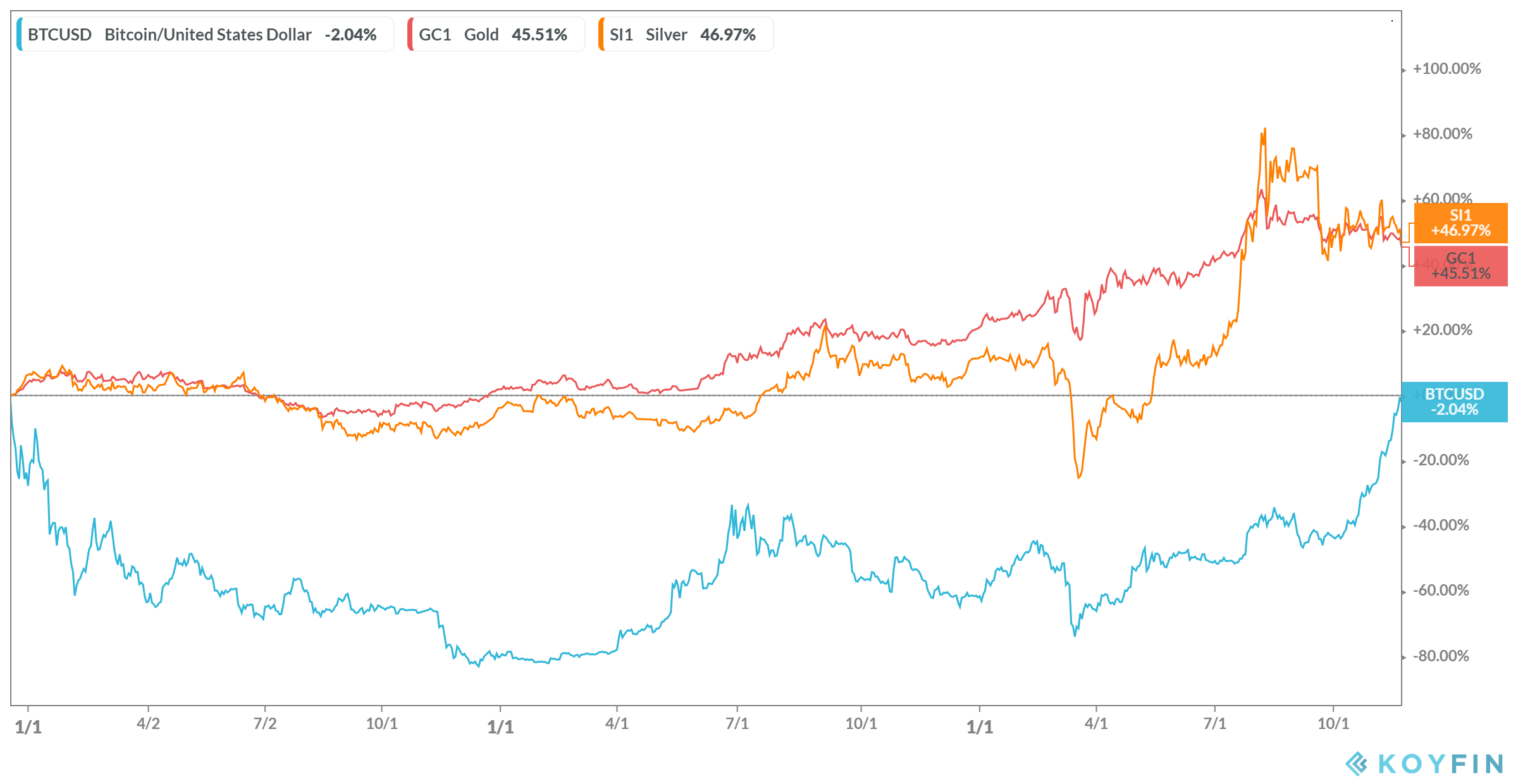
When we look at the longer-term performance, the trends are also distinct. Over the past five years, Bitcoin has gained about 92.8%, while Solana has seen a decline of 20.5%. In the last twelve months, Bitcoin has dipped 23.3%, while Solana has dropped even further, down 46%.
Interestingly, the past month has seen a reversal of fortunes. Solana surged by 24.9%, while Bitcoin gained only 11.2%. In the last week, Solana climbed 23.1% compared to Bitcoin’s 14.4%. This volatility suggests that Solana tends to fall more steeply when the market retreats and recover faster when it improves, making it a compelling choice for long-term holders.
Bitcoin’s Next Halving Falls Inside the Two-Year Window
Bitcoin’s supply schedule is the only upcoming event that significantly impacts either coin in this period. The halving, predicted to happen at block 1,050,000 in April 2028, will reduce the reward for miners from 3.125 BTC to 1.5625 BTC. This change will occur toward the end of the two-year window.
Currently, miners add roughly 450 new Bitcoins to the supply daily, worth about $39 million at today’s prices. After the halving, this number will drop to approximately 225 Bitcoins per day, worth around $19 million. Bitcoin’s annual inflation rate will fall from about 0.8% to around 0.4%, putting its supply growth below that of gold.
However, markets can often price in halving events well in advance, and external factors, such as interest rates, may overshadow its impact. As of September 21, the 10-year Treasury yield was 4.96%, and the Federal Reserve’s upper bound stood at 4%. This means that cash and bonds are offering better returns than Bitcoin has in 2026.
Arthur Hayes pointed out in August that significant institutional investment from sovereign wealth funds remains limited, meaning that a substantial buyer entering the market might have a greater influence on Bitcoin’s demand than the anticipated halving has on its supply.
Solana’s Funds Pay a Staking Yield Bitcoin’s Cannot
On October 28, 2025, U.S. spot Solana funds launched, quickly accumulating around $1.22 billion by late August 2026. Bitwise’s fund holds about 80% of this amount, creating a concentration of influence since one issuer’s actions can sway the entire group.
The key difference lies in how these funds manage the assets. Unlike Bitcoin’s funds, Solana funds stake their coins, returning roughly 6% a year to shareholders. Since Bitcoin generates no yield for its holders, this advantage is significant. Across a two-year period, this yield could compound to about 12% before any price changes.
Additionally, Solana has regulatory and commercial factors working in its favor. In March 2026, the SEC and CFTC classified SOL as a digital commodity, opening the door to broader adoption. Moreover, around $465 million of tokenized stocks already trade on the Solana platform. However, it faces competition from Ethereum and other newer chains, with no end in sight to this rivalry.
Where Will Bitcoin and Solana Be in Two Years?
Our analysis suggests that Solana likely has a better chance of finishing two years higher than its current price, bolstered by staking yields. Bitcoin, while starting 32% below its record and facing the upcoming halving, also has growth potential, but with a more cautious outlook.
Overall, Solana is 60% below its all-time high and offers a 6% yield along the way, making smaller upward movements more impactful. Meanwhile, Bitcoin is beginning its recovery, down 32% from its peak, and is looking for institutional buyers to show up.
But keep in mind that the Federal Reserve’s actions will play a crucial role in this dynamic. If interest rates rise and stay high enough to pull money away from crypto for an extended period, the coin that typically moves the most may take the hardest hit.
Contact [email protected] for any questions or corrections.
Sam Daodu is a crypto analyst who's spent nearly a decade making blockchain understandable—no easy task when most whitepapers read like fever dreams. He writes for 24/7 Wall St., covering Bitcoin, altcoins, and crypto market analysis for investors. Before crypto, he was a tech writer (back when explaining "the cloud" was peak innovation). Since 2018, he's written for CoinTelegraph, Yahoo Finance, The Block, Cryptonews, Zypto, Rain, and more—basically anywhere people want crypto news without the headache. Sam runs MacLabs Marketing, a content agency for crypto brands tired of sounding like AI wrote their website. He also publishes free crypto education on his site for Web3 enthusiasts who think "gas fees" is a typo. When he's not writing or staring at charts, Sam's either: - Watching anime (currently convinced One Piece has better tokenomics than most altcoins) - At the gym sculpting himself into a Greek god - Listening to the music your mum warned you only bad boys listen to Connect: LinkedIn | Email | MacLabs Marketing