Zcash Is Up 1,077% in a Year and Down 8% This Week. Is the Best Trade of 2026 Over?
Zcash turned in the most explosive crypto rally of 2026, then North Korean hackers started funneling stolen funds through its privacy shield. Now investors face a question that goes beyond profit-taking: does the very feature that drove the rally also…

This post may contain links from our sponsors and affiliates, and Flywheel Publishing may receive compensation for actions taken through them.
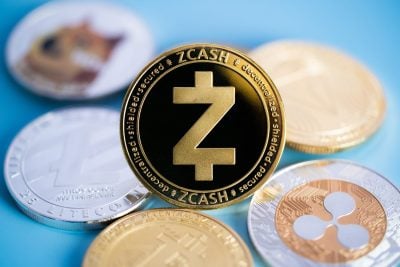
Zcash (CRYPTO:ZEC) fell 6.6% to roughly $1,329 on October 1, 2026, capping an 8% drop for the week and marking the first significant setback in the Zcash rally. Over the past year, Zcash has been the standout performer in the crypto market, gaining 1,077% over the last 12 months and 179% since the start of the year.
Zcash is a privacy-focused cryptocurrency that allows users to obscure the sender, receiver, and amount of a transaction. Just a day before this recent decline, hackers linked to the Bitget exchange heist began moving stolen ZEC into Zcash’s privacy feature. So, is the incredible trade of 2026 coming to an end, or are early investors simply taking profits after such a significant increase? (FLAG: “simply” is on the banned list)
Zcash’s 8% Weekly Drop Is a Small Pullback After a 1,077% Year

The recent drop in Zcash’s price is minor compared to its massive yearly performance. Despite the 8% decline, Zcash is still up 71% over the month and 209% over the past 90 days. For instance, a buyer who invested $1,000 in ZEC at the beginning of July would have had about $3,087 even at the October 1 low.
This surge has propelled Zcash to become the ninth-largest cryptocurrency by market value, sitting at approximately $24.5 billion as of September 30. (FLAG: “sitting” is on the banned list)
A drawdown refers to the drop from a recent peak. Zcash’s price fell about 17% from its late-September high of $1,600. It’s common for cryptocurrencies that experience rapid gains to fall sharply when latecomers to the market decide to cash out quickly. Similarly, early investors may sell on weaker days to lock in profits. In contrast, Bitcoin (CRYPTO:BTC) tends to have a more stable base of long-term holders, leading to less volatility.
Interestingly, while Zcash declined, other major cryptocurrencies were up on October 1. Bitcoin increased by 1.3%, Ethereum (CRYPTO:ETH) gained 0.7%, XRP (CRYPTO:XRP) added 0.6%, and Solana (CRYPTO:SOL) edged up by 0.3%. When one coin drops while others rise, it often signals that market participants are reacting to specific news about that coin—in this case, stolen Bitget funds moving into Zcash. (FLAG: “Interestingly” reads as AI phrasing)
Large Investors and Bitcoin Researchers Are Warming to Zcash’s Privacy

Zcash users can transfer coins into a shielded pool, which is an encrypted section of the network. In this pool, a zero-knowledge proof—a type of cryptographic technology—confirms that a transaction is valid without revealing the sender, receiver, or amount involved. Coins outside this pool operate on a public ledger similar to Bitcoin, making optional privacy an attractive feature for many buyers.
Large investors are increasingly recognizing the value of this privacy. Grayscale, the asset manager behind a Zcash ETF that has raised $306 million since August, recently noted that Zcash’s market value has risen to about 1.5% of Bitcoin’s over the past year, up from below 1% in August. (FLAG: “recently” is relative time; the note came out in late September)
Bitcoin researchers have also taken notice. On September 25, researchers from the New York cryptography lab alloc init published a proposal for a “Shielded Bitcoin,” which would use Zcash’s technology to anonymize Bitcoin transactions. However, this design is still in the proposal stage, and no established method exists yet for transferring Bitcoin in and out of this shielded system.
Bitget’s Hackers Moved $3.9 Million of Stolen ZEC Into Zcash’s Shielded Pool

Interestingly, the same privacy that appeals to investors can also attract criminals. On September 24, hackers stole $387.5 million from Bitget, with links to North Korean cyber activities. On September 30, wallets linked to the hack transferred about 2,746 ZEC, worth around $3.9 million, into Zcash’s Ironwood shielded pool, which was established to address previous flaws. (FLAG: second “Interestingly”)
These hackers opted for Zcash after the NEAR Protocol’s risk system blocked most of a $50 million attempt to launder funds. Once coins are moved into the shielded pool, it becomes challenging for external investigators to trace ownership.
While $3.9 million is a small fraction of the total theft and Zcash’s $24.5 billion market cap, a larger concern for holders may stem from increasing regulatory scrutiny. Recent years have seen exchanges in Japan and South Korea delist privacy coins, and the association with a North Korean theft provides regulators with new reasons to examine Zcash, a potential risk that the market has yet to fully account for.
Is the Zcash Rally Over, or Is the 8% Drop a Pause?
The Zcash rally is not over. An 8% drop in a week is a typical correction for a coin that has gained 1,077% in a year. As of October 2, buyers pushed ZEC back up to $1,382, while ongoing interest from large investors and support from Grayscale’s ETF suggest continued backing for its privacy technology.
However, Zcash’s next challenge lies in regulatory scrutiny rather than straightforward selling. If ZEC closes a week below $1,329—about 4% lower than its October 2 price—this could lead sellers to deepen the pullback into a more significant correction. Moreover, if a major exchange delists Zcash or restricts shielded withdrawals because of the hacking incidents, the market may finally price in the risks associated with privacy coins.
Contact [email protected] for any questions or corrections.
Sam Daodu is a crypto analyst and the editor of 24/7 Wall St.'s Crypto Desk, where he covers Bitcoin, XRP, Ethereum, Solana and the altcoins investors search for most. His work focuses on price levels, spot ETF flows, on-chain data and the regulatory decisions that move crypto markets, written so a first-time buyer and a seasoned trader can both use it.
Sam has written about crypto professionally since 2019 and has published more than 2,000 articles. Before joining 24/7 Wall St., he wrote for crypto media outlets and Web3 companies and ghostwrote for crypto founders and token launches. His analysis is syndicated on Yahoo Finance, MSN and AOL and has been cited by other crypto news sites. He also founded MacLabs Marketing, a content and personal branding agency for crypto founders and executives.
When he isn't reading charts, Sam is usually at the gym or watching One Piece, a series he maintains has better tokenomics than most altcoins.