Wall Street’s Biggest Settlement Firm Is Lining Up Stellar for 2027. Is XLM a Better Buy Than Ethereum?
Wall Street's biggest settlement firm just named Stellar as a future partner, sending XLM back onto traders' watchlists. But before you chase the catalyst, the comparison with Ethereum reveals some uncomfortable truths about timing, tokenization dominance, and price reality.

This post may contain links from our sponsors and affiliates, and Flywheel Publishing may receive compensation for actions taken through them.

The Depository Trust & Clearing Corporation (DTCC), a major player in settling U.S. stock trades, expects Stellar (CRYPTO:XLM) to join its upcoming Tokenization Service in 2027, according to its roadmap. Tokenization converts stocks and bonds into digital tokens that can be traded on a blockchain. With this news, XLM is back on buyers’ radar, especially after a 15.3% decline over the past two weeks.
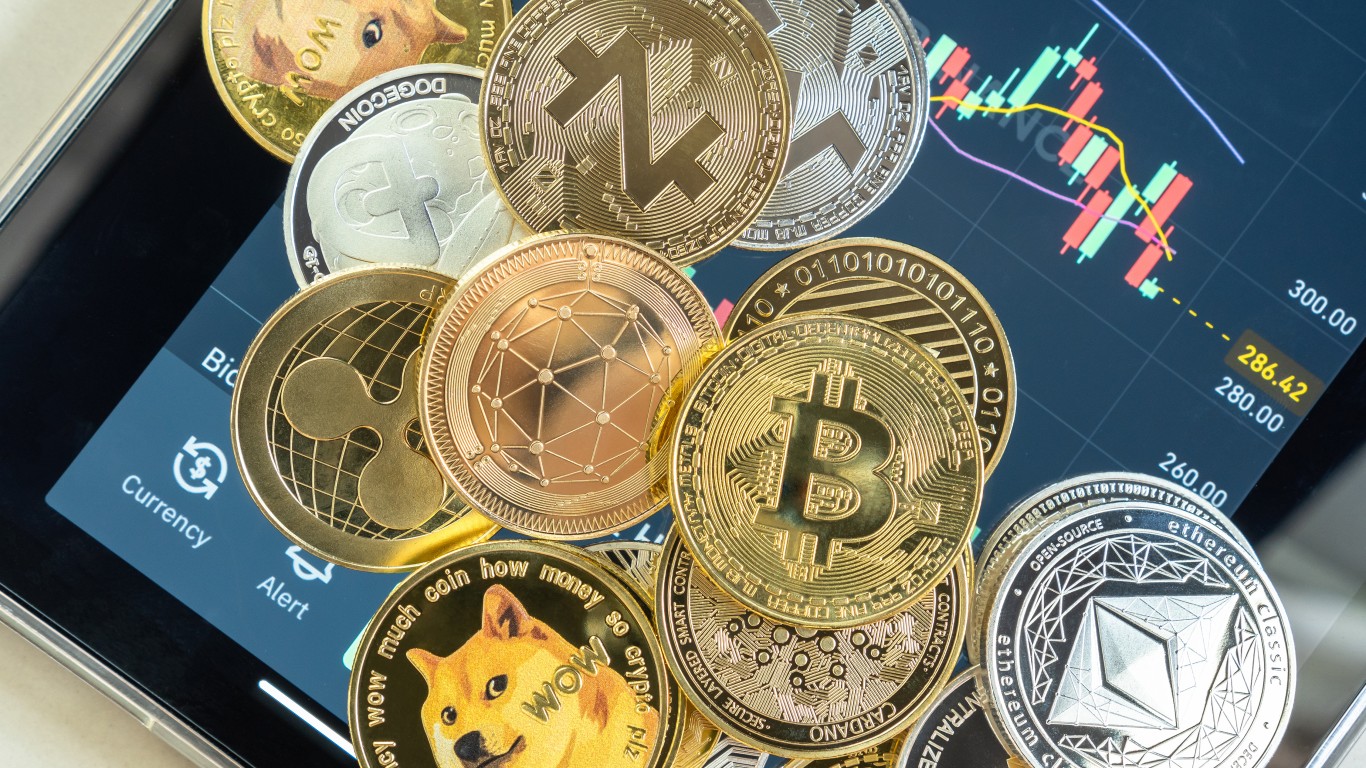
XLM is trading at approximately $0.18, down 0.6% in the last 24 hours. By comparison, Ethereum (CRYPTO:ETH) trades around $2,417 and plays a major role in the tokenized asset market, though its connection to DTCC’s upcoming service is less direct.
So, in the XLM vs Ethereum debate, which cryptocurrency stands as the better investment to capitalize on the tokenization trend?
DTCC’s Tokenization Service to Debut on Canton and Besu
DTCC plans to launch its Tokenization Service in October on two platforms, Canton Network and Besu, its private network. Canton is designed for financial institutions such as banks and asset managers, ensuring trade details remain confidential among the parties involved.
The initial rollout will cover 25 stocks, ETFs, and U.S. Treasuries, with each token fully backed by a corresponding security held at the Depository Trust Company (DTC), a DTCC subsidiary. Token holders will have the flexibility to transfer their tokens at any time between registered wallets. DTCC estimates it will have around $30 trillion in assets available for tokenization.
Before the official launch, DTCC conducted a successful test on July 15, turning DTC-held securities into tokens for live trades on both Besu and Canton, involving more than 30 participating firms. DTCC has described this initiative as part of a “multi-chain strategy” to ensure resiliency, scalability, and choice for users.
Stellar’s 2027 Inclusion Comes With Uncertainties
While DTCC’s roadmap indicates a potential inclusion for Stellar and the Arc network in 2027, this plan is subject to change. Stellar will not be part of the October launch, and DTCC has not confirmed a specific date for its entry.
Stellar has already made strides in this space, managing $3.6 billion in tokenized real-world assets (excluding stablecoins), ranking fourth among all networks, according to rwa.xyz data from October 17. These real-world assets (RWAs) include tokenized Treasury funds and private credit.
However, despite its accomplishments, XLM’s price does not reflect this progress well. XLM trades 79.6% below its January 2018 peak of $0.88 and has fallen 41.4% over the past year.
XLM’s supply also puts pressure on its price. Approximately 35.2 billion of 50 billion XLM tokens are in circulation, giving a fully diluted valuation (the value if all tokens were in circulation) of about $8.9 billion, compared with a market cap of around $6.3 billion. This indicates that more tokens could be released into the market, potentially absorbing new demand.
Ethereum Takes the Lead in Tokenization
The connection between Ethereum and DTCC comes through Besu, an Ethereum client, meaning DTCC’s private network uses Ethereum technology but operates separately from the public Ethereum blockchain.
Ethereum significantly outpaces Stellar in tokenized assets, with $17 billion in tokenized RWAs and $147.1 billion in stablecoins. In contrast, Stellar holds only $535 million in stablecoins, according to the same data source.
Price performance has also favored Ethereum. ETH trades 51.1% below its record high of $4,946 from August 2025 and is up 29.3% over the past 90 days, while XLM has dropped 3.8%. Over the last two weeks, ETH fell 9.3%, while XLM fell more sharply, down 15.3%.
One advantage XLM has is its smaller market cap, with Ethereum’s $295.2 billion about 47 times larger. Smaller cryptocurrencies can often react more sharply to news from large partners. However, Ethereum has already attracted substantial institutional investment that Stellar still needs to secure.
Is XLM a Smarter Investment Than Ethereum?
In the XLM vs Ethereum comparison, Ethereum stands as the more reliable choice for investors interested in tokenization. DTCC’s 2027 roadmap doesn’t change that. Investors considering XLM face significant risk from a potential DTCC catalyst that is still a year away and could change. For XLM to narrow the gap, DTCC’s October launch needs to progress smoothly, Stellar’s rollout date must be confirmed, and its tokenized asset base should keep growing.
Technically, XLM must first recover to $0.20, roughly 12% above its current price and a level it held on October 10. If DTCC postpones Stellar’s launch, XLM may lose its latest catalyst and keep trailing Ethereum as it has over the past 90 days. Conversely, if DTCC announces a 2027 launch date for Stellar and XLM closes above $0.20, it could create a significant opportunity for XLM to make up ground.
Contact [email protected] for any questions or corrections.
Sam Daodu is a crypto analyst who's spent nearly a decade making blockchain understandable—no easy task when most whitepapers read like fever dreams. He writes for 24/7 Wall St., covering Bitcoin, altcoins, and crypto market analysis for investors. Before crypto, he was a tech writer (back when explaining "the cloud" was peak innovation). Since 2018, he's written for CoinTelegraph, Yahoo Finance, The Block, Cryptonews, Zypto, Rain, and more—basically anywhere people want crypto news without the headache. Sam runs MacLabs Marketing, a content agency for crypto brands tired of sounding like AI wrote their website. He also publishes free crypto education on his site for Web3 enthusiasts who think "gas fees" is a typo. When he's not writing or staring at charts, Sam's either: - Watching anime (currently convinced One Piece has better tokenomics than most altcoins) - At the gym sculpting himself into a Greek god - Listening to the music your mum warned you only bad boys listen to Connect: LinkedIn | Email | MacLabs Marketing