Stellar Surpasses Its 50-Week Average, While XRP Lags: Which Payments Coin Will Lead Into Q4?
Stellar just crossed a technical threshold that XRP is still struggling to reach, but a surge in ETF inflows could flip the script heading into Q4. These two payments coins are telling very different stories right now, and only one…


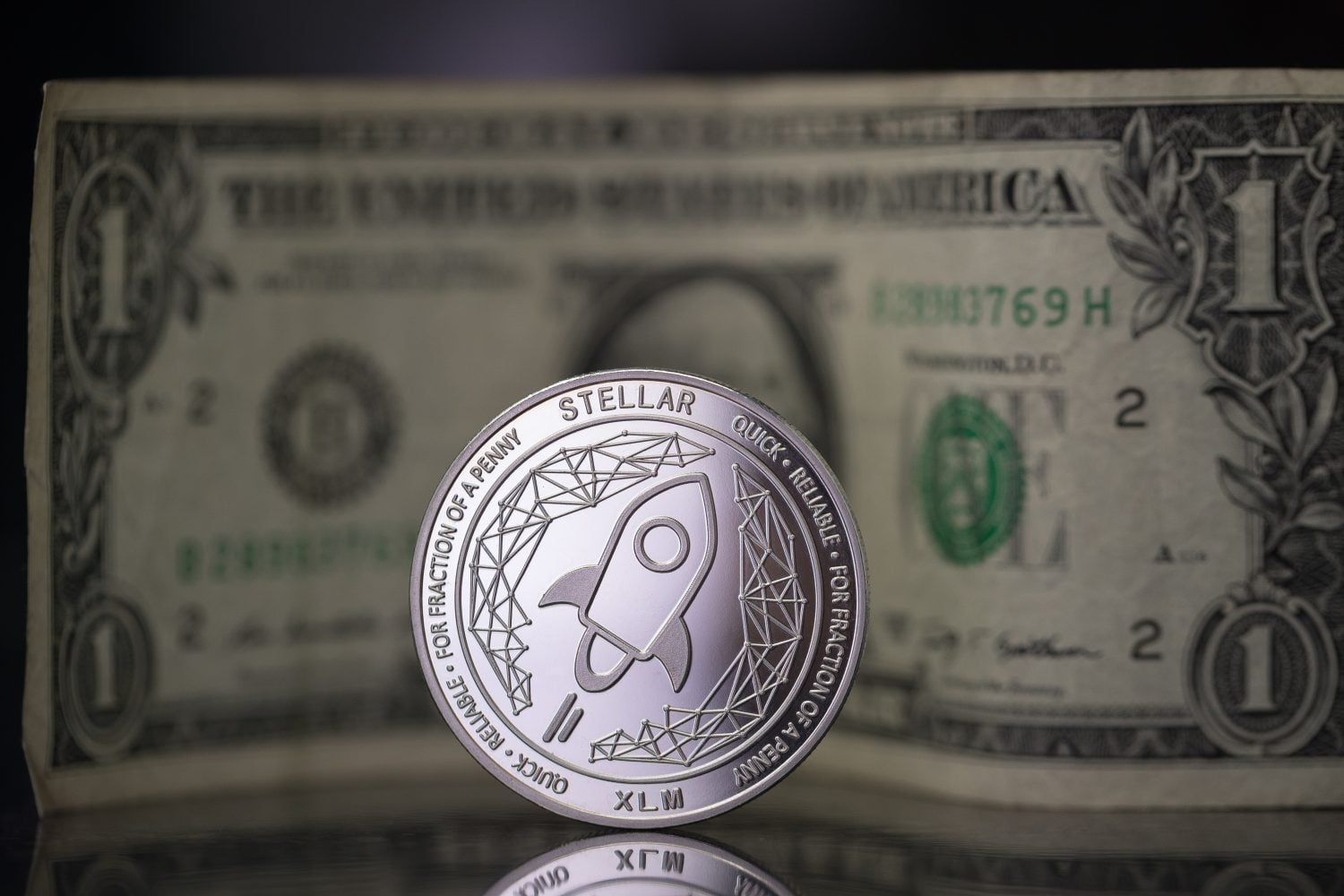
In late September 2026, Stellar (CRYPTO: XLM) rose above its 50-week moving average, while XRP (CRYPTO:XRP) remained stagnant just below its own average. Both cryptocurrencies were designed to enable faster, cheaper cross-border payments than traditional bank transfers, and both posted weekly gains of over 10%. However, Stellar’s recent performance versus XRP seems to hinge on a key technical indicator.
As of September 26, Stellar is trading at $0.22, up 11.2% for the week, while XRP is priced at $1.55 after a 10.4% gain, just under its 50-week average of about $1.56. While their weekly gains look similar, the two coins differ significantly in monthly performance and the investor interest they attract. So, which payment coin is better positioned as we head into the fourth quarter?
Stellar Broke Above Its 50-Week Average While XRP Stalled Near $1.56
A 50-week moving average represents the average closing price over the past year, indicating where the typical buyer has entered the market. When a coin trades above this average, it suggests that many of those investors are now in profit, while a coin below this line often means investors are still at a loss, leading some to sell once prices return to their purchase levels.
Currently, XRP finds itself among those still at a loss. As of September 24, the average XRP buyer of the past year was down about 12%. Those investors might be inclined to sell during any rallies near the $1.56 mark. On the other hand, Stellar has successfully navigated similar selling pressure around the $0.21 level and maintained its upward momentum.
Additionally, Stellar is experiencing stronger monthly growth. XLM has appreciated 16.4% over the past 30 days, compared to XRP’s 7.2% increase, suggesting XRP lost some ground earlier in September before rebounding. This trend also holds through 2026, with XRP down 14% and Stellar up 8% as of September 23.
Stellar Has Wall Street Partners, While XRP Has ETF Buyers
Stellar’s advantage lies in its connections to traditional finance. In May, the Depository Trust & Clearing Corporation (DTCC), which processes the majority of U.S. stock and bond trades, announced plans to offer tokenized stocks, ETFs, and Treasury securities on the Stellar network in the first half of 2027. Additionally, Stellar hosts $2.75 billion in tokenized real-world assets, including bonds and fund shares on its blockchain.
However, the timeline for this DTCC partnership extends to 2027. In fact, the DTCC carried out its first live tokenized trades on July 15 using other networks rather than Stellar and is gearing up to launch its full tokenization service in October. As a result, Stellar’s partnership may not generate immediate demand for XLM in the fourth quarter.
Conversely, XRP benefits from direct investor access. U.S. spot XRP ETFs, which are funds holding XRP that trade like stocks in brokerage accounts, saw inflows of $75.6 million from September 21 to September 25, dramatically up from $9.6 million the week prior, according to SoSoValue. Stellar has no U.S. spot ETF, and its only U.S. fund, Volatility Shares’ STLR, holds XLM futures with just $1.5 million in assets.
One Strong Week Is Not Enough for Stellar to Stay Ahead of XRP
Cryptocurrencies can often surge above long-term moving averages for a short period before falling back below them. Therefore, Stellar needs to hold above $0.21 for several weekly closes to establish a trustworthy trend. At the same time, XRP could turn the tide with a strong weekly close above $1.56.
Market capitalization also plays a significant role. XRP’s market value of around $98 billion is roughly 13 times greater than Stellar’s $7.4 billion. This means a similar dollar investment would move XLM more significantly than XRP, making it rise faster but also fall sharply if buying interest wanes.
Partnerships do not guarantee increases in token buying, either. Payment networks can settle large sums using minimal amounts of their own tokens for transaction fees, suggesting DTCC’s plans could operate without boosting XLM’s price. Similarly, while XRP’s ETFs boast $1.77 billion in net assets, this figure fluctuates with XRP’s price, making weekly inflows a more reliable indicator of new buying.
Stellar vs XRP: Which Payments Coin Will Lead Into Q4?
As we enter the fourth quarter, Stellar is charting a stronger course, having cleared its 50-week average and posting solid monthly gains. In contrast, XRP remains beneath its 50-week average but is seeing significant inflows into ETFs.
If XRP can close above $1.56 during a week in October, coupled with its ongoing ETF investments, it could reclaim the lead. However, if XRP fails to breach that level again while Stellar holds above $0.21, Stellar is likely to take the lead for the quarter, keeping XRP investors below their average purchase cost for a longer stretch.
Contact [email protected] for any questions or corrections.
Sam Daodu is a crypto analyst who's spent nearly a decade making blockchain understandable—no easy task when most whitepapers read like fever dreams. He writes for 24/7 Wall St., covering Bitcoin, altcoins, and crypto market analysis for investors. Before crypto, he was a tech writer (back when explaining "the cloud" was peak innovation). Since 2018, he's written for CoinTelegraph, Yahoo Finance, The Block, Cryptonews, Zypto, Rain, and more—basically anywhere people want crypto news without the headache. Sam runs MacLabs Marketing, a content agency for crypto brands tired of sounding like AI wrote their website. He also publishes free crypto education on his site for Web3 enthusiasts who think "gas fees" is a typo. When he's not writing or staring at charts, Sam's either: - Watching anime (currently convinced One Piece has better tokenomics than most altcoins) - At the gym sculpting himself into a Greek god - Listening to the music your mum warned you only bad boys listen to Connect: LinkedIn | Email | MacLabs Marketing