Stellar Now Hosts $2.75 Billion in Tokenized Real-World Assets: What Does It Mean for XLM Holders?
Stellar just cracked the top three blockchains for tokenized real-world assets, and XLM's price jumped the same week. But the connection between those two facts is far more complicated than it looks.


Stellar (CRYPTO:XLM) has reached an impressive $2.75 billion in tokenized real-world assets, placing it third among all blockchains after Ethereum (CRYPTO:ETH) and BNB Chain, according to DefiLlama. This figure positions it ahead of competitors like Solana, Avalanche, and Aptos. Notably, this news coincided with a rise in XLM’s price, which stood at $0.22—up by 9.6% over the past 24 hours, 15.5% for the week, and 20.3% for the month.
XLM is among the few major cryptocurrencies up around 11% for 2026, though it remains down 36% year over year. The question for XLM holders is whether the network’s ability to host these assets translates into increased value for its own token. The answer lies in the network’s fees, which are designed to remain low.
The $2.75 Billion Counts Other People’s Assets, and Most of It Never Moves Onchain
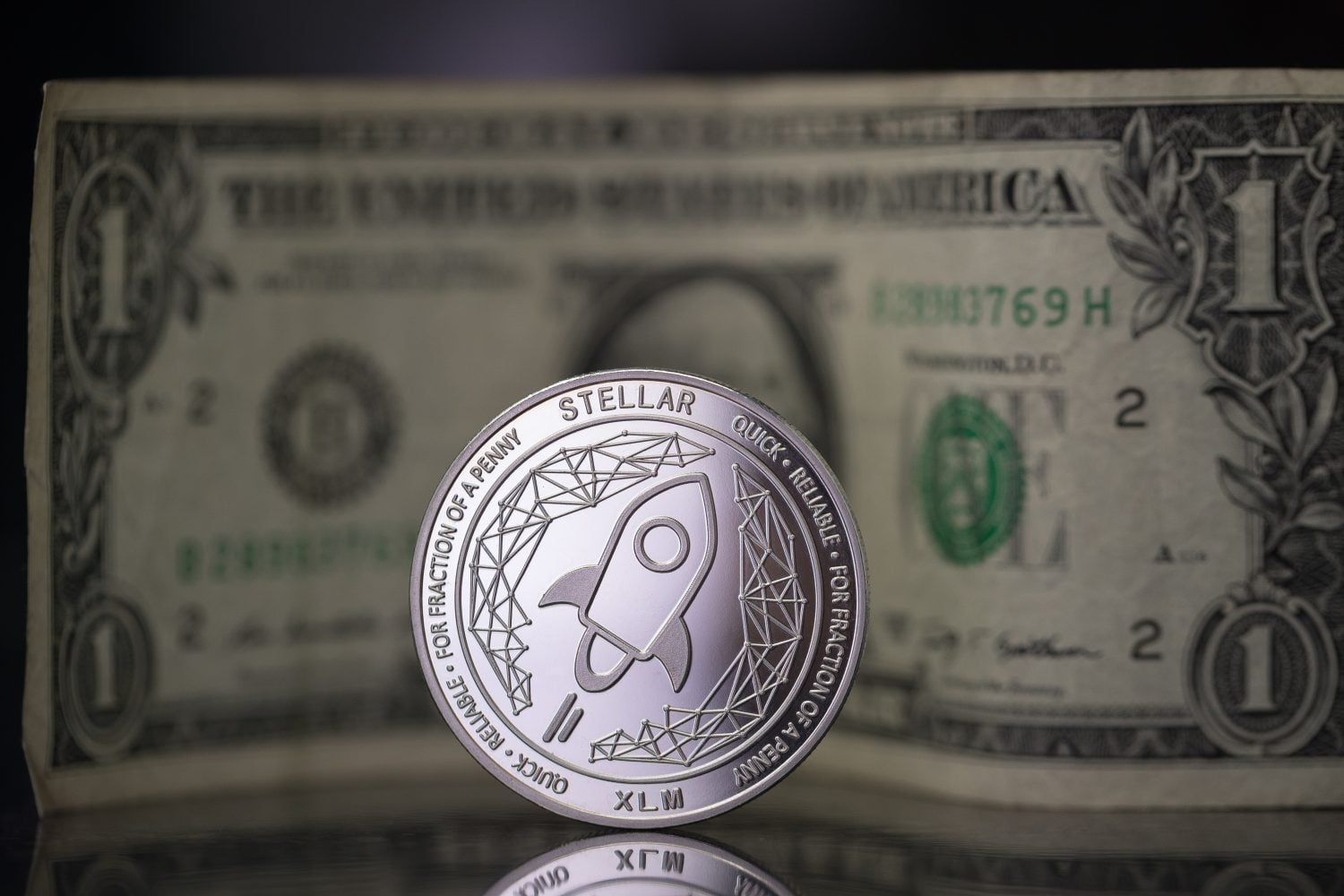
Tokenized real-world assets are digital claims on items that exist outside the blockchain, such as Treasury bills or shares in money-market funds. These assets are recorded on the blockchain to enable quick settlements, while a custodian manages the underlying asset.
For example, Franklin Templeton began issuing its tokenized Treasury fund on Stellar in 2021. Since then, the total value of tokenized assets on Stellar has surged from approximately $785 million in January to $2.75 billion today.
However, this figure reflects the value of the assets, not the value of XLM itself. For instance, the value of a tokenized Treasury bill will rise and fall in tandem with the actual Treasury bill, meaning the total can increase even if the price of XLM declines. Additionally, the value can rise when an issuer adds more shares for current clients without attracting new users or XLM buyers.
Currently, most of the assets on Stellar are not actively traded. The platform’s lending and trading protocols manage only about $233 million, which is less than ten percent of the total assets issued on the chain. This suggests that while many tokens are recorded on Stellar, they are used far less often for trading, lending, or pledging.
XLM Earns Fees That Are Flat by Design, So Hosting Assets Adds Little to the Token
The primary link between the tokenized assets and XLM comes from transaction fees. Every transaction on Stellar requires a small fee paid in XLM, and each account must maintain a minimal XLM reserve. Stellar deliberately set these fees low and uniform, meaning that transferring a multimillion-dollar fund incurs nearly the same fee as a small payment. This design attracts issuers who prefer a cost-effective platform for their transactions.
When select firms choose Stellar for its fast settlement times, compliance tools, and low fees, they often want the XLM token to remain inexpensive and stable. A rise in the token’s price could increase operational costs for these companies.
DTCC Chose Stellar for 2027, and XLM’s Rally Came Before the Ranking
A significant endorsement for Stellar came from the Depository Trust & Clearing Corporation (DTCC), which manages over $114 trillion in U.S. securities. On May 27, the DTCC recognized Stellar as the first public blockchain for its tokenization service, with plans to tokenize Treasuries, Russell 1000 stocks, and index ETFs set for the first half of 2027 under an SEC no-action letter from December 2025.
This endorsement boosts Stellar’s credibility in the regulated finance sector and, importantly, DTCC does not need to hold any XLM to use the network.
Interestingly, the asset ranking does not seem to explain XLM’s recent price rally. The token’s price climbed from a close of $0.202 on September 23 to $0.218 the following day, and the asset-ranking news was released on September 25, after most of that increase had already occurred.
In the previous weeks, sellers repeatedly drove the price back down near the current level, with highs of $0.223 on August 22 and $0.225 on September 23. On September 24, XLM gained on about 88 million tokens traded, valued at approximately $19 million, down from the 131 million tokens (around $29 million) traded on September 21. This suggests fewer buyers drove the latest price surge.
Does Hosting $2.75 Billion Increase XLM’s Value?
In summary, the ranking is undoubtedly a positive development for Stellar as a network, but it appears to have a neutral effect on XLM as a token. DTCC’s endorsement signals trust in the Stellar blockchain, while the system’s low fees maintain a connection to XLM that doesn’t support significant price increases. This helps explain why, despite growth in hosted assets, XLM remains down 36% over the past year.
For XLM holders, owning XLM ties them to the network’s reputation, but their claim on the hosted assets is fairly limited. If XLM closes above the recent high of $0.225 with trading volume exceeding 100 million tokens, it could indicate new investment is flowing in. Conversely, if it falls below the September 24 low of $0.197, about 10% lower, it could erase the gains made in late September, suggesting that hosted assets alone might not support the token’s price.
Contact [email protected] for any questions or corrections.
Sam Daodu is a crypto analyst who's spent nearly a decade making blockchain understandable—no easy task when most whitepapers read like fever dreams. He writes for 24/7 Wall St., covering Bitcoin, altcoins, and crypto market analysis for investors. Before crypto, he was a tech writer (back when explaining "the cloud" was peak innovation). Since 2018, he's written for CoinTelegraph, Yahoo Finance, The Block, Cryptonews, Zypto, Rain, and more—basically anywhere people want crypto news without the headache. Sam runs MacLabs Marketing, a content agency for crypto brands tired of sounding like AI wrote their website. He also publishes free crypto education on his site for Web3 enthusiasts who think "gas fees" is a typo. When he's not writing or staring at charts, Sam's either: - Watching anime (currently convinced One Piece has better tokenomics than most altcoins) - At the gym sculpting himself into a Greek god - Listening to the music your mum warned you only bad boys listen to Connect: LinkedIn | Email | MacLabs Marketing