JPMorgan, Citi and Barclays Are Now on DTCC’s Tokenization Rails. Why Is Canton (CC) Still Down 21% This Month?
JPMorgan, Citi, Barclays, and 17 other financial giants just signed onto DTCC's blockchain settlement platform, yet the coin powering that network keeps sliding deeper into the red. Something about how these banks actually use the network may surprise CC holders.

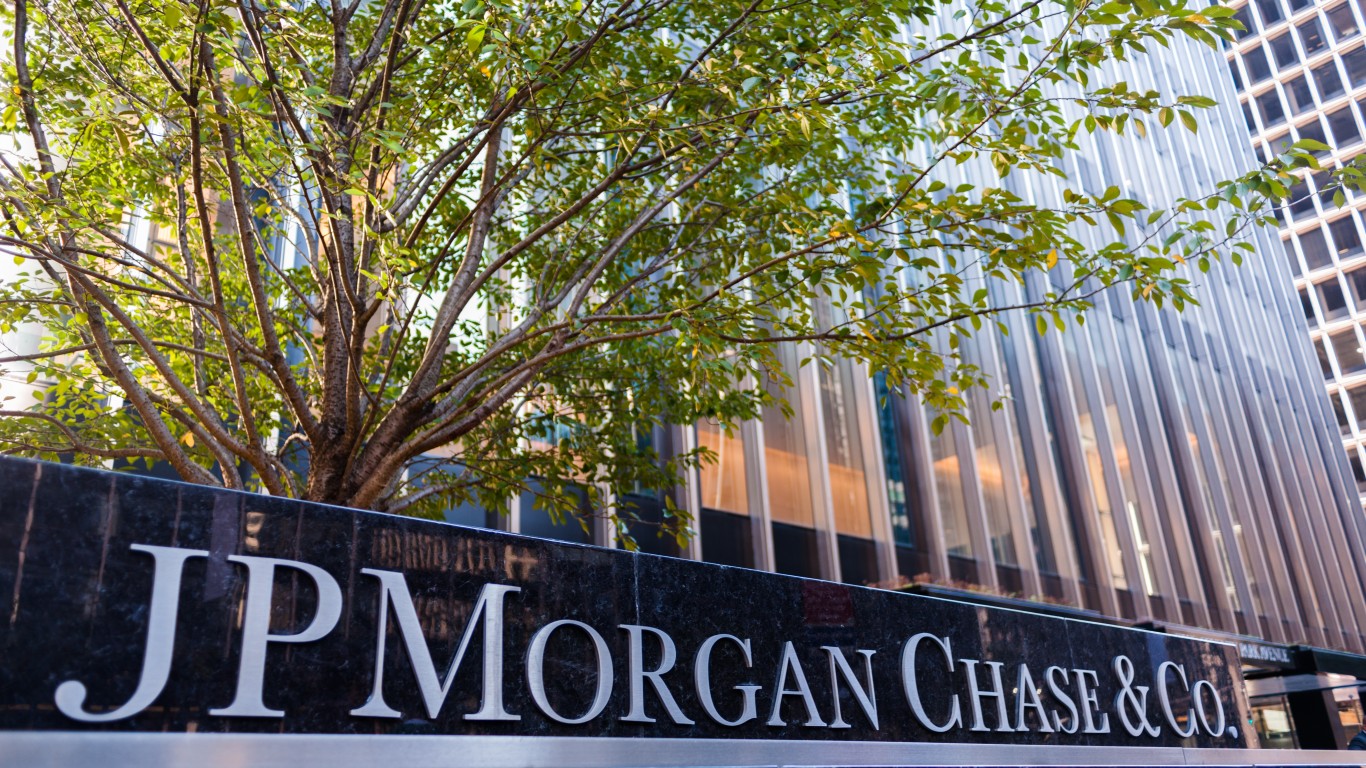
The Depository Trust & Clearing Corporation (DTCC) launched its Tokenization Service on October 28, 2026, a significant step for post-trade operations in the U.S. stock and bond markets. This service enables the creation of blockchain tokens that represent traditional securities, using the Canton Network, which relies on Canton Coin (CRYPTO: CC).
To date, 20 participants have signed up to use this service from DTC, the depository arm of the DTCC, including major banks and brokerages that hold securities at DTC. DTC holds over $114 trillion in assets under custody, and the participants include Barclays (NYSE: BCS), Citigroup (NYSE: C | C Price Prediction), JPMorgan Chase (NYSE: JPM), Morgan Stanley, and State Street (NYSE: STT).
The Tokenization Service operates on two networks: the Canton Network and DTCC’s private Besu network, with plans to add more networks in 2027.
Despite these advancements, Canton Coin’s value has continued to decline. CC traded at $0.1005, up 1.1% over the past 24 hours but still down 20.4% for the month. This dip is significant, as CC is 48.2% below its all-time high of $0.1942, reached on February 3, 2026.
Canton Strategic Holdings Is the Listed Company Closest to Canton Coin

Canton Strategic Holdings (NASDAQ: CNTN) recently divested its legacy biotech division, Gravitas Life Sciences, to focus on Canton-related businesses. As a Super Validator on the Canton Network, the company earns CC rewards. It also offers a Locking-as-a-Service product that secures CC for participants who must maintain minimum balances according to governance rules.
In the second quarter of 2026, these operations generated about $1.5 million in revenue, primarily from the new Locking-as-a-Service, which contributed $1.3 million. However, the company reported a net loss of $19 million due to the declining value of its 3.71 billion CC holdings, resulting in a $24 million unrealized loss, which reflects the depreciation of assets still on the books.
Looking ahead, the company plans to list tokenized shares on TSV LLC, a blockchain trading platform, with trading expected to start as soon as November 2 under the SEC’s Innovation Exemption.
Fairmint’s tokens are designed to carry the same rights as the company’s Nasdaq shares. However, the announcement does not clarify whether buyers will use CC for these transactions, suggesting trades may involve cash tokens or stablecoins, with CC serving only as a fee currency.
Banks Have Yet to Commit to Buying Canton Coin

While DTCC has welcomed 20 banks and brokers to its network, it has not guaranteed they will purchase, hold, or transact in Canton Coin. Institutions can avoid public-token systems entirely by using the Besu network. Their participation signals support for DTCC’s initiatives rather than a direct endorsement of Canton Coin.
CC serves as the utility token for the Canton network, enabling applications to pay synchronizer fees—a system that organizes and confirms transactions. CC fees are burned, permanently removing those tokens from circulation.
The network mints new tokens as rewards for app providers and validators based on their activity, so the overall CC supply grows as usage increases. However, under governance proposal CIP-0129, traffic on dedicated synchronizers will not contribute to burning CC.
DTCC has not specified which type of synchronizer it will use for its Canton transactions, leaving CC holders uncertain. If transactions occur on a dedicated synchronizer, it may generate DTCC fees while saving banks time, but it could also burn less CC.
The participating banks are also developing their own systems. Citi’s CEO, Jane Fraser, highlighted on the October 13 earnings call that Citi Token Services and tokenized deposits are key areas of focus, and the bank operates its own competing network connecting 300 banks.
State Street CEO Ron O’Hanley said on October 14 that its tokenized fund platform will launch by year-end, with its cash fund operating on Stellar. Meanwhile, JPMorgan has its own tokenized fund offerings.
Canton Coin Gains Only When Burning Outpaces Minting
On October 23, Canton’s Super Validators approved CIP-0129, which introduces universal burning: every production synchronizer will burn CC at a specified list price, with volume discounts for high-frequency users. A subsequent proposal is needed to set prices, but for now, the network is minting more CC than it burns.
The discounts could mean large users, likely banks, burn less CC per transaction. Additionally, the Canton Development Fund has allocated 15.8 million CC (valued at about $1.6 million) to RedStone to develop CAPS, a privacy-focused pricing standard still in development. If grant recipients sell their CC, it could further exert downward pressure on the token’s price.
This ongoing situation is reflected in CC’s performance, which is trading below its 20-day, 50-day, and 200-day moving averages, indicating continued market struggles.
Contact [email protected] for any questions or corrections.
Sam Daodu is a crypto analyst and the editor of 24/7 Wall St.'s Crypto Desk, where he covers Bitcoin, XRP, Ethereum, Solana and the altcoins investors search for most. His work focuses on price levels, spot ETF flows, on-chain data and the regulatory decisions that move crypto markets, written so a first-time buyer and a seasoned trader can both use it.
Sam has written about crypto professionally since 2019 and has published more than 2,000 articles. Before joining 24/7 Wall St., he wrote for crypto media outlets and Web3 companies and ghostwrote for crypto founders and token launches. His analysis is syndicated on Yahoo Finance, MSN and AOL and has been cited by other crypto news sites. He also founded MacLabs Marketing, a content and personal branding agency for crypto founders and executives.
When he isn't reading charts, Sam is usually at the gym or watching One Piece, a series he maintains has better tokenomics than most altcoins.