JPMorgan Has Nearly $900 Million in Tokenized Funds on Ethereum and Solana. Which Chain Benefits More?
JPMorgan just parked nearly $900 million in tokenized funds across Ethereum and Solana, but the fine print reveals one chain got a much bigger piece of the deal than the headlines suggest.

This post may contain links from our sponsors and affiliates, and Flywheel Publishing may receive compensation for actions taken through them.

JPMorgan Chase (NYSE: JPM | JPM Price Prediction) has made headlines by placing nearly $900 million in tokenized funds on both Ethereum (CRYPTO: ETH) and Solana (CRYPTO: SOL). A tokenized fund is an investment fund whose shares exist as tokens on a blockchain, allowing them to trade around the clock.
According to Sentora data, the JPMorgan OnChain Liquidity-Token Money Market Fund (JLTXX) holds about $792 million across both networks, while the My OnChain Net Yield Fund (MONY) holds an estimated $103.1 million on Ethereum alone.
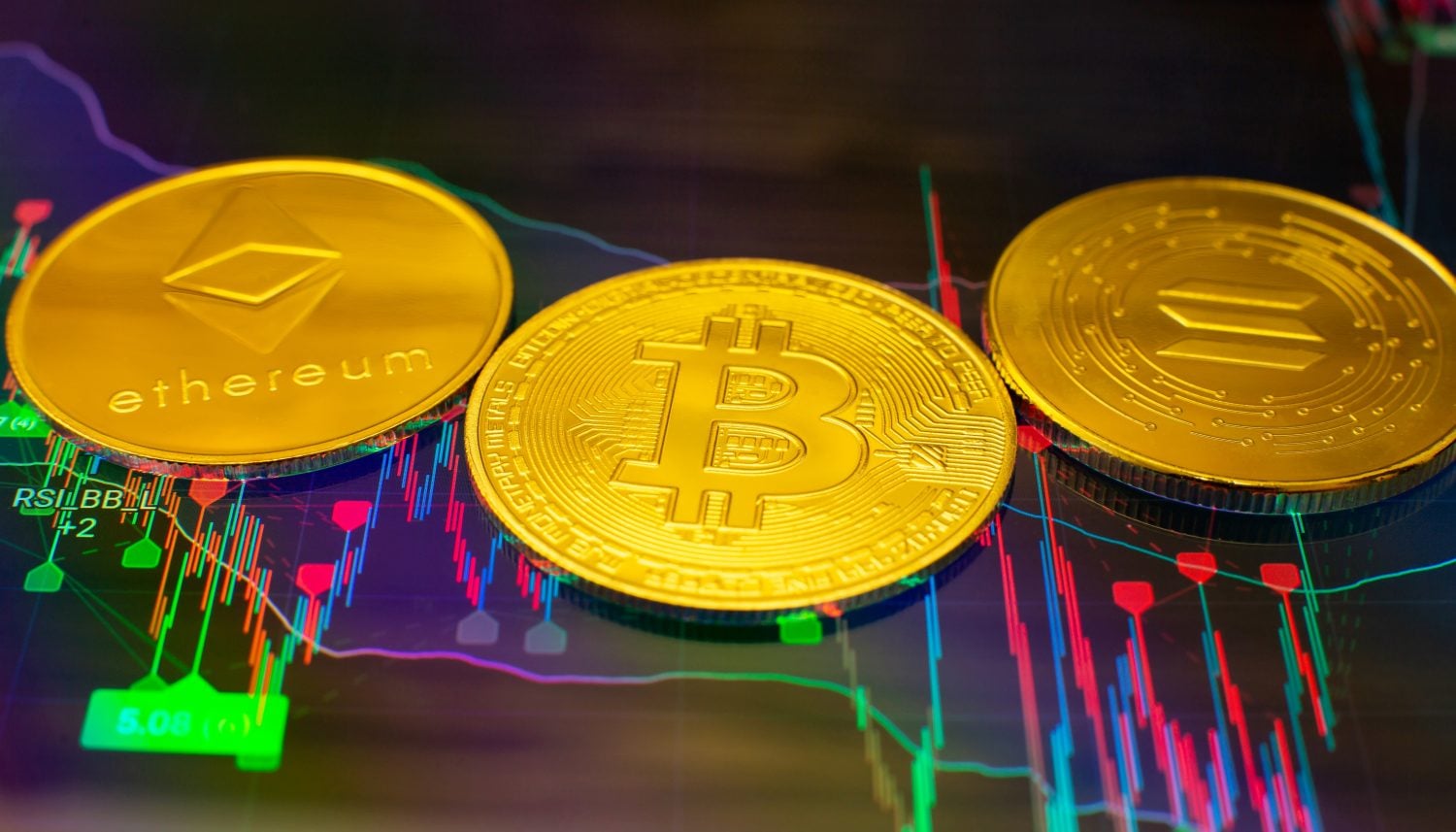
In just one week, JPMorgan took two significant steps. On October 19, 2026, Kinexys, the bank’s blockchain unit, introduced its JPM Coin deposit token (JPMD) to Ethereum. Shortly after, on October 22, J.P. Morgan Asset Management launched MONY and JLTXX on Solana. However, despite these announcements, both cryptocurrencies saw declines: ETH fell to $2,333, down 2.1% for the week, while SOL dropped to $101, down 1.5%.
What JPMorgan Put on Ethereum and Solana, Product by Product
JLTXX is a U.S.-registered government money market fund that invests cash in short-term government debt and passes interest earnings directly to investors. JPMorgan designed it so that stablecoin issuers can hold reserves in JLTXX tokens under the GENIUS Act, a federal stablecoin law. JPMorgan first launched JLTXX on Ethereum in May.
MONY, by contrast, is a private placement regulated under the SEC’s Rule 506(c), meaning only high-net-worth individuals can invest. JPMorgan rolled this fund out in December 2025. Both funds operate through Morgan Money, JPMorgan’s cash management platform, allowing investors to subscribe and redeem, then receive tokens at a designated blockchain address. Retail traders cannot purchase these tokens on exchanges.
Meanwhile, JPMD is a deposit token representing a dollar held in a JPMorgan bank account, enabling institutional clients to transact at any time. It initially launched on Base, the blockchain connected to Coinbase (NASDAQ: COIN), where Sentora reports a $1 million supply, but it is not yet available on Ethereum.
These tokenized funds bring in modest revenue compared to JPMorgan’s core businesses. Fees from these funds contribute to Asset & Wealth Management, which manages over $5.1 trillion in client assets, while payments revenue, including JPMD, grew 12% in the second quarter. Additionally, neither Sentora nor JPMorgan has disclosed how JLTXX’s $792 million is split between Ethereum and Solana, making it hard to say Solana has a significant share.
What JPMorgan’s Announcements Left Out
The announcements did not commit anyone to buy or hold ETH or SOL. When a tokenized fund moves its assets, it incurs small transaction fees known as gas. However, money market fund tokens mainly sit in a few institutional wallets, so they generate far less fee activity than stablecoin transfers or trading.
The Solana announcement notably excluded details about the on-chain cash used to trade the fund tokens. It mentioned Morgan Money as the subscription channel but did not reference any stablecoin or JPMD for Solana. Until JPMorgan identifies an on-chain cash option for Solana, the bank’s own dollars will remain absent from that chain.
When explaining its choice of Ethereum, JPMorgan cited its “established depth of on-chain liquidity and tokenized assets,” yet Sentora still shows no JPMD supply on Ethereum. Paul Przybylski, who leads digital and tokenized assets at J.P. Morgan Asset Management, said clients operate across multiple networks, so their liquidity should reflect that need. However, he did not provide specific figures to back that demand.
JPMorgan’s timing on Solana also could be considered late, as competitors like BlackRock (NYSE: BLK) and Franklin Templeton introduced tokenized funds there in 2025. Currently, the market appears to be contracting, with Sentora reporting $14.4 billion in tokenized Treasury and money market products across 119 offerings, a 3.5% decline over the past month.
Ethereum Holds the Lead in JPMorgan’s Onchain Funds
Ethereum currently leads JPMorgan’s tokenized funds. MONY’s $103.1 million is entirely Ethereum-based, JLTXX launched there first, and JPMD integrated into Ethereum before any other chain besides Base. Because Base is an Ethereum layer-2 network, the $1 million JPMD supply also links back to Ethereum.
JPMorgan and the respective coins gain different advantages from this move. JPMorgan stands to benefit from fee-generating fund assets and a reserve product tailored for stablecoin issuers, while Ethereum and Solana gain enhanced credibility and the potential for increased stablecoin and trading activity stemming from involvement with a prominent bank like JPMorgan. While both networks use a portion of their fees for validator rewards, the flow is negligible at these fund sizes.
Which Chain Benefits More From JPMorgan Tokenized Funds?
For now, Ethereum appears to benefit more from JPMorgan’s tokenized funds, though neither asset has guaranteed buyers. ETH has declined 12.5% over the past month, while SOL’s value has fallen 16.1%, trends that far outweigh the impact of a few hundred million dollars in funds.
Solana could gain ground if JPMorgan names it as a JPMD network, giving the funds an on-chain cash option there, or if a Solana-based stablecoin issuer starts holding its reserves in JLTXX. If JPMD’s Ethereum supply rises above zero before JPMorgan announces anything for Solana, Ethereum’s lead likely holds, but a Solana JPMD launch first could start shifting the advantage to SOL.
Contact [email protected] for any questions or corrections.
Sam Daodu is a crypto analyst and the editor of 24/7 Wall St.'s Crypto Desk, where he covers Bitcoin, XRP, Ethereum, Solana and the altcoins investors search for most. His work focuses on price levels, spot ETF flows, on-chain data and the regulatory decisions that move crypto markets, written so a first-time buyer and a seasoned trader can both use it.
Sam has written about crypto professionally since 2019 and has published more than 2,000 articles. Before joining 24/7 Wall St., he wrote for crypto media outlets and Web3 companies and ghostwrote for crypto founders and token launches. His analysis is syndicated on Yahoo Finance, MSN and AOL and has been cited by other crypto news sites. He also founded MacLabs Marketing, a content and personal branding agency for crypto founders and executives.
When he isn't reading charts, Sam is usually at the gym or watching One Piece, a series he maintains has better tokenomics than most altcoins.