XRP Has Lost Two-Thirds of Its Value Since Its All-Time High. Should You Hold or Sell?
XRP has shed two-thirds of its value from its peak, and now holders face a decision where staying put and walking away both carry serious consequences. Your cost basis, time horizon, and position size may matter far more than where…

This post may contain links from our sponsors and affiliates, and Flywheel Publishing may receive compensation for actions taken through them.

A $10,000 investment in XRP (CRYPTO:XRP) near its all-time high of $3.65 on July 17, 2025, is now worth about $3,425. XRP is trading at $1.25, which is roughly 66% lower than that peak. For many holders, the XRP hold-or-sell decision has become a tough choice.
The decline has accelerated recently, with XRP losing 16% of its value over the past month alone. This dip has left it trading just above key support levels at $1.24 and $1.20. Many investors feel trapped; selling would cement their losses, while holding risks further drops, leaving them uncertain about the future. Consequently, some end up making no decision at all.
XRP Needs a 192% Gain to Return to Its All-Time High
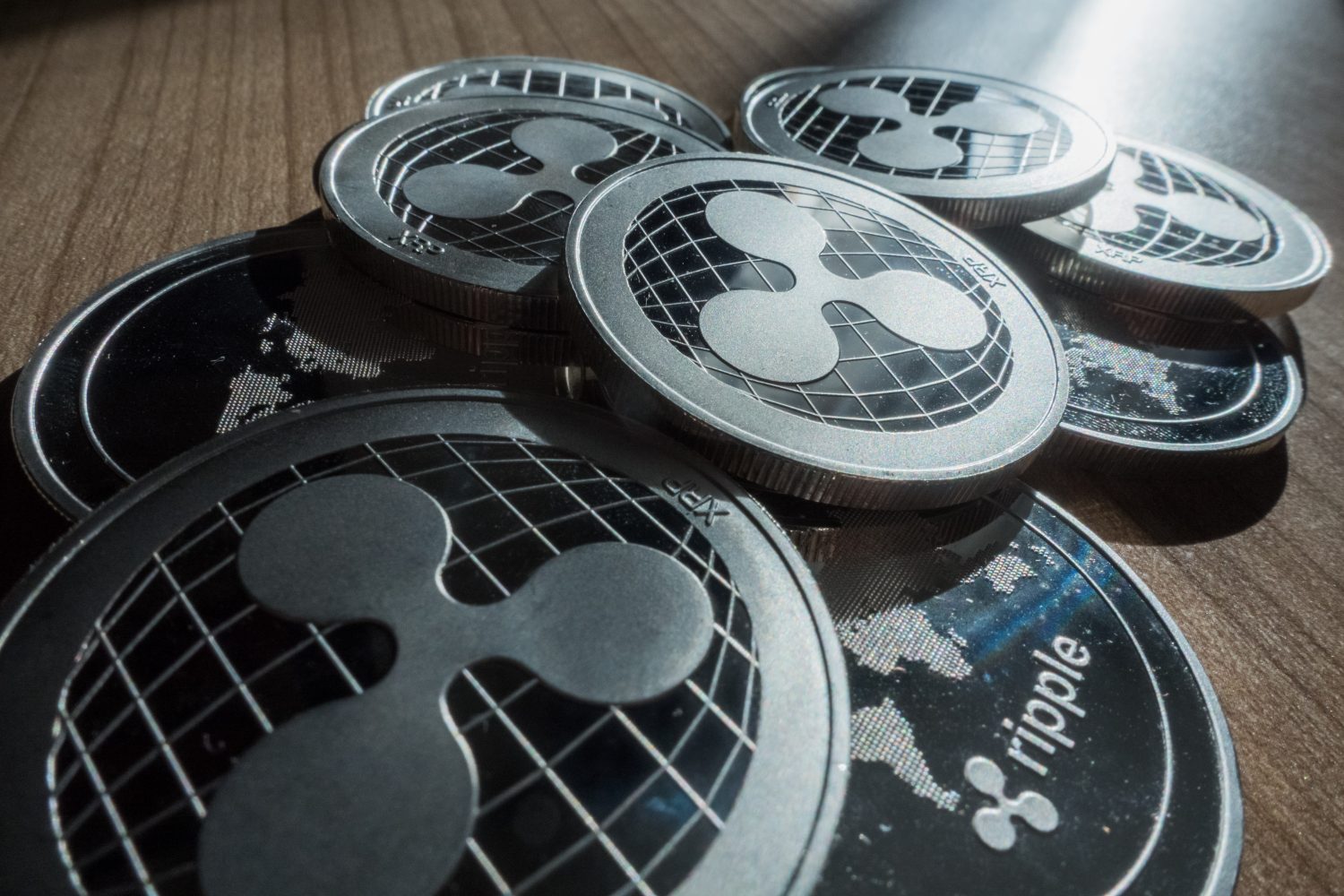
Mathematically, the situation is challenging for holders. After a 66% drop, XRP must rise approximately 192% from $1.25 just to return to $3.65. This means the coin would need to nearly triple before those who bought at the peak can break even.
XRP has recovered from significant crashes in the past, but it often takes years. For instance, after a peak close of $3.40 in January 2018, XRP didn’t close above that level again until July 17, 2025. Long-term holders haven’t gained as much as they might have expected; XRP traded around $1.21 in November 2021, so someone holding for five years is only up about 3%.
Time is a crucial factor for any holder. Although XRP could eventually recover, funds tied up in the coin for years can’t cover high-interest debt or unexpected expenses. For anyone who may need that money soon, the wait could be costly.
Ripple’s Bank Charter and XRP ETF Inflows May Encourage Some Holders

Despite the price decline, Ripple’s business has continued to grow. On October 26, the Office of the Comptroller of the Currency (OCC) gave Ripple National Trust Bank final approval, meaning the reserves backing Ripple’s RLUSD stablecoin—operating on the XRP Ledger—are under federal oversight. BNY (NYSE:BK), the main custodian of RLUSD reserves, also supports XRP on its custody platform.
Additionally, there hasn’t been a drop in ETF interest. XRP ETFs received $4.3 million in inflows in the week ending October 30 and now hold $1.42 billion in net assets.
XRP’s Link to Bitcoin and Limited ETF Demand Push Others to Sell
XRP’s performance is closely tied to Bitcoin (CRYPTO:BTC) and often suffers larger drops when Bitcoin declines. Over the past year, XRP has fallen 50%, compared to Bitcoin’s 29% drop. In 2026, XRP is down 32%, while Bitcoin has lost only about 12%. Our analysis of why XRP drops every time Bitcoin drops explains how their prices are interconnected.
Moreover, demand for XRP ETFs remains weak compared to Bitcoin’s. While spot Bitcoin ETFs hold around $98 billion in assets, the entire XRP market is valued at about $79 billion. As a result, even a few million dollars in weekly inflows have limited impact on XRP’s price.
Taxes can also shape decision-making. Realizing a loss can offset capital gains dollar for dollar. If losses exceed gains, investors may deduct up to $3,000 of the remaining loss from ordinary income each year under 26 U.S.C. § 1211(b). For those in the 22% tax bracket, this deduction can save approximately $660. Our guide on utilizing October’s crypto losses to reduce your 2026 tax bill outlines the necessary steps.
Cost Basis, Time Horizon, and Position Size Determine the XRP Decision
Ultimately, your numbers matter more than XRP’s future movements. First is cost basis, the price at which you bought XRP. If you purchased it in November 2023 for around $0.61, you’re up about 105%, meaning selling would incur a tax liability. In contrast, someone who bought near the all-time high may be sitting on losses that could help reduce taxes.
Next is your time horizon. If you need access to your funds within a year or two, holding XRP—especially given its historical ups and downs—could be risky.
Finally, consider your position size. If XRP represents a small portion of your portfolio, another drop may sting but won’t be life-changing. However, if you have most of your net worth in XRP, selling part of your holdings may lower your risk.
XRP Hold or Sell: Should You Keep XRP After a 66% Drop?
A common mistake is holding on simply to break even, as the price you paid has no bearing on where XRP might move next. If you can wait several years and expect Ripple’s growth and ETF demand to boost prices, holding may make sense. On the other hand, if you need access to funds soon, or if a tax-loss sale is advantageous, you might want to consider selling some or all of your holdings.
If Bitcoin stabilizes and ETF inflows increase, holders might be able to sell at a better price or wait for a more favorable market. However, if XRP drops below its $1.20 support level, the decision could become more complicated for those who can’t afford to wait years for a recovery.
Contact [email protected] for any questions or corrections.
Sam Daodu is a crypto analyst and the editor of 24/7 Wall St.'s Crypto Desk, where he covers Bitcoin, XRP, Ethereum, Solana and the altcoins investors search for most. His work focuses on price levels, spot ETF flows, on-chain data and the regulatory decisions that move crypto markets, written so a first-time buyer and a seasoned trader can both use it.
Sam has written about crypto professionally since 2019 and has published more than 2,000 articles. Before joining 24/7 Wall St., he wrote for crypto media outlets and Web3 companies and ghostwrote for crypto founders and token launches. His analysis is syndicated on Yahoo Finance, MSN and AOL and has been cited by other crypto news sites. He also founded MacLabs Marketing, a content and personal branding agency for crypto founders and executives.
When he isn't reading charts, Sam is usually at the gym or watching One Piece, a series he maintains has better tokenomics than most altcoins.