The XRP Ledger Now Ranks 6th for Tokenized Assets With $5 Billion. How Much of It Actually Needs XRP?
Major institutions like Franklin Templeton and Aviva Investors are racing to tokenize assets on the XRP Ledger, pushing its value past $5 billion, but the settlement details of their biggest deals reveal a surprising truth about XRP's actual role in…

This post may contain links from our sponsors and affiliates, and Flywheel Publishing may receive compensation for actions taken through them.
The XRP Ledger (XRPL) has seen impressive growth in tokenized assets, climbing to $5.05 billion in 2026. This positions it as the sixth-largest blockchain for such assets. But how much does this growth rely on XRP (CRYPTO:XRP)?
Tokenized real-world assets on the XRP Ledger have grown significantly, increasing from $1.76 billion in early 2026 to $5.05 billion. This surge, tracked by RWA.xyz, places XRPL in sixth place among all blockchains.
These assets typically include traditional investments like shares, funds, and loans, all recorded as tokens on the blockchain. Notable institutions like Aviva Investors, Singapore’s DBS, Franklin Templeton (NYSE:BEN), and Ripple are actively developing their projects on this ledger.
Despite the growth of tokenized assets, XRP’s price hasn’t followed suit. Currently, XRP trades at $1.32, up 2.9% in the last 24 hours. By comparison, Bitcoin (CRYPTO:BTC) has increased by 3.7%, and Ethereum (CRYPTO:ETH) has risen by 6% over the same period. Moreover, XRP is down 28.3% year-to-date and sits 63.8% below its all-time high of $3.65.
Interestingly, XRP exchange-traded funds (ETFs) hold $1.46 billion but showed zero net flows on November 3. While XRPL’s tokenized assets expanded throughout the year, XRP’s value fell. This raises the question: how much of the $5.05 billion in tokenized assets actually requires XRP for operation?
Most XRPL Tokenized Assets Cannot Move Off Their Issuing Platform
According to RWA.xyz, tokenized assets fall into two categories: distributed assets, which can be transferred to external wallets and traded among investors, and represented assets, which remain on the issuing platform and serve as a shared record of ownership for institutions. This distinction affects how often these assets move on the ledger and, consequently, how much XRP is used in transactions.
On the XRP Ledger, represented assets overwhelmingly dominate. RWA.xyz reports that represented assets account for $5.02 billion, while distributed assets stand at just $645 million, making the distributed share a mere 11.4%. By distributed value alone, XRPL ranks ninth, trailing projects like Stellar, Arbitrum, and ZKsync Era.
The distributed assets predominantly consist of cash-like funds. For instance, Franklin Templeton’s Benji platform holds $195 million in tokenized money market funds, while Ondo maintains $186 million in a tokenized short-term Treasury fund. Additionally, VERT Capital, a Brazilian firm, has placed $116 million in private credit loans on the ledger, followed by Archax with $55 million.
Ripple’s RLUSD, Not XRP, Settles XRPL’s Biggest Fund Deal
Stablecoins are tracked separately and excluded from RWA.xyz’s overall network totals. The XRP Ledger currently holds $902 million in stablecoins, with Ripple USD (CRYPTO:RLUSD) constituting $850 million of that amount, making it the largest entry on the ledger. Stablecoin issuers typically earn interest on the cash and Treasury bills that back their tokens, so each new RLUSD dollar contributes to Ripple’s revenue. However, Ripple operates as a private entity and does not disclose its revenue breakdown by business unit.
Ripple’s operations are also expanding. The company runs a cross-border payments network, offers custody services, and owns Ripple Prime, a prime brokerage that supports hedge funds with lending, trade clearing, and asset custody. Moreover, on October 26, the Office of the Comptroller of the Currency granted final approval for Ripple National Trust Bank. This bank will manage the reserves for RLUSD and provide custody services, but it is prohibited from accepting insured deposits or making loans.
Under a September 2025 agreement, DBS, Franklin Templeton, and Ripple are planning to list sgBENJI, a tokenized Franklin money market fund, on DBS Digital Exchange. Clients will be able to trade it against RLUSD and use it as collateral for repo trades—short-term loans backed by securities. Ripple’s global head of trading and markets, Nigel Khakoo, has praised RLUSD as “a regulated, stable and liquid mode of exchange,” and the deal’s terms give XRP no role in settlements for this partnership.
Likewise, in a February 13, 2026, announcement, Aviva Investors and Ripple revealed plans to launch tokenized funds on XRPL throughout 2026 and beyond, highlighting the ledger’s fast and low-cost transactions but omitting any mention of a settlement token. This suggests Aviva could settle in pounds, RLUSD, or other assets, limiting XRP’s role to transaction fees.
Stablecoins Carry Nearly All the Value Moving on XRPL
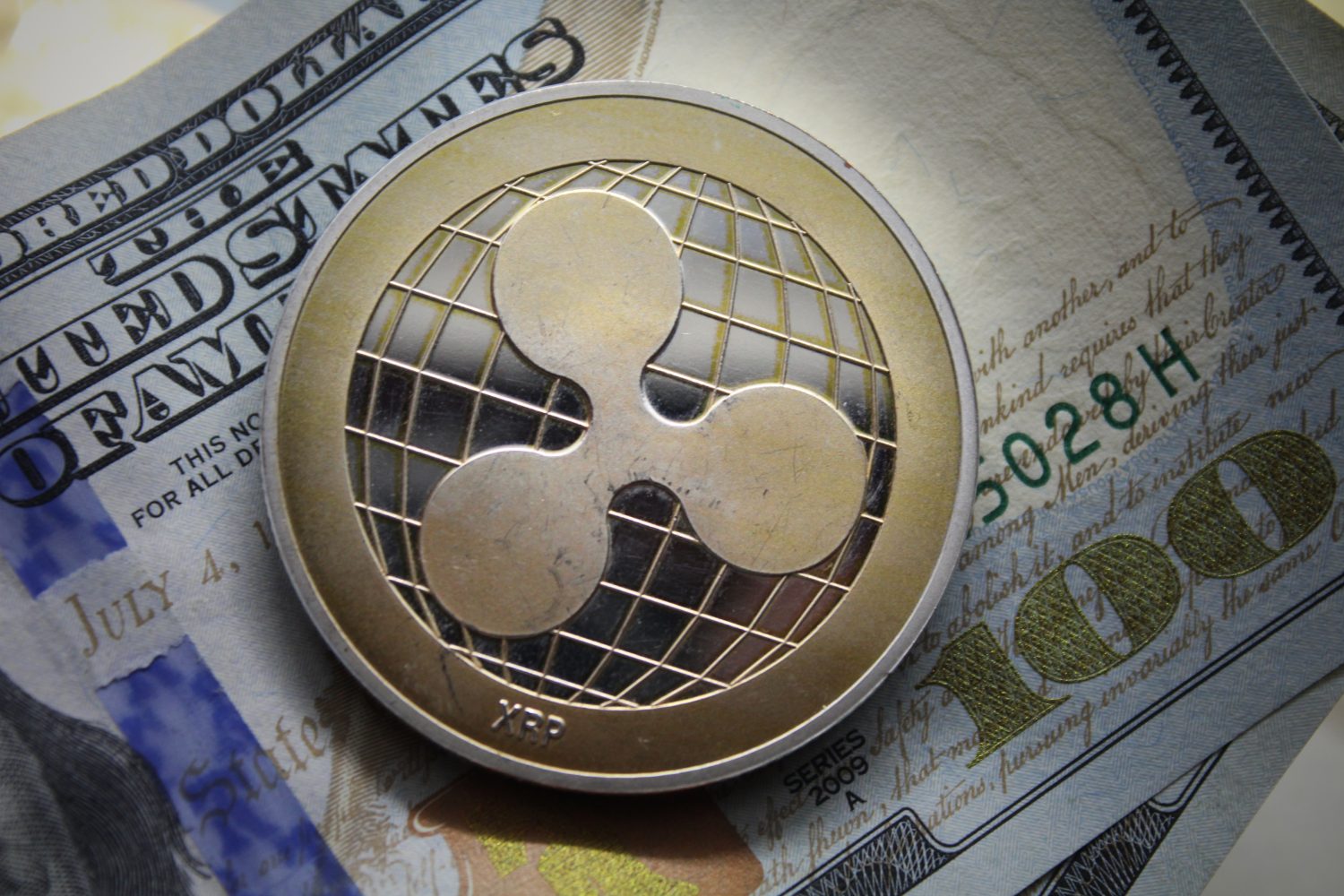
XRPL data also shows a clear preference for RLUSD. RWA.xyz notes that the ledger’s transfer volume for tokenized assets over the last 30 days was just $22.5 million, a staggering 99.7% drop from the previous month. In contrast, stablecoin transfer volume surged to $9.1 billion, up 80.9%. This indicates that nearly all the value moving across XRPL comes from stablecoin transactions.
XRPL’s sixth-place ranking can also be misleading when compared to its competitors. Ethereum alone boasts $15.2 billion in tokenized assets, excluding stablecoins, with a staggering 99.3% classified as distributed. Stellar, often seen as XRPL’s closest rival, holds $4.1 billion solely in distributed assets. Avalanche, which looks more like XRPL, has a total value of $12.9 billion, with only 11.7% of its assets distributed.
How Much of the $5 Billion in XRPL Tokenized Assets Requires XRP?
In reality, very little of the $5 billion in XRPL tokenized assets relies on XRP. XRP is involved in transactions primarily in two ways. Each transaction has a 10-drop fee (equivalent to 0.00001 XRP) that is permanently burned. Additionally, every XRPL account must maintain a minimum XRP balance to function, but beyond that, XRP use in the ecosystem is minimal.
Contact [email protected] for any questions or corrections.
Sam Daodu is a crypto analyst and the editor of 24/7 Wall St.'s Crypto Desk, where he covers Bitcoin, XRP, Ethereum, Solana and the altcoins investors search for most. His work focuses on price levels, spot ETF flows, on-chain data and the regulatory decisions that move crypto markets, written so a first-time buyer and a seasoned trader can both use it.
Sam has written about crypto professionally since 2019 and has published more than 2,000 articles. Before joining 24/7 Wall St., he wrote for crypto media outlets and Web3 companies and ghostwrote for crypto founders and token launches. His analysis is syndicated on Yahoo Finance, MSN and AOL and has been cited by other crypto news sites. He also founded MacLabs Marketing, a content and personal branding agency for crypto founders and executives.
When he isn't reading charts, Sam is usually at the gym or watching One Piece, a series he maintains has better tokenomics than most altcoins.