How Much Does a Bitcoin ATM Charge You to Buy $100 of Bitcoin?

This post may contain links from our sponsors and affiliates, and Flywheel Publishing may receive compensation for actions taken through them.
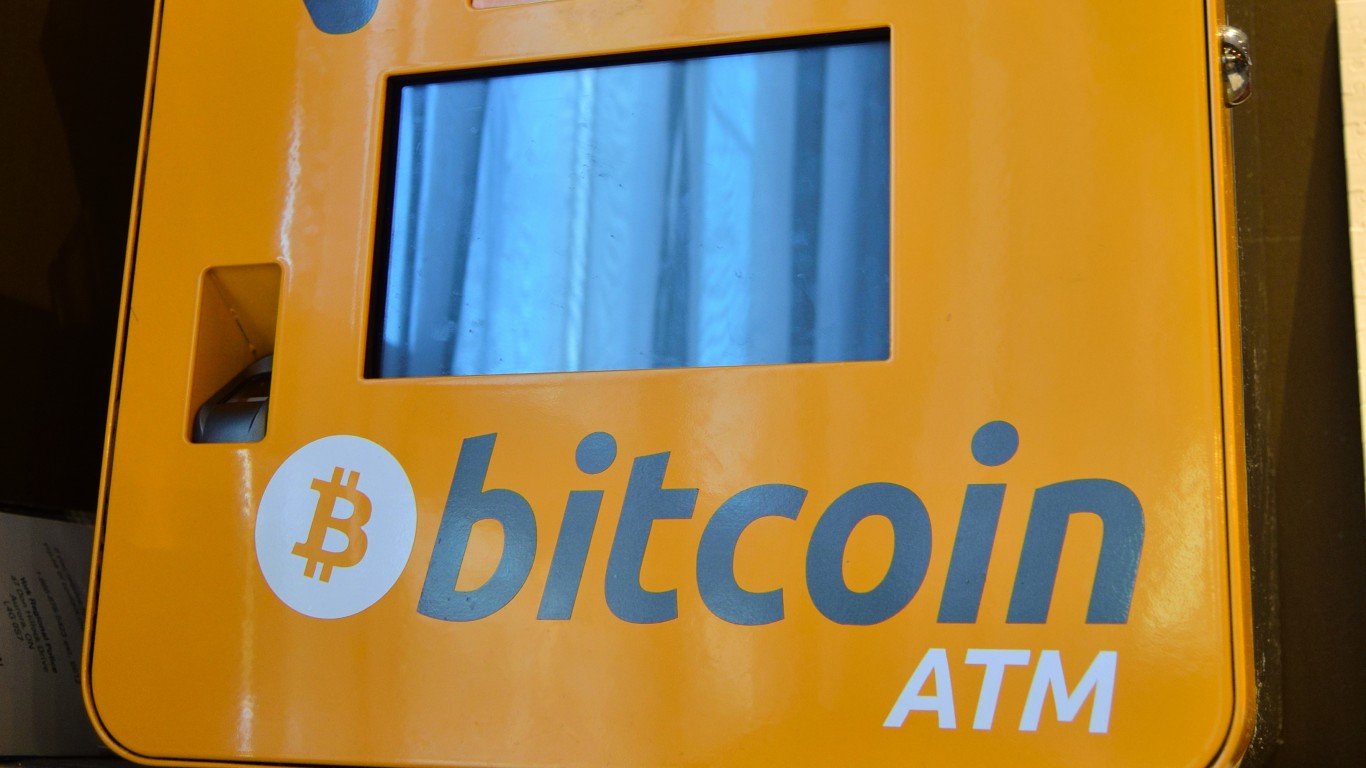
Buying $100 of Bitcoin (CRYPTO:BTC) through a Bitcoin ATM can cost you between $8 and $35 in fees, according to the disclosures from major operators. In one test, putting $20 into a crypto ATM resulted in just $13.22 worth of Bitcoin after fees—a common scenario with these machines.
Bitcoin trades around $71,297 currently, after the November slide we flagged, so a $100 purchase gets only a small fraction of a Bitcoin. That fraction varies by ATM’s fee structure, as operators add a mix of percentage fees, flat charges, and sometimes a network fee on top of the market rate. So what do the leading operators say about Bitcoin ATM fees?
What Bitcoin ATM Operators Share About Their Fees
The numbers below come from the latest disclosures by the operators. They don’t publish a specific example for a $100 purchase, so the figures below reflect only their stated fees.
| Operator | Stated Fee or Markup | Flat or Network Charge | Disclosure |
|---|---|---|---|
| CoinFlip | 5% to 22% (typical range) | Network fee, minimum $2.99 | Terms of service updated Nov. 5, 2026 |
| Athena Bitcoin | 13% to 28% (typical range) | Separate flat transaction fee | Annual report for 2025 |
| Bitcoin Depot | 15% to 50% markup | Flat $3 on every kiosk transaction | Annual report for 2025 |
For a $100 purchase, CoinFlip’s fees range from $5 to $22, plus a network fee of at least $2.99. At Bitcoin Depot, a 15% to 50% markup means you would get only about $67 to $87 worth of Bitcoin before its $3 flat fee. CoinFlip requires a $20 minimum first purchase and rejects $1 bills. Bitcoin Depot filed for Chapter 11 bankruptcy in May, and Nasdaq suspended its shares on May 26.
Some states have started limiting what kiosks can charge.
- Illinois caps kiosk fees at the greater of $5 or 18% of the transaction, with daily limits of $2,500 for new customers and $10,500 for existing customers.
- California caps fees at 15% or $5, whichever is higher, and has limited kiosks to $1,000 per day since January 1, 2024.
- Minnesota has banned virtual currency kiosks since August 1.
Why Bitcoin ATMs Are More Expensive Than Apps
The higher costs of Bitcoin ATMs start with handling cash. These kiosks accept paper money, so operators pay for armored cash pickups, machine maintenance, and rent for the locations hosting them, and those costs are spread across many small transactions.
Convenience also comes with a price. Buyers can use these kiosks without a bank account or brokerage login, and the coins reach their wallets quickly, which some users are willing to pay extra for.
Part of the fee also hides in the exchange rate. CoinFlip’s guide explains how the spread, the difference between the market rate for Bitcoin and the rate quoted at the machine, works as a fee without showing up as a line item. If the ATM displays a Bitcoin price above the current market rate, customers are paying a hidden fee before any posted charges.
Fraud prevention also adds to the cost. Operators maintain compliance teams and fraud warnings because criminals sometimes direct victims to these machines, and those expenses feed into the fees.
More Affordable Options to Buy $100 of Bitcoin
If you have a bank account, a brokerage is one of the simplest and cheapest routes. For example, Charles Schwab (NYSE:SCHW | SCHW Price Prediction) charges 0.75% on crypto trades, which amounts to just 75 cents on a $100 purchase. Increasingly, banks are also letting customers hold crypto.
Another alternative is a spot Bitcoin ETF. The Grayscale Bitcoin Mini Trust (NYSEARCA:BTC) has a low expense ratio of 0.15%, which Grayscale calls the lowest of any spot Bitcoin fund. However, Grayscale notes that the fund is not a direct investment in Bitcoin, so holders cannot transfer it to a personal wallet.
Crypto exchange apps typically offer a middle ground. They allow users to hold coins and withdraw them to their own wallets, but usually require ID verification and a linked bank account or card. For those who want control over their coins, an exchange is generally much cheaper than a kiosk for the same amount of Bitcoin.
How Much Does a Bitcoin ATM Charge on $100?
For anyone with a bank account, Bitcoin ATMs are typically among the most expensive places to buy $100 worth of Bitcoin, with CoinFlip’s fees reaching as high as 22% and Bitcoin Depot’s markup hitting 50%. If cash is your only option, compare the kiosk’s quoted rate with the live price before inserting bills, and check whether your state has fee caps. More states may follow Illinois with such limits, which could lower kiosk costs.
Kiosks also attract scams, and a legitimate business or government agency never asks for payment through a Bitcoin ATM. In a May 15 alert, the FBI reported receiving over 13,400 complaints related to cryptocurrency kiosks in 2025, with losses exceeding $388 million—up 58% from 2024. The bureau emphasized that “no legitimate law enforcement or government official will call to demand payment via a cryptocurrency kiosk.”
Contact [email protected] for any questions or corrections.
Sam Daodu is a crypto analyst and the editor of 24/7 Wall St.'s Crypto Desk, where he covers Bitcoin, XRP, Ethereum, Solana and the altcoins investors search for most. His work focuses on price levels, spot ETF flows, on-chain data and the regulatory decisions that move crypto markets, written so a first-time buyer and a seasoned trader can both use it.
Sam has written about crypto professionally since 2019 and has published more than 2,000 articles. Before joining 24/7 Wall St., he wrote for crypto media outlets and Web3 companies and ghostwrote for crypto founders and token launches. His analysis is syndicated on Yahoo Finance, MSN and AOL and has been cited by other crypto news sites. He also founded MacLabs Marketing, a content and personal branding agency for crypto founders and executives.
When he isn't reading charts, Sam is usually at the gym or watching One Piece, a series he maintains has better tokenomics than most altcoins.