Litecoin Fell Below $50 and Sits 88% Under Its All-Time High, Twice as Far as Bitcoin. Will LTC Ever Go Back Up?

This post may contain links from our sponsors and affiliates, and Flywheel Publishing may receive compensation for actions taken through them.
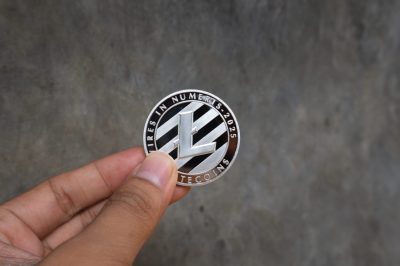
Litecoin (CRYPTO:LTC) has fallen below $50, trading around $49 after a 5.7% drop in 24 hours. That decline took it below its lowest level in the prior 30 days, $50 on November 8.
Litecoin is trading 88.2% below its all-time high of $410, set on May 9, 2021. In contrast, Bitcoin (CRYPTO:BTC) dropped 3.9% in the same timeframe to approximately $71,300 and trades 43.4% below its peak of $126,080 from October 6, 2025. So why is Litecoin falling more sharply, and will it ever recover?
Forced Selling in Bitcoin Dragged Litecoin Under $50
Litecoin’s decline began with Bitcoin, as a wave of leveraged long positions was forced to close. These trades rely on borrowed funds to amplify gains, and when prices drop far enough, exchanges sell the positions to cover the loans. Each forced sale, a liquidation, pushes the price lower and triggers the next, a chain reaction known as a liquidation cascade.
In addition to leveraged selling, withdrawals from spot Bitcoin ETFs, a general aversion to risk, and weaker technology stocks contributed to the downturn. Smaller cryptocurrencies like Litecoin are usually hit harder during such sell-offs because fewer buyers are ready to absorb the selling.
A quick bounce for Litecoin appears unlikely to last. Although liquidation-driven selling tends to fade once forced positions close, any rebound after that will need new buyers to step in.
On the charts, Litecoin is trading below its 20-day simple moving average of $54, about 12% higher; its 50-day average of $61, about 25% higher; and its 200-day average of $52, about 7% higher. Trading below the 200-day average signals a long-term downward trend.
Litecoin Has Trailed Bitcoin, Ethereum and Solana for Years
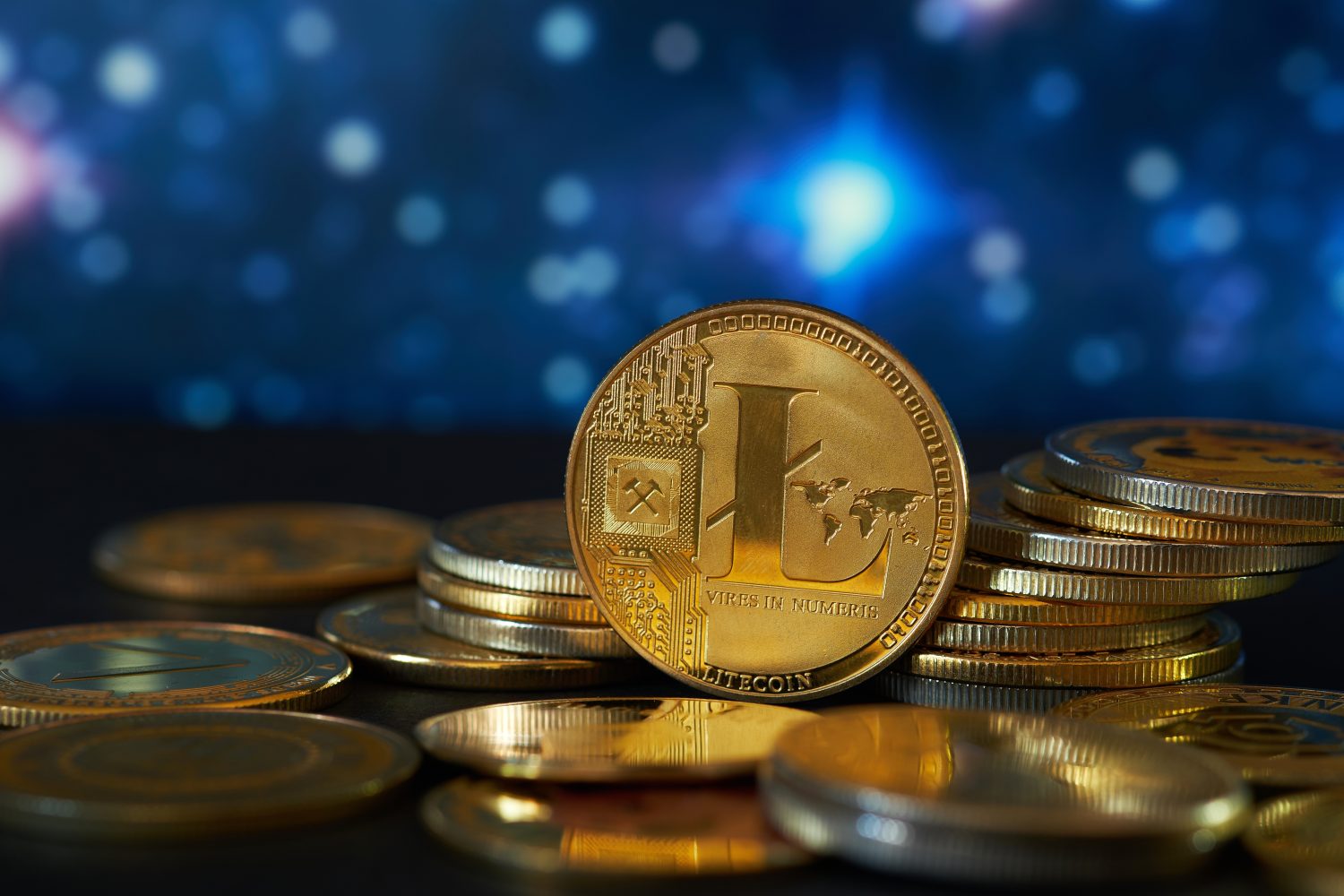
In the same 24-hour period, Ethereum (CRYPTO:ETH) fell 4.1% while Solana (CRYPTO:SOL) declined 4.9%, which leaves Litecoin the weakest performer of the four. This year, Litecoin is down 35%, while Bitcoin has dropped 15.9%. Over the past five years, Litecoin has lost 80.7%, compared with Bitcoin’s 14.2% rise and Ethereum’s and Solana’s losses of 56% and 65.5%, putting Litecoin in the worst position.
When priced in Bitcoin, the trend is similar. At the end of December 2025, one Litecoin could buy approximately 0.000877 BTC, whereas now it can only purchase around 0.00068 BTC, about 22% less. Litecoin briefly outperformed Bitcoin in September, when the ratio reached 0.00095, but that lead faded the same way earlier leads did.
Size accounts for much of the gap. Litecoin ranks 24th by market cap, whereas Bitcoin holds the top spot and attracts ETF and corporate-treasury money that Litecoin can’t match. Litecoin’s role as a payments coin also faces competition from faster networks and stablecoins.
Litecoin’s Recovery Leans on Buyers Who Haven’t Shown Up
Lite Strategy (NASDAQ:LITS) holds 751,798 LTC, about $36.5 million, according to the company on November 10. While a corporate treasury that locks up coins can limit market supply, it creates no new demand once the company stops buying.
Spot Litecoin ETFs, which hold the coin directly and trade like stocks, are open every trading day, but demand remains weak. Their net assets stood at about $11.3 million on November 11. Since October 13, they’ve had only one day of net inflows, $581,000 on October 19, and two days of net outflows, $276,000 on October 27 and $271,000 on November 4.
The most encouraging sign for Litecoin buyers is a 13.9% gain over the past 90 days, measured from mid-August. This suggests that buyers do enter the market when prices drop, but the gain has been shrinking as selling pressure continues.
Litecoin Price FAQ
Is Litecoin a Good Investment?
This largely depends on the investor’s risk tolerance and time frame. Litecoin has lagged behind Bitcoin over one year and five years, and demand for its ETFs remains low. Our look at what $1,000 in Litecoin could be worth by 2028 goes through the numbers.
Will Litecoin Reach $500?
For Litecoin to reach $500, it would first need to surpass its all-time high of $410. Current price trends and fund flows don’t point to that soon, but it may be possible during a strong market cycle, as our look at whether Litecoin can reach $500 by 2030 explains.
Will Litecoin Ever Go Back Up?
A rebound could come once the selling pressure eases, as it did in September. However, a return to the $410 all-time high seems unlikely without new money choosing Litecoin over Bitcoin. Most published Litecoin forecasts come from AI models and automated sites, which aren’t evidence, a limit that applies to our own Grok price comparison too.
Two signals could show Litecoin’s next direction. If it recovers its 200-day moving average of $52 while spot Litecoin ETFs post several straight days of inflows, a lasting recovery might be starting. But if it breaks below its one-year low of $41 from June 25, about 16% lower, this year’s downtrend could have further to run.
Contact [email protected] for any questions or corrections.
Sam Daodu is a crypto analyst and the editor of 24/7 Wall St.'s Crypto Desk, where he covers Bitcoin, XRP, Ethereum, Solana and the altcoins investors search for most. His work focuses on price levels, spot ETF flows, on-chain data and the regulatory decisions that move crypto markets, written so a first-time buyer and a seasoned trader can both use it.
Sam has written about crypto professionally since 2019 and has published more than 2,000 articles. Before joining 24/7 Wall St., he wrote for crypto media outlets and Web3 companies and ghostwrote for crypto founders and token launches. His analysis is syndicated on Yahoo Finance, MSN and AOL and has been cited by other crypto news sites. He also founded MacLabs Marketing, a content and personal branding agency for crypto founders and executives.
When he isn't reading charts, Sam is usually at the gym or watching One Piece, a series he maintains has better tokenomics than most altcoins.