Will Cardano (ADA) Recover in 2027?

This post may contain links from our sponsors and affiliates, and Flywheel Publishing may receive compensation for actions taken through them.
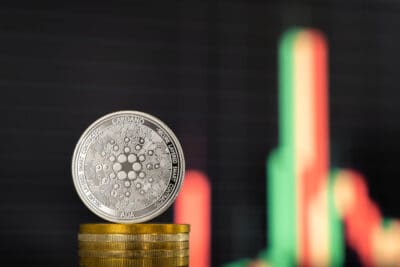
Cardano (CRYPTO: ADA) trades at $0.15, a staggering 95.1% below its all-time high of $3.09 in September 2021. To recover in 2027, ADA needs to climb at least 67% just to break above the $0.25 mark. Over the past month, it has dropped by 31.1%, hitting a low of $0.148 on November 14.
Cardano’s recovery could mean three target levels. The first is getting back above $0.25. The second is reaching $0.33, which is 120% higher than its price. The third is hitting $1, a target many investors frequently mention.
November has been particularly hard for ADA, as it fell from $0.193 on October 31, down 21.1% since then. So, is there a chance ADA could reach any of these levels in 2027?
Bitcoin Has to Stop Falling Before Cardano Can Recover

Bitcoin (CRYPTO: BTC) trades at $64,118, down 13% in just one week and 49.1% below its all-time high. During the same period, ADA dropped 12.5%, showing a close correlation between the two cryptocurrencies.
Over a longer timeframe, ADA tends to underperform even more. It has fallen 67.3% over the past year, compared with Bitcoin’s 30.4% decline. Additionally, Bitcoin is trading about 12% below its 200-day moving average of $72,872, a measure traders use to identify market trends.
Dijkstra Upgrades Arrive as Charles Hoskinson Steps Back

The next phase of Cardano’s development, called Dijkstra, is split into two parts. The first phase is expected in the fourth quarter of 2026, with the second phase, known as Peras, slated for the second quarter of 2027. The Peras upgrade aims to speed up transaction finality, which helps applications that require quick settlements.
However, on November 13, founder Charles Hoskinson said his personal role in building Cardano is done. His declaration—”My job is done with Cardano”—has left some investors concerned about the project’s future direction during this critical upgrade phase.
Cardano’s DeFi Shrinks While Staking Holds and the ETF Waits
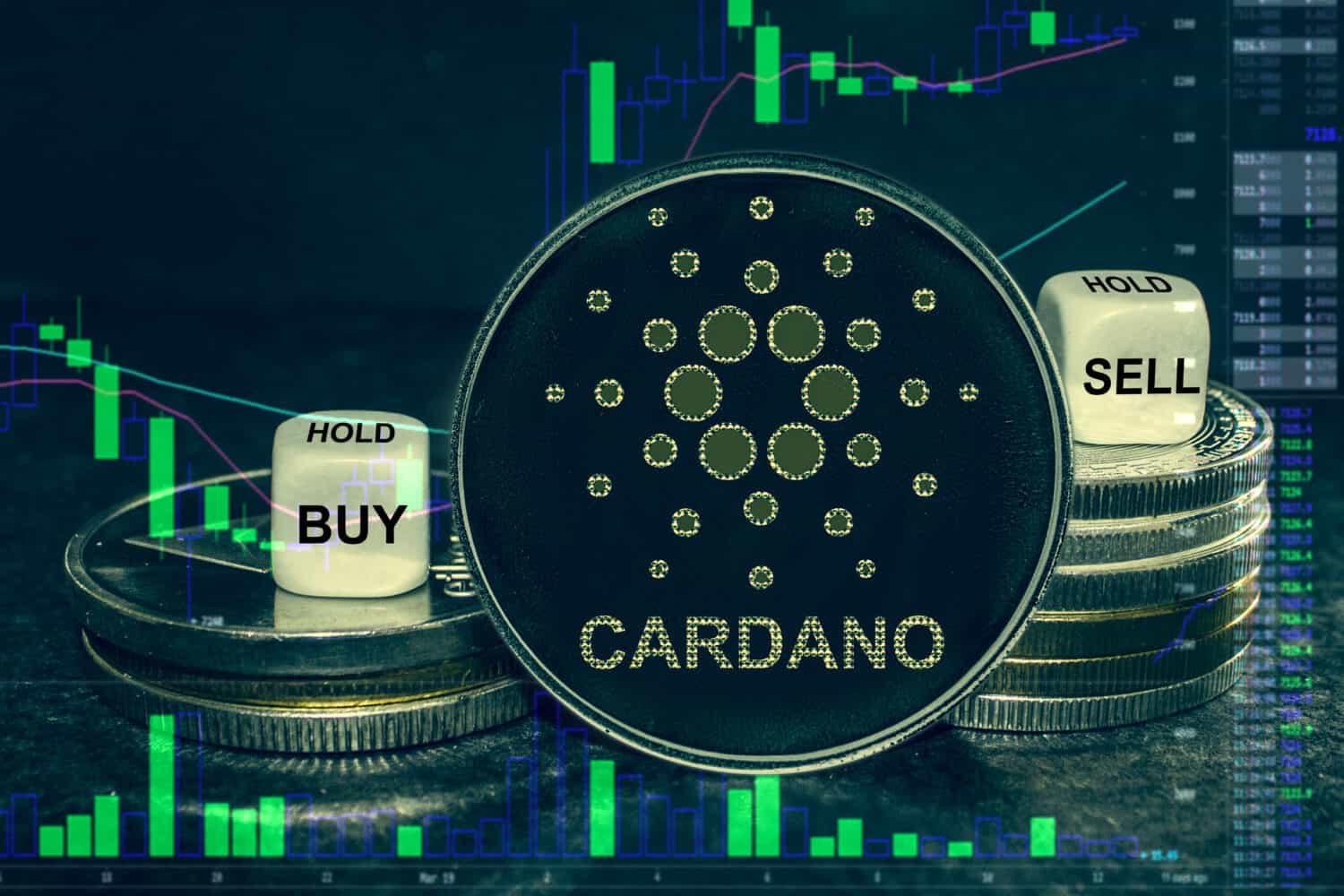
Cardano’s decentralized finance (DeFi) apps are struggling. According to DefiLlama, total value locked in Cardano’s DeFi apps is about $54 million, down 79% from $260 million a year earlier.
On a more positive note, Cardano’s staking remains stable. Around 57.9% of ADA’s supply is staked, yielding about 2.1% in rewards as of October. Yet, this yield seems inadequate compared to ADA’s 67.3% drop over the past year.
The approval of an exchange-traded fund (ETF) for ADA, like Grayscale’s pending Cardano ETF, could attract new investors. Outside demand has moved ADA before. It shot up 79%, from $0.633 to $1.13, after President Donald Trump named ADA for a U.S. crypto strategic reserve on March 2, 2025.
Cardano Has Never Won Back a Fall This Deep
Cardano has spent more than five years below its all-time high and is down 91.5% over five years. Its best close in the late 2024 rally was $1.23 on December 6, 2024. Smaller pullbacks have reversed quickly, such as the rise from $0.33 on November 5, 2024, to over $1 by November 22. In 2026, ADA hit a low of $0.144 on June 28 before a brief 88% rebound to $0.27.
ADA faces another hurdle from supply dilution, as new coins are released to reward stakers, further increasing supply. A close at $1.01 in November 2024 corresponded to a market cap of $36.1 billion, while $1 in 2027 would require a market cap of about $38 billion based on the circulating supply.
ADA’s market cap is $5.72 billion, ranking it 18th among cryptocurrencies, and a look at whether to buy, sell, or hold Cardano before year-end covers the near-term setup
Will Cardano Recover in 2027?
In 2027, ADA might reclaim $0.25, but it has a slim chance of returning to $0.33, and reaching $1 seems very unlikely. First, Bitcoin needs to regain its footing above its 200-day average. Then, ADA must clear its own 200-day average of $0.20, which is 33% above its price. Finally, the Peras upgrade needs to launch on schedule, potentially coupled with an approved ETF.
A close above $0.25 by June 30, 2027, could make $0.33 a more realistic goal. Conversely, closing below the $0.144 low from June might indicate a longer wait, making a return to $1 unlikely before 2028. Longer scenarios appear in what $1,000 in Cardano could be worth by 2028 and whether Cardano or XRP could be the better buy under $1 by 2030.
Contact [email protected] for any questions or corrections.
Sam Daodu is a crypto analyst and the editor of 24/7 Wall St.'s Crypto Desk, where he covers Bitcoin, XRP, Ethereum, Solana and the altcoins investors search for most. His work focuses on price levels, spot ETF flows, on-chain data and the regulatory decisions that move crypto markets, written so a first-time buyer and a seasoned trader can both use it.
Sam has written about crypto professionally since 2019 and has published more than 2,000 articles. Before joining 24/7 Wall St., he wrote for crypto media outlets and Web3 companies and ghostwrote for crypto founders and token launches. His analysis is syndicated on Yahoo Finance, MSN and AOL and has been cited by other crypto news sites. He also founded MacLabs Marketing, a content and personal branding agency for crypto founders and executives.
When he isn't reading charts, Sam is usually at the gym or watching One Piece, a series he maintains has better tokenomics than most altcoins.