XRP Just Formed a Death Cross: What It Means and the Levels to Watch

This post may contain links from our sponsors and affiliates, and Flywheel Publishing may receive compensation for actions taken through them.

XRP (CRYPTO:XRP) formed a death cross on November 21, 2026, when the 50-day moving average dropped below the 200-day moving average. Traders often read the XRP death cross as a bearish signal, and it comes after XRP fell 28% over the past month. XRP now trades around 99 cents.
So what does the XRP death cross mean for holders, and which price levels count now?
XRP’s 50-Day Average Fell Below Its 200-Day on November 21

The 50-day moving average averages the last 50 daily closes, and XRP’s fell below its 200-day average on November 21. At the November 22 close, the 50-day average stood at approximately $1.22, while the 200-day average was around $1.24.
Although the two averages are only about 1% apart, both remain well above XRP’s current price. To reach them, XRP needs to climb about 24% to hit the 50-day average and roughly 25% to reach the 200-day average.
XRP’s Death Cross Arrived After Most of the Damage

Moving averages are based on past prices, so a death cross appears after much of the decline has already happened. XRP is already below its 20-day, 50-day, and 200-day averages, and the death cross doesn’t show how much further XRP might fall. Our look at what followed Dogecoin’s last death cross shows how the same signal played out for another coin.
Despite the bearish signal, fund money hasn’t rushed out of XRP. U.S. spot XRP ETFs, including the Bitwise XRP ETF (NYSEARCA: XRP), recorded outflows of $11.1 million in the week to November 20. In contrast, spot Bitcoin (CRYPTO: BTC) ETFs recorded much larger outflows of $1.79 billion. Our look at XRP ETF outflows tracks how little has left the XRP funds.
XRP’s Support Starts at 91 Cents, Resistance at $1.05
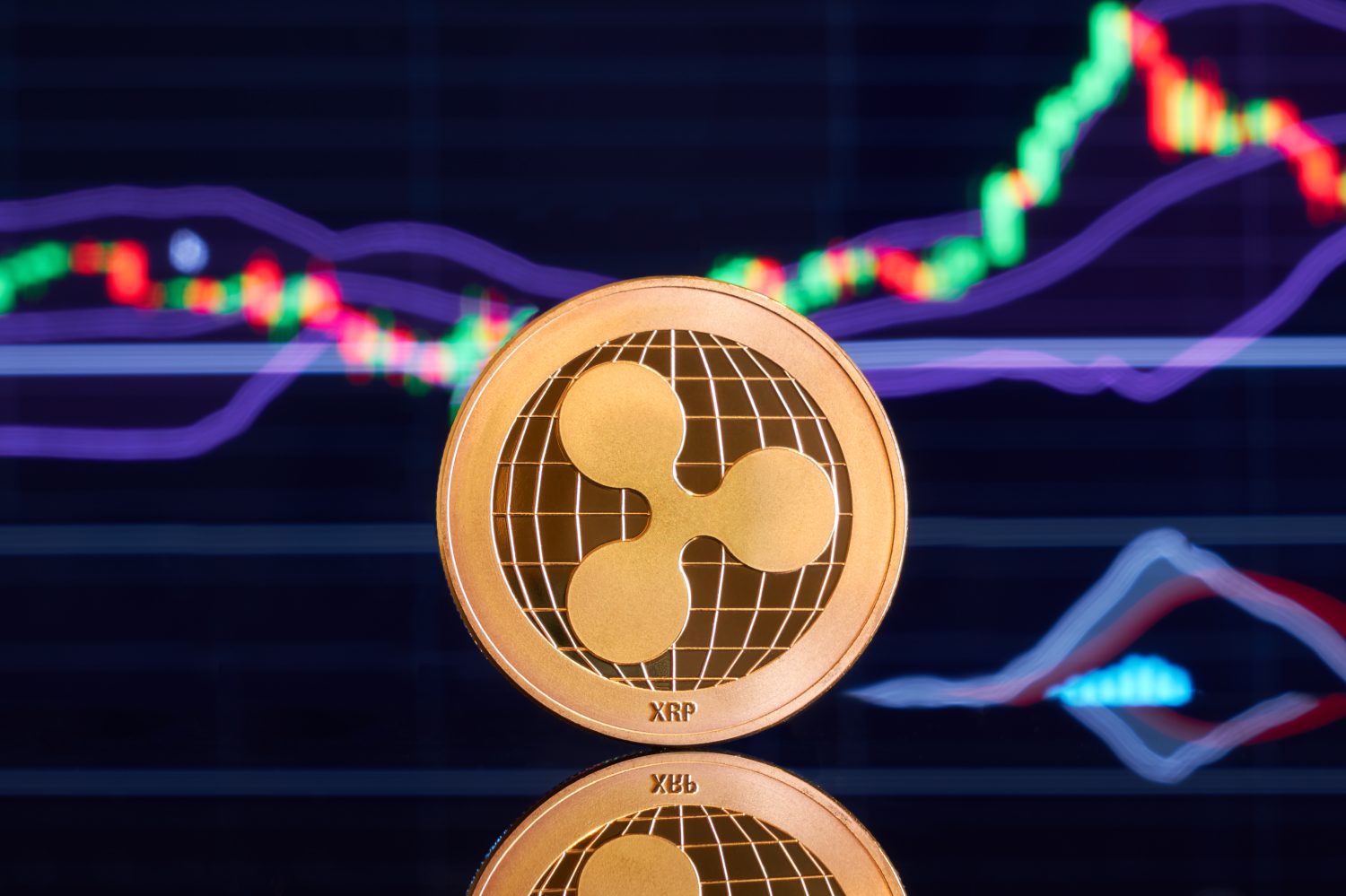
XRP’s first support level is its one-year low close of around 91 cents on November 20, about 8% below its current price. Further down, buyers stepped in at 86 cents, XRP’s intraday low on November 21, 13% below the current price.
On the upside, the first resistance level is the 20-day average near $1.05, around 6% above the current price. Beyond that, the 50-day and 200-day averages near $1.22 and $1.24 form a clear ceiling for XRP.
A Close Below 86 Cents Could Confirm XRP’s Death Cross
Price levels matter more than the death cross. If XRP closes a day below 86 cents, traders may treat that as confirmation of the bearish signal. Even so, XRP has eventually recovered from past steep drops below its all-time high, though those recoveries took years.
The bearish signal gets called off if XRP climbs back above its 50-day and 200-day averages, or if the 50-day average crosses back above the 200-day. Until then, XRP could struggle to break above the 20-day average at $1.05, and our 2028 XRP forecasts show the longer-term targets.
Contact [email protected] for any questions or corrections.
Sam Daodu is a crypto analyst and the editor of 24/7 Wall St.'s Crypto Desk, where he covers Bitcoin, XRP, Ethereum, Solana and the altcoins investors search for most. His work focuses on price levels, spot ETF flows, on-chain data and the regulatory decisions that move crypto markets, written so a first-time buyer and a seasoned trader can both use it.
Sam has written about crypto professionally since 2019 and has published more than 2,000 articles. Before joining 24/7 Wall St., he wrote for crypto media outlets and Web3 companies and ghostwrote for crypto founders and token launches. His analysis is syndicated on Yahoo Finance, MSN and AOL and has been cited by other crypto news sites. He also founded MacLabs Marketing, a content and personal branding agency for crypto founders and executives.
When he isn't reading charts, Sam is usually at the gym or watching One Piece, a series he maintains has better tokenomics than most altcoins.