How Low Could Dogecoin Go After Falling to 5 Cents?

This post may contain links from our sponsors and affiliates, and Flywheel Publishing may receive compensation for actions taken through them.

Dogecoin (CRYPTO:DOGE) has plunged to about 5 cents, trading at $0.0548. This is the lowest Dogecoin price since June 2022 and a staggering 92.5% drop from its all-time high of $0.73 in May 2021. Moreover, it’s down 28.6% over the past month and 53.3% since the beginning of the year.
With Dogecoin now well past the 90% drop threshold from its peak, our look at what it did after every 90% drop applies directly.
So how low could the Dogecoin price go, and what could stop the slide?
Dogecoin Is Falling Harder Than Bitcoin as Stocks and Rates Turn Against It
The recent sell-off started outside the crypto market. On November 20, the Dow Jones Industrial Average and S&P 500 entered correction territory, defined as a drop of 10% or more from a recent peak, as investors sold off nearly everything. A downturn in AI stocks further fueled the selling frenzy after Anthropic’s IPO failed to boost confidence in the tech sector.
Interest rates have also contributed to this decline. As of November 20, CME FedWatch showed a 96% chance of a quarter-point interest rate hike by the Fed in December. Higher interest rates make cash and Treasury bonds more attractive, diminishing the appeal of non-interest-bearing assets like Bitcoin and Dogecoin.
In that same 24-hour period, Dogecoin experienced a steeper drop than Bitcoin (CRYPTO:BTC) and Ethereum (CRYPTO:ETH). Other cryptocurrencies like Solana (CRYPTO:SOL) fell even further, while Shiba Inu (CRYPTO:SHIB) dropped slightly less.
| Coin | 24-hour change | 30-day change |
|---|---|---|
| Dogecoin | -7.0% | -28.6% |
| Bitcoin | -5.7% | -25.3% |
| Ethereum | -5.2% | -27.6% |
| Solana | -8.8% | -31.7% |
| Shiba Inu | -6.6% | -27.0% |
Dogecoin’s high supply partly explains its drop compared to Bitcoin and Ethereum. Around 5 billion new Dogecoins enter circulation each year, creating extra selling pressure, especially when demand decreases. Unlike Ethereum and Solana, which offer staking rewards to incentivize holding, Dogecoin lacks such benefits, leading to further sell-offs. However, Solana’s larger decline suggests that this isn’t the only factor at play.
Dogecoin Lost Its 2023 Floor, and These Levels Come Next
Dogecoin trades below its 20-day, 50-day, and 200-day simple moving averages, at around $0.06, $0.07, and $0.08, respectively. This means it’s struggling against the short-, medium-, and long-term trends.
In November, Dogecoin broke through two significant support levels—prices where buyers had previously stepped in. Its 2023 low was $0.0564 in August, while the October 2022 low was $0.0556. Both levels are now above the current price and may act as resistance on future rebounds.
Dogecoin attempted to bounce back after hitting an intraday low of $0.0507 on November 21, reaching $0.0602 on November 23, briefly moving above the 6-cent mark. However, it soon retraced most of that gain, touching $0.0544 on November 24.
Below its current price, these are the key support levels to watch.
- $0.0507, the November 21 intraday low, 7.5% below the current price
- $0.0497, the June 2022 low and the bottom of that bear market, 9.3% below and under 5 cents
- $0.0476, the March 2021 low, set before the run to the all-time high, 13.1% below
- $0.0301, the February 2021 low from the early days of the rally, 45.1% below
Can a Bitcoin Rebound Save Dogecoin?
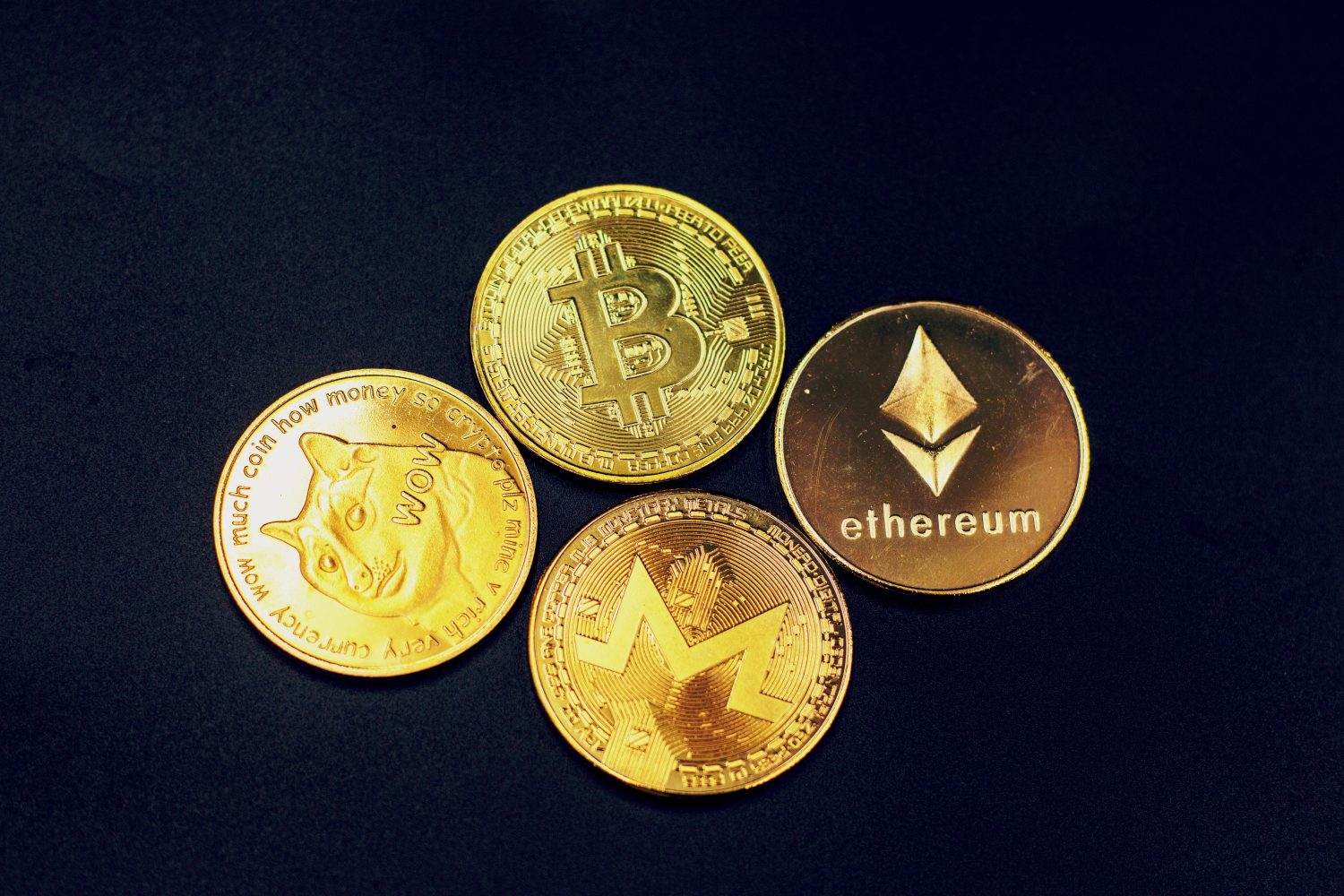
A possible rebound in Bitcoin may provide some support for Dogecoin, as it has commonly mirrored Bitcoin’s movements. In past instances when Bitcoin fell more than 15% from its monthly open to its monthly low, Dogecoin either kept pace or experienced larger falls. For instance, in February, Bitcoin dropped 23.7%, and Dogecoin slid 23.3%. In June, Bitcoin fell 21.2%, while Dogecoin plummeted 30.8%.
Bitcoin’s lowest closing price over the past year was $58,566 on June 30, slightly below the $59,508 Bitcoin was trading at today. If Bitcoin can maintain this level, it could allow room for Dogecoin to recover. However, if Bitcoin dips below this threshold, Dogecoin might head towards its June 2022 low.
Additionally, buying activity from “whales”—large holders accumulating Dogecoin—could slow its decline, but any significant buying would need to be visible in wallet data first. Spot Dogecoin ETFs in the U.S. haven’t shown much support either, with minimal activity since late October apart from a $409,000 outflow on November 19, while net assets fell from $13.1 million on October 28 to $8.9 million.
Much of the market selling relates to the anticipated Fed rate hike. If the Fed holds rates at the December meeting, it could ease pressure on riskier assets like Bitcoin and Dogecoin. However, if it hikes and signals further increases, the downward trend for both Bitcoin and Dogecoin could continue.
How Low Could the Dogecoin Price Go?
We believe Dogecoin’s most likely floor price is the June 2022 low of $0.0497. This level is significant because it’s the last price point where buyers held on during a full crypto bear market, and it also aligns with the 5-cent mark. Daily closing prices count more than intraday drops. Despite Dogecoin briefly dipping to $0.0507, it hasn’t been able to maintain that level as a closing price.
If Dogecoin closes a day below $0.0497, buyers will have lost the 2022 floor, and the next potential support could be the March 2021 low of $0.0476. On the other hand, if it closes back above its 20-day average of about $0.06 before the Federal Reserve meeting in December, it may indicate the bottom is already behind us, which would challenge our assessment. Our five-year price prediction covers the longer view.
Contact [email protected] for any questions or corrections.
Sam Daodu is a crypto analyst and the editor of 24/7 Wall St.'s Crypto Desk, where he covers Bitcoin, XRP, Ethereum, Solana and the altcoins investors search for most. His work focuses on price levels, spot ETF flows, on-chain data and the regulatory decisions that move crypto markets, written so a first-time buyer and a seasoned trader can both use it.
Sam has written about crypto professionally since 2019 and has published more than 2,000 articles. Before joining 24/7 Wall St., he wrote for crypto media outlets and Web3 companies and ghostwrote for crypto founders and token launches. His analysis is syndicated on Yahoo Finance, MSN and AOL and has been cited by other crypto news sites. He also founded MacLabs Marketing, a content and personal branding agency for crypto founders and executives.
When he isn't reading charts, Sam is usually at the gym or watching One Piece, a series he maintains has better tokenomics than most altcoins.