Deere Has More Than Doubled Its Dividend Since 2020, but the Raises Have Stopped

This post may contain links from our sponsors and affiliates, and Flywheel Publishing may receive compensation for actions taken through them.

Deere & Company (NYSE:DE | DE Price Prediction) has more than doubled its dividend over the past decade. The quarterly payout rose from $0.76 in 2020 to $1.62, up about 113%. The payout has also stayed at $1.62 for every quarter since the December 31, 2024 ex-dividend date. If you’re putting it toward retirement income, that recent pause matters as much as the longer growth record.

A 1% Yield at a Premium Multiple
At $615.01, the $6.48 annualized dividend yields about 1.05%. Price gains have done most of the work for shareholders. The stock is up 33.14% year to date and 588.6% over ten years. Based on the last four quarters of EPS, shares trade at about 34 times earnings. That is a rich price for a company still working through the bottom of its cycle.
Coverage Holds Up Through Downturns
In fiscal 2025, Deere paid $1.72 billion in dividends against $4.998 billion of net income. The payout ratio is near 34%. Operating cash flow minus capital spending came to $3.231 billion, so dividends used about 53% of it. Fiscal first-quarter cash flow turned negative in each of the last four years. The company still paid the dividend every time.

Past downturns show the same pattern: Deere holds the dividend steady during weak years. The payout stayed at $0.28 from 2008 through 2009 and at $0.60 from 2015 into 2018. The records show no suspension anywhere in the history. That is the whole appeal of a dividend ladder built so you never have to sell a share, which we walked through in a free guide here.
Buybacks Take the Hit First
When earnings fall, Deere cuts buybacks before it touches the dividend. Repurchases fell from $7.216 billion in fiscal 2023 to $1.138 billion in fiscal 2025. They totaled $697 million[1] over the first nine months of fiscal 2026.
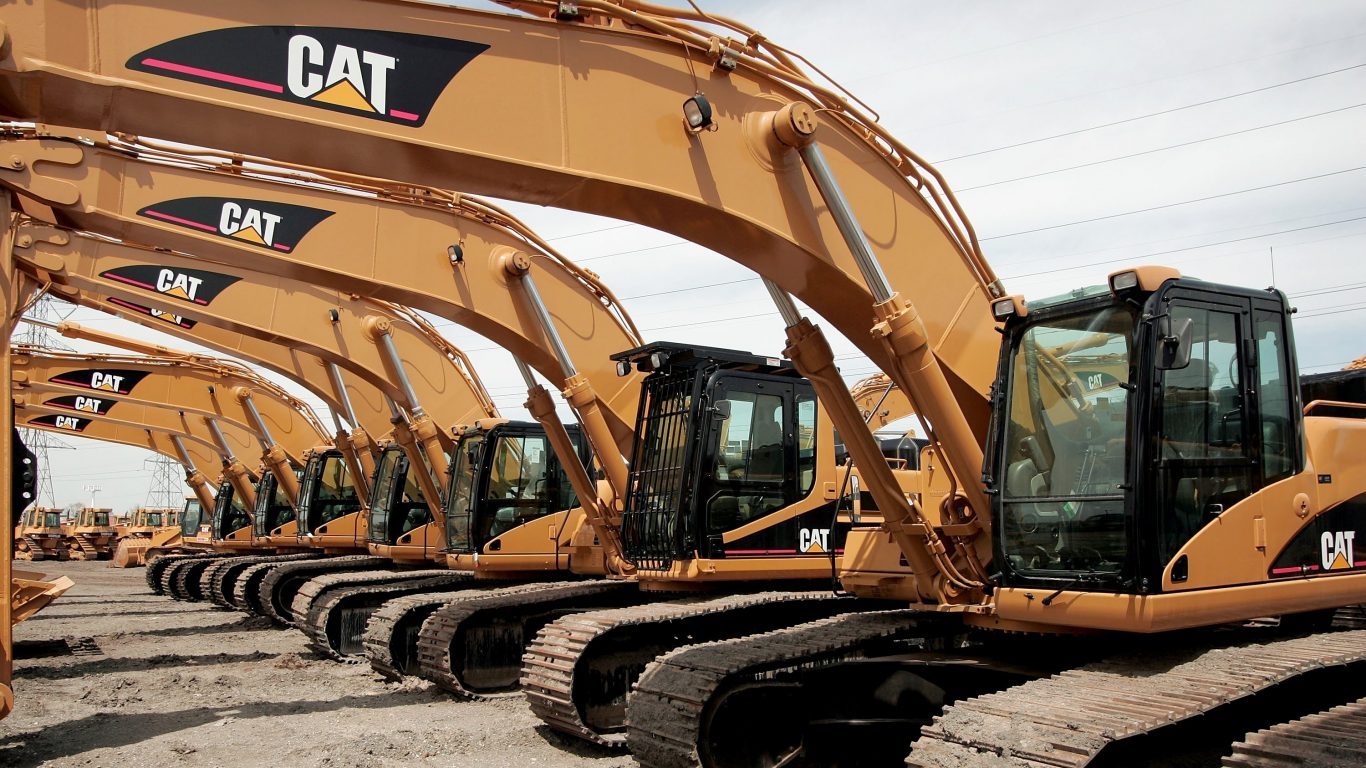
Caterpillar (NYSE:CAT) is returning cash more aggressively. It bought back $5.0 billion of stock in its first quarter alone, helped by a “record backlog”. AGCO (NYSE:AGCO) raised its dividend to $0.30 from $0.29. But it posted negative operating cash flow of $245 million in the first half. Its chief executive called the market “the weakest global industry demand environment in more than a decade.”
Farm Incomes Decide the Next Raise
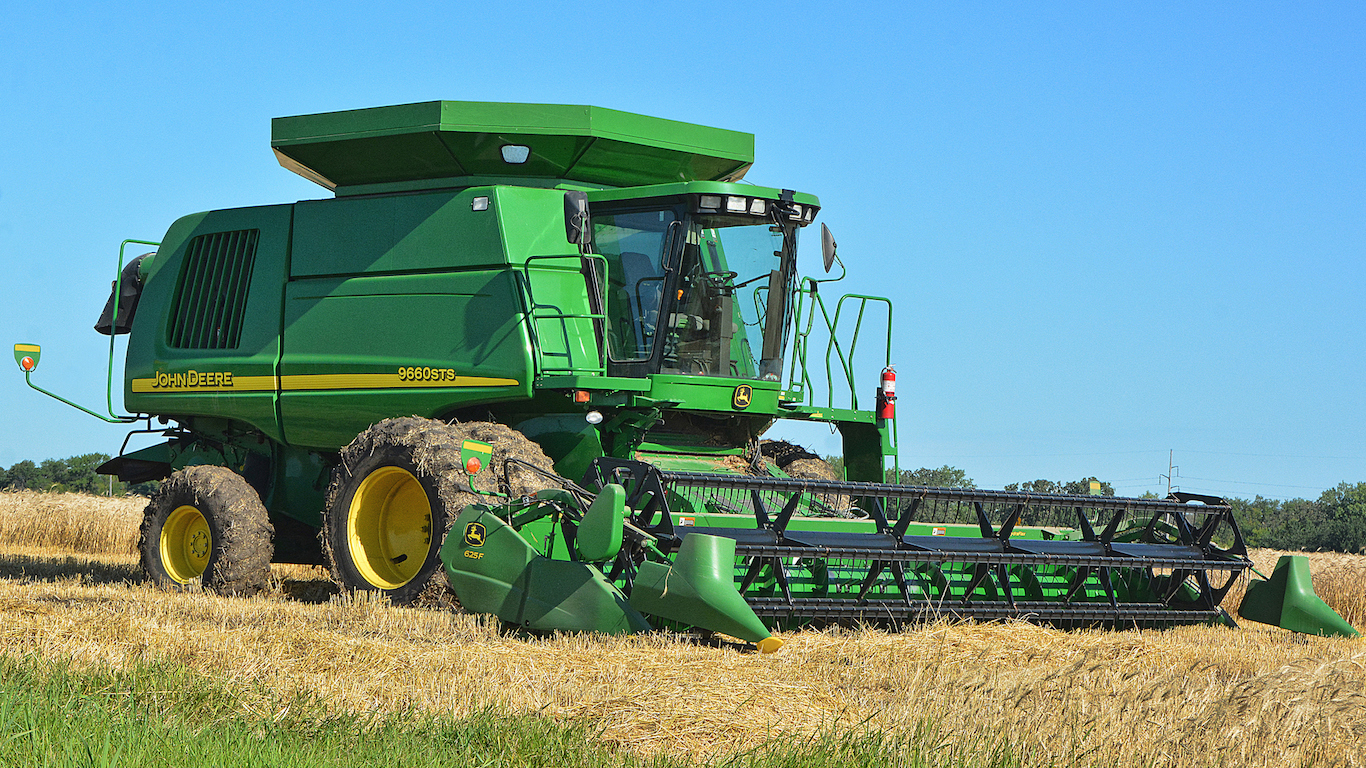
Deere expects large ag equipment sales in the U.S. and Canada to fall 15% to 20%[2] in fiscal 2026. Construction & Forestry sales are expected to rise about 20%[2]. Chief executive John May is standing by his call that this is the bottom:
“As we look ahead, we continue to believe 2026 will mark the bottom of the current ag equipment cycle. Across our business, early order program trends, improving used-equipment inventories, and increasing customer adoption of our advanced technologies give us confidence that Deere is well positioned for long-term value creation.”[1]
Early orders are running up mid-single-digits[2]. Earlier in the year, Deere raised its fiscal 2026 net income guidance to $4.75 billion to $5.00 billion[1]. Meanwhile, tariff costs are expected to run near $1 billion[2] in fiscal 2027 without the same level of refunds. The FTC right-to-repair case remains open.
Verdict for Retirement Investors

The dividend alone makes a thin case for the stock. A yield near 1% at about 34 times earnings gives little income for the price. The dividend’s real value is its reliability: Deere has kept paying through every farm downturn on record while cutting buybacks first. The case for owning the stock depends on whether May is right that the cycle has bottomed. Deere’s upcoming earnings report should show whether early orders are turning into a recovery, and a dividend increase would be the clearest sign that management agrees.
Contact [email protected] for any questions or corrections.
Chris Lange is a financial and geopolitical writer with more than a decade of experience covering a myriad of topics. He has published thousands of articles for 24/7 Wall St., with past coverage focused heavily on stocks, IPOs, healthcare, defense, global affairs, and technology.
His work has been quoted, or referenced by a number of outlets including Business Insider, USA Today, Yahoo Finance, MSN, The Motley Fool, and many other publications. A graduate of Southwestern University, he studied business with a focus on investments and has previous experience in banking and startups.
When not reading or writing the news, he is following his passion for Lacrosse, playing chess, or building solar projects with his dad.