JEPI Is Falling While the S&P 500 Soars. Is That Fat 8% Yield Actually a Trap?
JEPI's 8% yield lands in your checking account every month like clockwork, but price-only holders watching the S&P sprint higher are quietly paying a price that never shows up on the fact sheet.

This post may contain links from our sponsors and affiliates, and Flywheel Publishing may receive compensation for actions taken through them.

Buy an income ETF, spend the income, and the ticker on your brokerage screen becomes a running scoreboard of what you actually own. That is the awkward reality confronting holders of the JPMorgan Equity Premium Income ETF (NYSEARCA:JEPI) right now. On a price-only basis, JEPI is down about 0.9% year to date, even as the S&P 500 has climbed roughly 10% so far this year. JEPI still shows a positive number if you reinvest every distribution, but almost no one who owns this fund does that. They are spending the checks.
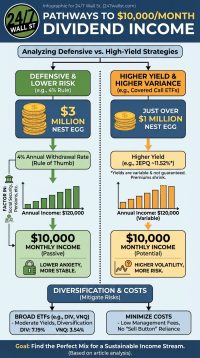
The fund converts equity exposure into a monthly paycheck. It holds a basket of lower-volatility, higher-quality large-caps and sells equity-linked notes that mimic out-of-the-money S&P 500 call writing. The option premium plus underlying dividends are paid to shareholders monthly, which is why trailing 12-month distributions total $4.57 per share and the forward annualized estimate is roughly $4.65. At a share price near $57, that yields 8%.
Where the 8% Comes From, and What It Costs
Selling calls means capping upside. When the S&P rips higher, the short call position bleeds, and JEPI’s underlying equity sleeve will not sprint after a market led by mega-cap tech because the portfolio tilts toward lower-beta names. That is the design and the source of the gap you are looking at right now.
Over the past year, JEPI’s total return (dividends reinvested) came in at about 8% while SPDR S&P 500 ETF Trust (NYSEARCA:SPY) delivered about 21%. Stretch the window to five years, and the gap widens, with JEPI at about 43% and SPY at about 73%. Every dollar an investor in their 40s parked in JEPI instead of a plain S&P index fund gave up meaningful compounding.
Now imagine the retiree using JEPI as designed. They collect roughly $0.35 to $0.45 per share per month, about $0.39 in the most recent July 1 payment, and spend it on utilities, groceries, and a grandkid’s birthday. They do not reinvest. Their principal has slipped modestly this year while the broad market has run. If they view the fund as a growth holding, they are losing. If they view it as a bond substitute with equity kick, they are winning.
The Tradeoffs Nobody Reads on the Fact Sheet
- Capped upside is not optional. The option overlay is the return engine. In any 20%+ market year, JEPI will trail by double digits.
- Distributions swing with volatility. Monthly payments have ranged from about $0.29 in mid-2024 to over $0.62 in 2022. Retirees planning a fixed budget need to average across the year, not lean on any single month.
- Tax treatment is messy. Option premium flows through as ordinary income, making JEPI a poor fit for taxable accounts unless you are in a low bracket.
The one thing JEPI does not do, and this matters, is behave like the yield-max ETNs that show up next to it on screeners with 60%+ indicated yields. Those instruments strip-mine principal to fund the payout. JEPI’s 0.35% expense ratio and quality-leaning equity sleeve keep the NAV drift comparatively mild.
Who Should Actually Own This Fund
If you are 35 and dollar-cost averaging toward retirement, JEPI is a trap. You are paying an active manager to hand your capital back to you as taxable income, while capping the compounding you should be maximizing. An index fund compounds without the drag.
If you are 68, drawing down, and need a monthly deposit that lands in your checking account without selling shares in a down market, JEPI earns its 5%-10% slot alongside bonds and dividend equities. The 8% yield is real. The price chart is the receipt for what that yield costs. Know which side of that trade you are on before you buy.
Contact [email protected] for any questions or corrections.
Omor Ibne Ehsan is a writer at 24/7 Wall St. He is a self-taught investor with a focus on growth, cyclical, and dividend equities that have strong fundamentals, value, and long-term potential. He also has an interest in high-risk, high-reward investments such as penny stocks.