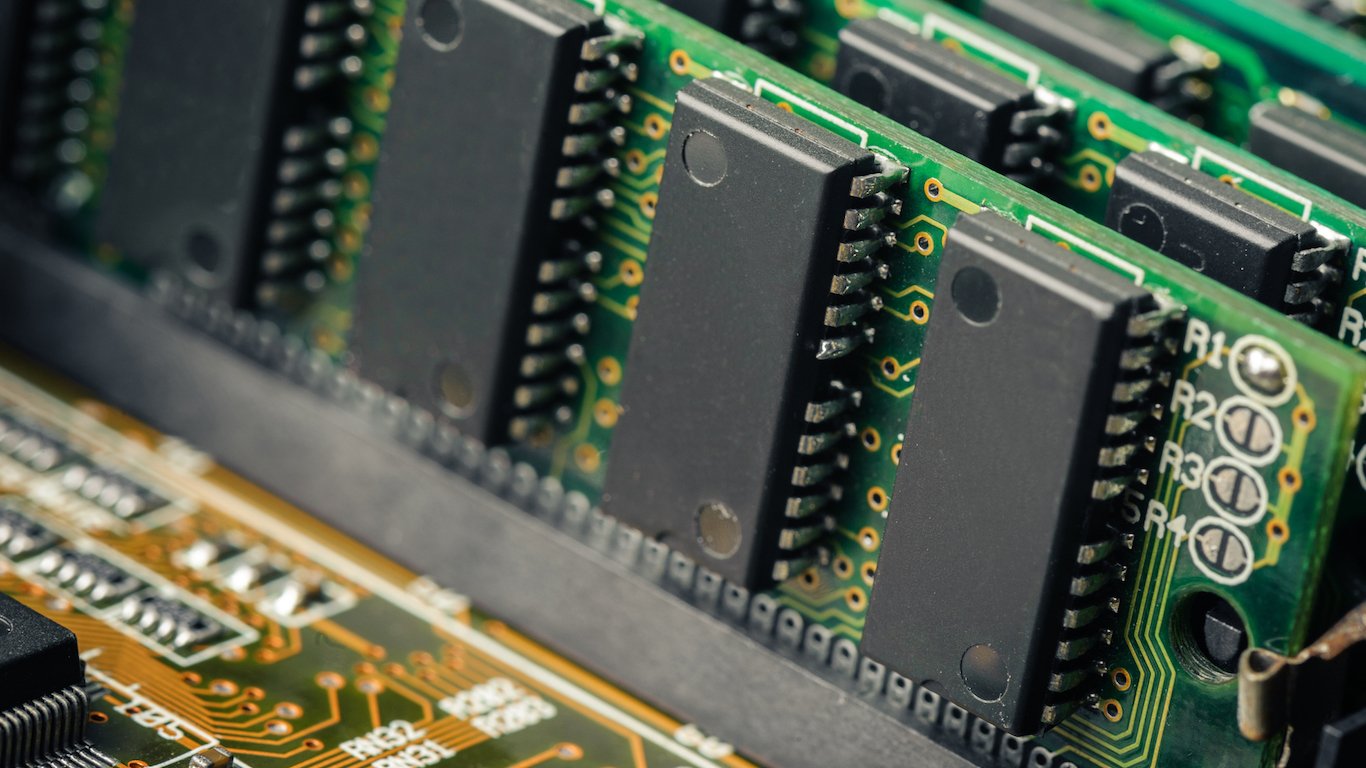
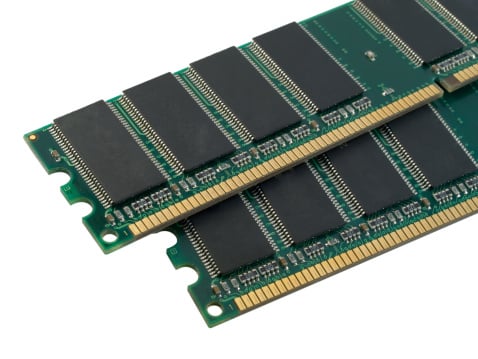
SOXS Jumps 11% as Micron Slides on Fears of Fiercer Chinese Memory Chip Competition
A Chinese memory chip company just raised a war chest nearly double what Wall Street expected, and it sent shockwaves through a semiconductor sector that has been one of the biggest winners of the AI boom.

The Direxion Daily Semiconductor Bear 3X Shares (NYSEARCA:SOXS) is up again today, climbing roughly 11% as memory chip stocks lead a broad semiconductor pullback. The move is a mirror image of what is happening under the hood: Micron Technology (NASDAQ:MU | MU Price Prediction) is down about 8% intraday and SK Hynix (NASDAQ:SKHY) is down 11%, dragging the Invesco PHLX Semiconductor ETF (NASDAQ:SOXQ) down with them, and SOXS is designed to deliver three times the daily inverse of that basket. So, when chips are down by a certain amount, SOXS is generally up about 3x that (and vice versa).
The Trigger: A Chinese DRAM IPO Reprices the Competitive Map
According to reporting from Barron’s, Chinese memory maker CXMT (ChangXin Memory Technologies) is set to begin taking orders for a listing on Shanghai’s STAR Market, aiming to raise roughly $8.5 billion, nearly double its initial target, at an implied market capitalization over $80 billion. That is a much larger war chest than investors expected for the country’s leading DRAM producer.
Why it lands so hard on Micron and SK Hynix: DRAM is a near-oligopoly. Three companies, Micron, Samsung, and SK Hynix, have historically controlled the bulk of global supply. CXMT is the world’s fourth-largest DRAM manufacturer, with DRAM share that roughly tripled year over year to about 8% in Q1, per Counterpoint Research. That is still well behind Micron at around 22% DRAM share, but the direction of travel is what spooked memory investors this morning. A well-funded fourth player with a mandate to keep expanding capacity is exactly what a supply-constrained market does not want to see.
There is an important limit that keeps this from being an existential threat. CXMT is constrained by US sanctions that curb its access to the most advanced chipmaking equipment, so it cannot easily supply US customers or produce the most advanced high-bandwidth memory (HBM) that powers AI servers. HBM is the fastest-growing, highest-margin corner of DRAM, and it remains the domain of Micron and the two Korean incumbents. Still, more Chinese standard-DRAM supply pressures pricing across the industry, and Micron generates the large majority of its revenue from DRAM, including HBM.
Why the Selloff Is Notable Given Micron’s Fundamentals
The competitive-share worry is hitting a stock that has been one of the year’s biggest AI beneficiaries. Micron is up roughly 245% year to date and about 730% over the past year, and the company most recently reported fiscal Q3 2026 revenue of $41.46 billion, up 346% year over year, with non-GAAP EPS of $25.11. CEO Sanjay Mehrotra said the results “reflect the strategic value of memory in the AI era” and guided Q4 revenue to $50 billion, plus or minus $1 billion, with gross margin near 86%. The stock carries a market capitalization of roughly $1 trillion and trades at about 6 times forward earnings, with a consensus analyst price target of $1,486. The fundamental picture remains intact. What changed today is the perceived competitive slope.
SK Hynix just listed in the USA as an ADR; its price is suffering today from the same DRAM competition fears plus profit-taking after a strong memory rally. When the two largest DRAM suppliers by market value both drop together, the semiconductor index has nowhere to hide, and that is precisely the setup SOXS is built to profit from on a single-day basis.
The Leverage Warning: SOXS Is a Short-Term Tactical Vehicle
Today’s pop is dramatic, but it sits inside a brutal trend. Even with today’s pop and an amazing one-month return of over 1,000%, SOXS is still down 22% YTD, 66% over the last year, and 99.7% over the last five years, per Yahoo Finance.
Leveraged and inverse funds compound daily, which means a choppy but rising underlying index produces significant volatility drag on the inverse side. SOXS amplifies moves in both directions, and over any period longer than a single session the path matters as much as the destination. It is a short-term tactical vehicle for traders who want to press a specific view on chips over hours or days, or a hedging overlay for a semiconductor-heavy book. For anyone thinking about the AI hardware trade over a longer horizon, 24/7 Wall St. maintains a broader look at the names driving it in its 7 Stocks Powering the AI Boom research.
What to Watch Next
The near-term question for memory stocks like Micron and SK Hynix, and therefore SOXS, is whether the CXMT overhang is a one-day repricing or the start of a rerating of DRAM’s supply outlook. Micron’s HBM franchise, where the company noted HBM4 in high-volume shipments and HBM4E targeting calendar 2027 volume production, remains outside CXMT’s reach under current export controls. If pricing on standard DRAM holds and HBM demand from AI accelerator makers stays firm, today’s move looks more like a sentiment shock than a fundamentals event. If Chinese capacity ramps faster than expected, the memory cycle’s next leg gets more complicated, and vehicles like SOXS will keep drawing tactical flows on the down days.
Contact [email protected] for any questions or corrections.
I've spent more than 15 years inside enterprise software, working alongside the finance, sales operations, and HR leaders who run the revenue engines at some of the largest tech companies in the country.
My day job is helping enterprise executives make smarter decisions about retention, compensation, and growth. These are the same operational levers that show up in every earnings report investors actually read. That perspective shapes my writing for 24/7 Wall St.
The headline numbers are easy. The interesting stuff is underneath: how companies make money, what executives are worried about, and what any of it means for the person checking their 401(k) on a Sunday afternoon. I write about personal finance and business as someone who has spent her career inside the rooms where these decisions get made.