Micron Hit With Price-Fixing Lawsuit: Real Collusion or Simple Supply and Demand?
Artificial intelligence has created shortages across nearly every part of the semiconductor supply chain. GPUs have received most of the attention, but memory chips have quietly become just as critical. Every advanced AI accelerator depends on high-bandwidth memory (HBM), and…

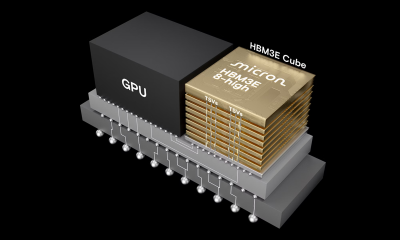
Artificial intelligence has created shortages across nearly every part of the semiconductor supply chain. GPUs have received most of the attention, but memory chips have quietly become just as critical. Every advanced AI accelerator depends on high-bandwidth memory (HBM), and manufacturers are struggling to keep pace. Even after investing billions of dollars to expand production, suppliers remain sold out months in advance.
Despite the AI boom, some see the situation in a more nefarious way. Micron Technology (NASDAQ:MU | MU Price Prediction), SK hynix, and Samsung stand accused of colluding to keep prices high in a new lawsuit seeking class-action status that was just filed in a California federal court. As this isn’t the first time the memory market has faced allegations of price fixing, it’s reasonable to ask if this is history repeating itself or just simple economics?
Why This Lawsuit Looks Different From 2002
The lawsuit alleges Micron, Samsung, and SK hynix — which collectively control roughly 90% of the global memory market — coordinated production cuts of older DDR3 and DDR4 memory while steering customers toward higher-priced HBM products. The complaint points to recent price increases for Apple‘s (NASDAQ:AAPL) Mac and iPad products as evidence consumers ultimately bear the cost.
The allegations echo the industry’s infamous DRAM price-fixing scandal from the early 2000s. Following complaints by Dell Technologies (NYSE:DELL) and Gateway, investigations found that Micron, Samsung, SK hynix, Infineon, and Elpida (now owned by Micron) had coordinated DRAM pricing. Several companies, including Micron, ultimately pleaded guilty and paid criminal fines while numerous civil settlements followed.
History makes today’s accusations impossible to ignore. That said, courts have consistently ruled that an oligopoly alone is not proof of illegal collusion. Plaintiffs generally must establish “plus factors” beyond parallel pricing — such as direct communications, coordinated production decisions, or other evidence showing companies acted together rather than independently.
Supply and Demand May Explain More
Yet there is a simpler explanation. When demand grows faster than supply, prices increase until additional capacity comes online or competition comes in, and an equilibrium is reached. If customers are competing for a product that’s already sold out, rising prices are exactly what basic economics predicts.
Micron’s own earnings release shows demand outstripping available HBM supply by a wide margin. AI infrastructure spending from hyperscalers continues climbing with some $750 billion expected just by the major players, while expanding memory fabrication plants requires years — not months — and billions of dollars in capital expenditures.
That doesn’t automatically clear any company of wrongdoing. Discovery could uncover evidence supporting the plaintiffs’ claims. But based on publicly available information today, supply constraints appear more convincing than a coordinated scheme to manipulate prices.
In short, investors should remember that shortages alone do not equal collusion.
AI Demand Has Turned Memory Into a Scarce Resource.
Micron HBM production is fully sold out for 2026 under binding, fixed-price, multi-year contracts, with a significant portion of 2027 output also committed. Management has said it can satisfy only about 50% to 66% of customer demand despite running manufacturing facilities near full utilization while it attempts to expand capacity with new facilities.
It’s not unique to Micron either, as both Samsung and SK hynix face similar constraints as AI server demand continues climbing.
HBM illustrates the point perfectly. Producing these advanced memory stacks requires new manufacturing techniques, advanced packaging, and years of capital investment. Capacity cannot be doubled overnight.
Key Takeaway
The new lawsuit revives memories of the industry’s genuine price-fixing scandal two decades ago, and regulators should investigate credible allegations wherever they arise. Regardless, today’s market looks fundamentally different.
AI has created unprecedented demand for HBM memory while production remains constrained despite aggressive capacity expansion. Until plaintiffs produce evidence beyond parallel pricing in a concentrated industry, this case appears to reflect the basic laws of supply and demand more than a repeat of the DRAM conspiracy that led to guilty pleas in 2002.
For Micron investors, the bigger story remains AI-driven demand — and the company’s ability to convert that demand into higher revenue and profits as new capacity comes online.
Contact [email protected] for any questions or corrections.
After two decades of patrolling the dark corners of suburbia as a police officer, Rich Duprey hung up his badge and gun to begin writing full time about stocks and investing. For the past 20 years, he’s been cruising the markets looking for companies to lock up as long-term holdings in a portfolio while writing extensively on the broad sectors of consumer goods, technology, and industrials. Because his experience isn’t from the typical financial analyst track, Rich is able to break down complex topics into understandable and useful action points for the average investor. His writings have appeared on The Motley Fool, InvestorPlace, Yahoo! Finance, Money Morning, and, of course, 24/7 Wall St. He has been featured in both U.S. and international publications, including MarketWatch, Financial Times, Forbes, Fast Company, and USA Today.