America’s Power Buildout Is Accelerating. These 3 ETFs Invest in the Infrastructure
The U.S. grid rebuild is accelerating fast enough that three very different ETFs are all chasing the same dollars, but they disagree sharply on where the real money gets made.

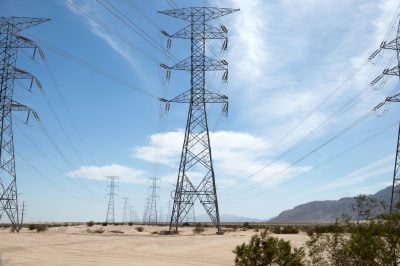
American electricity demand is growing fast enough to force a wholesale grid rebuild. Hyperscale data centers, factory reshoring, and vehicle electrification are pulling load higher as coal retirements shrink supply. Three ETFs offer distinct routes into that spending: Global X U.S. Infrastructure Development ETF (CBOE:PAVE), the Utilities Select Sector SPDR Fund (NYSEARCA:XLU), and the First Trust NASDAQ Clean Edge Smart Grid Infrastructure Index Fund (NASDAQ:GRID).
Why the Load Curve Finally Broke
The Department of Energy projects data centers alone could reach up to 12% of U.S. electrical demand by 2028. PJM Interconnection’s independent monitor concluded “data center load growth is the primary reason for recent and expected capacity market conditions, including total forecast load growth, the tight supply and demand balance, and high prices” across the mid-Atlantic and Midwest. The companies supplying power and cooling for that new capacity represent the other half of this investment thesis, and we profiled seven of them in a free AI infrastructure report.
The Federal Energy Regulatory Commission’s 2024 State of the Markets Report flagged that transmission projects driven by load growth were the second-largest category of projects entering service in 2024, trailing only reliability work. The 10-year Treasury yield sits at 4.94%, near its 12-month high of 5.01%, which raises capital costs for utilities and contractors throughout the value chain.
PAVE: Owning the Contractors Doing the Digging
PAVE offers the broadest exposure. Global X built the fund around U.S. industrials, engineering firms, materials producers, and heavy equipment names serving utilities, data center developers, and state DOTs. With $13.5 billion in net assets, it has become the default vehicle for the broader infrastructure trade.
The top holding is Quanta Services (NYSE:PWR | PWR Price Prediction) at 4% of net assets, the country’s dominant electric transmission builder. Trailing revenue reached $32.9 billion, quarterly revenue rose 41% year over year, and the stock trades at a forward multiple of 33x — reflecting a market that prices Quanta as a structural winner.
The portfolio spans power-adjacent names like Eaton, Emerson Electric, Rockwell Automation, and Hubbell; construction firms including EMCOR, MasTec, and Sterling Infrastructure; materials producers such as Nucor, Vulcan Materials, and Martin Marietta; and railroads (CSX at 3%, Union Pacific at 3%), adding freight exposure.
The key tradeoff is dilution. Because PAVE owns rail, water, and highway names, investors get less pure power exposure than XLU or GRID. That said, PAVE is up 11% year-to-date and 14% over the past year, but slipped 6% in the past month as rate expectations firmed.
XLU: The Regulated Cash Flow Anchor
XLU is the traditional choice for income-oriented investors. State Street’s utilities ETF holds $23.1 billion in net assets and is heavily concentrated: NextEra Energy (NYSE:NEE) is 12.9% of the fund, Southern Company 7.6%, Duke Energy 6.9%, and Constellation Energy 5.6%.
When regulated utilities invest in transmission or generation, that capital enters the rate base and earns a regulated return. Rising data center load is expanding rate bases faster than in decades. Independent power producers Constellation, Vistra, and NRG (a combined 11% of the fund) add merchant generation exposure, benefiting from tighter capacity prices driven by data center demand.
XLU delivered $1.48 in trailing 12-month distributions, offering a meaningful yield that PAVE and GRID do not match. With the 10-year yield near cycle highs, utility valuations have compressed. XLU is down 3% year-to-date and roughly flat over the past year, a reminder that utilities behave like long-duration bonds in a rising-rate environment.
GRID: The Overlooked Pure Play on the Equipment Bottleneck
GRID is the most overlooked of the three. First Trust’s smart grid fund holds $12.1 billion in net assets, concentrated in electrical equipment makers: transformers, switchgear, cables, and power management systems. These are the components utilities are struggling to procure quickly enough.
The top five positions (Eaton at 8.5%, Schneider Electric at 8.3%, ABB at 8.1%, Quanta Services at 8.1%, and Johnson Controls at 8%) represent over 40% of assets. As a result, just five earnings reports can move the fund materially.
GRID also holds significant international/concentrated exposure. Schneider and ABB are European; Prysmian and Nexans supply cables; National Grid and Terna handle transmission. The shortage of transformers and high-voltage cable is global, and most suppliers with meaningful fabrication capacity are based outside the U.S.
That concentration has been rewarded in performance. GRID is up 19% year-to-date, 22% over the past year, and has returned 422% over a decade — the strongest track record of the three.
Which Fund Fits Which Investor
Income-focused investors should anchor with XLU for its dividend and rate-base expansion, though the dividend advantage is diminished by a 5% Treasury yield. Those seeking participation in the broader buildout — including rail, materials, and construction — should hold PAVE. Those seeking the most focused bet on the equipment bottleneck should choose GRID, provided they can tolerate its concentration and international exposure.
A reasonable portfolio might own more than one. XLU and GRID together cover utility spending and equipment makers without PAVE’s industrial dilution. Investors with broad industrial or S&P 500 exposure may find PAVE the least additive.
Contact [email protected] for any questions or corrections.
Ryne Mauck is an investment writer covering exchange-traded funds, retirement planning, and portfolio strategy. Through his work at 24/7 Wall St. and other investment platforms, including Seeking Alpha, he aims to provide clear, research-driven insights that help investors make more informed decisions while maintaining a long-term approach to investing.
Ryne holds a B.Sc. in Finance and an M.A. in Political Science. He is a formerly registered Municipal Advisor Representative and has passed the Series 50, Series 63, and Series 65 exams. His articles are not intended to be, nor should they be interpreted as, financial advice.