Bond ETFs Can Trade Above or Below the Value of Their Bonds. Here’s How to Spot It Before You Buy
The price you pay for a bond ETF and the value of the bonds inside it are two different numbers, and the gap between them can cost you money even when the fund performs exactly as expected. Here is where…

This post may contain links from our sponsors and affiliates, and Flywheel Publishing may receive compensation for actions taken through them.
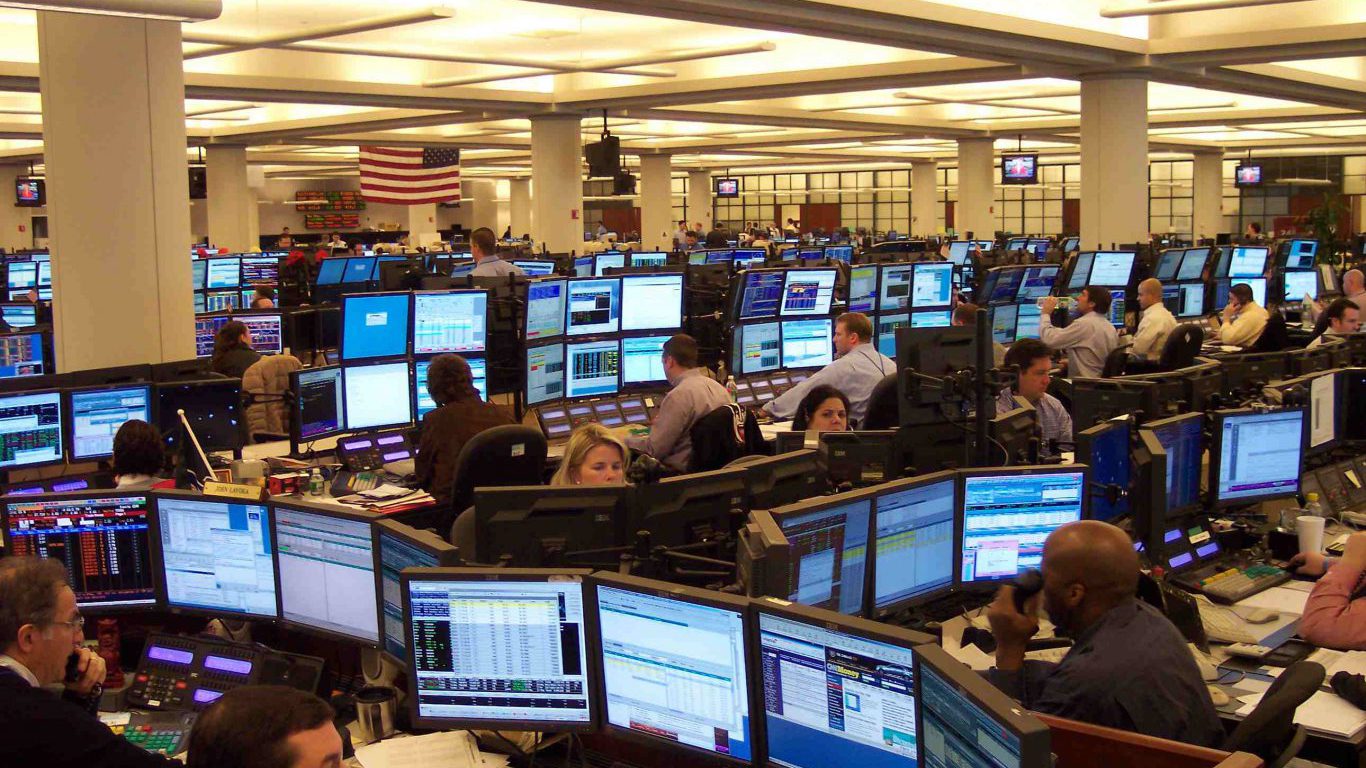
When you buy a bond ETF, you pay the price on the exchange, and that price and the value of the bonds inside the fund are two separate numbers that can drift apart. If you buy above that value or sell below it, you pay for the gap, even if the bonds themselves performed fine.
On Monday, the gap on one of the biggest bond funds was tiny. iShares iBoxx $ High Yield Corporate Bond ETF (NYSEARCA:HYG) had a Premium/Discount reading of -0.07 as of November 2, 2026. That’s a slight discount. SEC rules require every ETF to publish the numbers.
What a Premium or Discount Actually Means
Start with net asset value, or NAV, which is the per-share value of everything a fund holds. Under the SEC’s ETF rule, Rule 6c-11. The premium or discount is the difference between an ETF’s market price at the time NAV is calculated and its NAV per share. It’s expressed as a percentage of NAV. A discount means shares trade below the value of the holdings, and a premium means they trade above it.
Authorized participants usually keep the two close. These are large financial firms. Their agreements let them create and redeem big blocks of ETF shares, called creation units, in exchange for baskets of the fund’s holdings. When shares trade cheap, these firms can redeem them for the more valuable bonds, and when shares trade rich, they can deliver bonds and get new shares to sell. That trading normally pulls the market price back toward NAV.
Bond funds have an extra complication. Many bonds trade privately between dealers, and some don’t change hands every day. On its fund pages, iShares says the holdings values it shows come from a third-party pricing vendor, and that vendor price may differ from the price the fund uses to determine its NAV. That’s one reason a bond fund’s market price and NAV can differ.
What Three Big iShares Bond Funds Showed on November 2
HYG holds high-yield, or junk, corporate bonds. iShares listed its 30-day median bid/ask spread at 0.01% as of November 2, 2026. The bid-ask spread is the gap between the highest price a buyer will pay and the lowest price a seller will accept. You pay it on top of any premium or discount.
The iShares Core U.S. Aggregate Bond ETF (NYSEARCA:AGG) tracks the broad U.S. investment-grade bond market. iShares showed it with a Premium/Discount reading of -0.03 as of November 2, 2026, which is also a small discount. iShares listed its 30-day median bid/ask spread at 0.01% on the same date.
The iShares 20+ Year Treasury Bond ETF (NASDAQ:TLT) holds long-term Treasuries, and it moved the other way. iShares showed it with a Premium/Discount reading of 0.05 as of November 2, 2026, a small premium. iShares listed its 30-day median bid/ask spread at 0.01%.
All three gaps were very small on that date. The reason to check anyway is so you know where to look when a gap gets bigger.
SEC Rules Make Every ETF Show Its Work
Rule 6c-11 requires every ETF to post the following on its website each business day:
- Its portfolio holdings
- Its NAV, market price, and premium or discount as of the prior business day
- A table showing how many days it traded at a premium or discount during the most recent calendar year and calendar quarters
- A line graph of its premiums and discounts over those same periods
- Its median bid-ask spread, calculated from the national best bid and offer recorded every 10 seconds over the past 30 calendar days
One more disclosure works as a warning sign. If an ETF’s premium or discount stays above 2% for more than seven consecutive trading days, the fund must post a statement saying so. The statement must cover what the fund thinks contributed. It must also stay on the fund’s website for at least a year.
A Quick Pre-Trade Checklist for Bond ETF Buyers
Before you place an order, pull up the fund’s page and check its current premium or discount and its median bid-ask spread. Then look over the days-at-premium/discount table and the line graph for patterns, like long stretches on one side of NAV.
Next, look for a posted statement about a premium or discount above 2%. If one is there, the fund’s price and its holdings have recently drifted apart in a meaningful way, and the statement explains why.
Use a limit order, which sets the most you’ll pay or the least you’ll accept. Keep this in mind. Buying at a premium or selling at a discount is a real cost, even in a year when the fund’s bonds did exactly what you expected.
A bond ETF’s price usually tracks its holdings closely, though not always. The SEC makes funds show their work, so a two-minute look at the fund page before you trade is worth it.
Contact [email protected] for any questions or corrections.
Ryne Mauck is an investment writer covering exchange-traded funds, retirement planning, and portfolio strategy. Through his work at 24/7 Wall St. and other investment platforms, including Seeking Alpha, he aims to provide clear, research-driven insights that help investors make more informed decisions while maintaining a long-term approach to investing.
Ryne holds a B.Sc. in Finance and an M.A. in Political Science. He is a formerly registered Municipal Advisor Representative and has passed the Series 50, Series 63, and Series 65 exams. His articles are not intended to be, nor should they be interpreted as, financial advice.