2 Pharmaceutical ETFs Rose Up to 24.62% Over the Past Year, and One Has Gained 75.8% Over Five

This post may contain links from our sponsors and affiliates, and Flywheel Publishing may receive compensation for actions taken through them.

Two pharmaceutical funds built on opposite designs both beat the S&P 500 over the past year. The Invesco Pharmaceuticals ETF (NYSEARCA:PJP) returned 25%, and the State Street SPDR S&P Pharmaceuticals ETF (NYSEARCA:XPH) gained 24%. Over the same period, the iShares Core S&P 500 ETF (NYSEARCA:IVV), our S&P 500 benchmark, returned 8%.
Over five years, the two funds part ways. PJP rose 76% and finished ahead of IVV’s 70%. XPH gained 53% and trailed the index, so its strong year sits on top of a weaker long-term record. The difference comes from how each fund is built. PJP leans on large, established drug and health care companies, while XPH spreads its assets fairly evenly across dozens of smaller drugmakers.
All returns assume reinvested distributions and run through the November 27, 2026 close, a shortened session after Thanksgiving. One-year figures start November 26, 2025, and five-year figures start November 26, 2021. No past window forecasts the next one.
PJP Puts Its Weight Behind Six Health Care Heavyweights
PJP tracks the Dynamic Pharmaceutical Intellidex Index. Invesco says the index evaluates companies on price momentum, earnings momentum, quality, management action, and value. Put simply, it scores pharmaceutical stocks on those factors and keeps the ones that rank best, so the mix changes as business results and share prices move.
As of July 31, 2026, the fund held 33 positions. Six large companies sat at the top:
| PJP Holding | Share of Net Assets |
|---|---|
| Abbott Laboratories | 5.67% |
| AbbVie | 5.48% |
| Amgen | 5.33% |
| Johnson & Johnson | 5.18% |
| Merck | 5.06% |
| Eli Lilly | 5.02% |
Abbott, the top holding, gets its largest share of revenue from medical devices, with diagnostics, nutrition, and branded generics sold mainly outside developed markets. Johnson & Johnson pairs Innovative Medicine with a MedTech segment.
Amgen describes itself as a biotechnology company, and Lilly’s revenue is concentrated in tirzepatide therapies for diabetes and obesity. In practice, PJP’s results depend heavily on a small group of diversified companies, each with several commercial franchises.
PJP led XPH in both windows, with its 25% one-year gain and 76% five-year gain. It provides a trailing yield of 0.9% from four distributions over the past year. But concentration is the tradeoff. A few companies drive the outcome, and the factor-based screen can swap holdings in and out more often than buy-and-hold investors may expect.
XPH Gives Eli Lilly and Small Drug Developers Equal Footing
XPH tracks the S&P Pharmaceuticals Select Industry Index, which gets its members from the pharmaceuticals segment of the S&P Total Market Index. State Street’s fact sheet calls the index modified equal-weighted and says it aims for “unconcentrated industry exposure across large, mid and small cap stocks.” Each company gets a similar piece of the fund, no matter how large it is.
The September 30, 2026 holdings show what that looks like. XPH listed 65 positions, and its largest weights are much smaller than PJP’s, so no single company dominates:
| XPH Holding | Share of Net Assets |
|---|---|
| Xeris Biopharma | 2.46% |
| VeraDermics | 2.42% |
| Amneal Pharmaceuticals | 2.32% |
| Ligand Pharmaceuticals | 2.16% |
| Viatris | 2.13% |
| Indivior Pharmaceuticals | 2.05% |
These leaders run very different businesses. Xeris is an endocrine and rare disease company with three commercial products. VeraDermics is a late clinical-stage developer with no approved products and no revenue. Amneal sells complex generics, specialty drugs, and biosimilars, and Ligand is a royalty aggregator that funds partners’ drug programs in exchange for royalties and milestones.
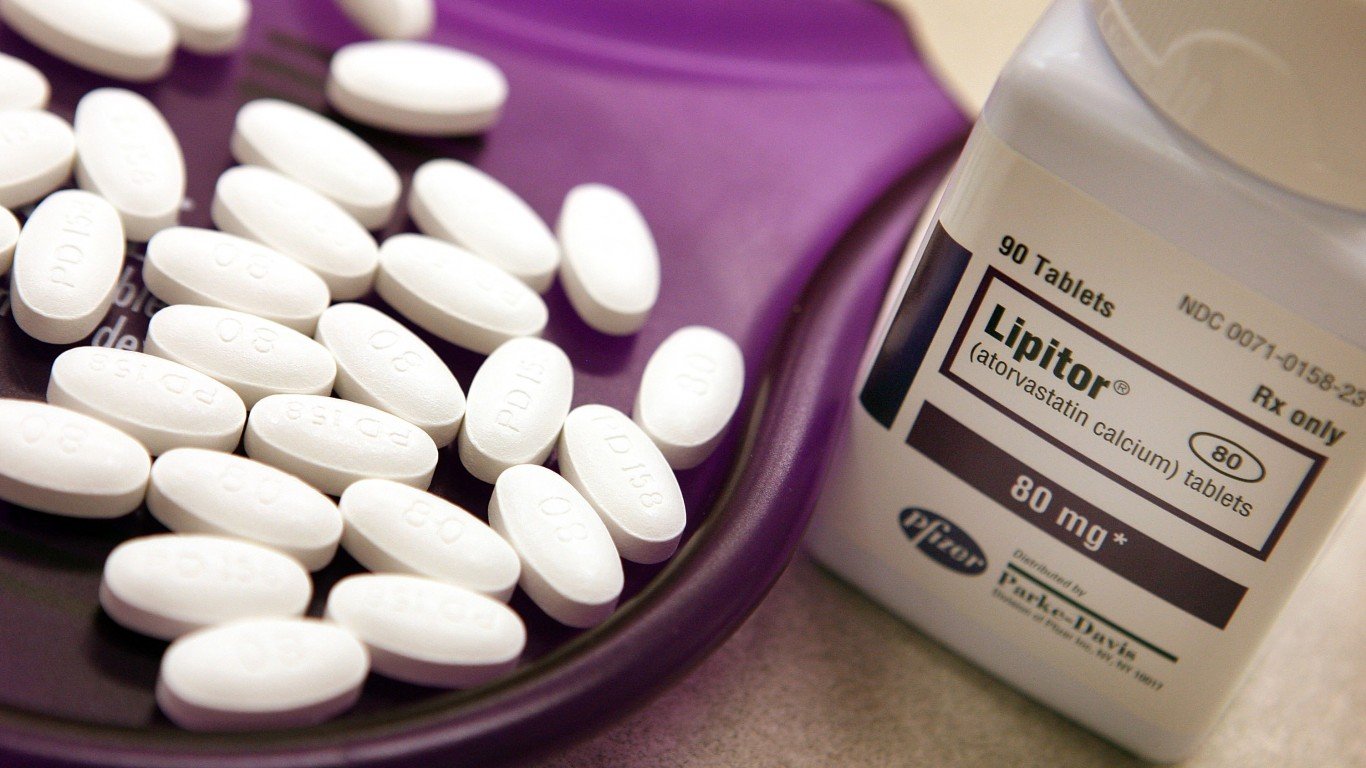
Viatris covers generics and established brands such as Lipitor and EpiPen. Indivior treats opioid use disorder and agreed to an all-stock merger with Supernus Pharmaceuticals, which shareholders approved in October 2026. That deal shows how often this list can change as smaller drugmakers combine. Eli Lilly holds a 2% weight, about the same as companies a small fraction its size.
XPH’s 24% one-year gain nearly touched PJP’s, but its 53% five-year return trailed IVV. Its trailing yield is 0.4%, also from four distributions. Equal weighting gives more influence to companies whose value rests on a few products or one trial result, which widens outcomes in both directions.
Why Five Years Split Established Drugmakers From Smaller Ones
PJP’s largest holdings can take in a setback in one franchise with growth in another. AbbVie’s latest results show Skyrizi and Rinvoq growing while Humira declines, and Lilly’s incretin franchise is expanding worldwide. Big drugmakers pay for research out of existing cash flow, so a failed trial dents earnings without putting the company at risk.
XPH gives those companies a much smaller share of the fund. A clinical-stage developer with no sales gets about the same weight as Eli Lilly. The fund’s return therefore depends on dozens of smaller businesses that rely on narrow product lines, pipeline results, and access to capital. Over five years, that mix produced the weaker record, though the past year showed smaller drug stocks can rally quickly when sentiment improves.
Five Risks That Could Reshape Returns for Both Funds
- Drug pricing policy and regulation. Amgen attributes lower Enbrel pricing to Medicare Part D price setting under the Inflation Reduction Act. A policy change can reprice an entire class of drugs, and both funds are exposed.
- Patent expirations. Merck’s Januvia and Janumet face generic erosion, and Amgen’s Prolia faces biosimilars. This hits PJP’s large holdings hardest, since they have to replace aging blockbusters.
- Clinical trial and approval risk. A failed study or a rejected application can wipe out much of a small developer’s value. XPH takes more of this risk. VeraDermics, one of its top holdings, has a single disclosed program.
- Single-industry concentration. Both funds hold only drug and related companies. State Street’s disclosure notes that sector funds tend to be more volatile than broadly diversified funds, and neither fund has other sectors to cushion a downturn in pharma.
- XPH’s weaker long-term record. XPH trailed IVV over five years, so its strong past year sits on a weaker long-term base.
Which Pharmaceutical Fund Fits Your Portfolio
PJP fits long-term investors and retirees who want pharmaceutical exposure anchored in established companies. It concentrates in established, diversified health care companies, and it is the only one of the two that beat IVV over five years. XPH suits investors who already own big drugmakers through an S&P 500 fund and want a tilt toward smaller drug developers, with the extra clinical risk that comes with them. Both yields are small, so both function mainly as growth holdings, with income playing a minor role.
Contact [email protected] for any questions or corrections.
Ryne Mauck is an investment writer covering exchange-traded funds, retirement planning, and portfolio strategy. Through his work at 24/7 Wall St. and other investment platforms, including Seeking Alpha, he aims to provide clear, research-driven insights that help investors make more informed decisions while maintaining a long-term approach to investing.
Ryne holds a B.Sc. in Finance and an M.A. in Political Science. He is a formerly registered Municipal Advisor Representative and has passed the Series 50, Series 63, and Series 65 exams. His articles are not intended to be, nor should they be interpreted as, financial advice.