I make $50K per year from the RV park I own and have a few million in the bank – this is why I’ve changed my mind on retiring early
Financial plans change all the time. Sometimes, external circumstances force us to change our plans, and other times, our priorities change. Changes in our financial goals are completely okay and not all that uncommon. In a recent Reddit post, the…

This post may contain links from our sponsors and affiliates, and Flywheel Publishing may receive compensation for actions taken through them.

Financial plans change all the time. Sometimes external circumstances force us to change course, and other times our priorities simply shift. Revising financial goals is completely normal and more common than most people realize.
In a Reddit post in the ChubbyFIRE community, one user laid out a situation that many high earners will recognize. At 35 years old, this individual has built a strong financial foundation: a net worth of $2 million spread across a fully funded retirement account, solid brokerage investments, and real estate equity. Alongside a $350K+ salary from oil and gas, they earn $50K annually from an RV park purchased in 2016. The pressure behind those numbers is real. They are married with two preschoolers, use their W-2 income to support aging parents recovering from a stroke, and are helping a sibling through serious health issues.
The ChubbyFIRE community typically targets a portfolio in the $2.5 million to $5 million range, designed to support $100,000 to $200,000 in annual retirement spending. This poster is approaching that threshold with substantial obligations still in place, which makes the tension between financial independence and real-world demands especially vivid.
Those impressive numbers carry heavy structural obligations. And yet, the poster had begun to question their original goal of retiring by 40.
Here is why they are reconsidering early retirement, what we think about it, and what others can take away from this situation:
Financial Independence Doesn’t Equal Fulfillment
A lot of people misunderstand what financial independence actually means in practice. Having a substantial net worth and steady income provides security, but security alone does not guarantee happiness. This poster was starting to feel that gap acutely.
After years of accumulating wealth, he found that the wealth itself was not making him happy. The idea of escaping the workforce had lost most of its appeal. That realization is more common than the FIRE community often acknowledges. Charles Schwab notes that one risk of early retirement is a lack of fulfillment: without a clear plan for time and energy, some early retirees find themselves wanting to return to work within just a few years. A 2024 Fidelity study reinforces this point, finding that 66% of Americans look forward to pursuing work for pleasure during retirement and often opt for a phased approach rather than a clean break.
Financial independence is a worthy goal, but it should not become the singular focus of a life. Balancing financial targets with genuine life satisfaction is the part of the equation that spreadsheets cannot capture. Defining what a fulfilling post-work life actually looks like, before stepping away, is just as important as hitting the savings number.
Money Should Serve You
Many people fall into the trap of serving money rather than the other way around. They make decisions based on financial metrics alone and measure progress entirely in dollars. The real goal of financial independence is to flip that dynamic so that money works for you.
For someone experiencing corporate burnout with a solid asset base already in place, that shift means moving away from a purely accumulation mindset and toward using the portfolio to support a better present. The $50K in annual income from the RV park is a useful model: it covers real expenses without requiring a demanding day job. The RV park and campground sector as a whole generated roughly $10.9 billion in U.S. revenue in 2025, growing at 8.3% annually since 2020, with national occupancy averaging between 60% and 70% of sites. Well-located properties typically carry cap rates in the 7% to 12% range, and the sector has proven recession-resistant, with bookings holding steady during economic downturns. Pairing real estate income like this with a diversified investment portfolio can create enough cash flow to step back from high-stress employment without abandoning financial security entirely.
The lesson is straightforward: a well-constructed portfolio can generate the income needed to live well today, not just decades from now.
Diversification Is Key
One thing this Redditor did very well was diversify early. Real estate has been a meaningful contributor to their financial foundation. Depending on a single job or a single asset class is inherently risky, and building multiple income streams creates both stability and flexibility.
Most people focus on diversifying investments across stocks, bonds, and asset classes. Equally important is diversifying income itself. The poster’s combination of a W-2 salary, real estate rental income, and investment returns is a textbook example of why that approach works. You can read more about diversifying a portfolio weighted toward retirement accounts for additional strategies on building income across multiple sources.
Burnout Is Real
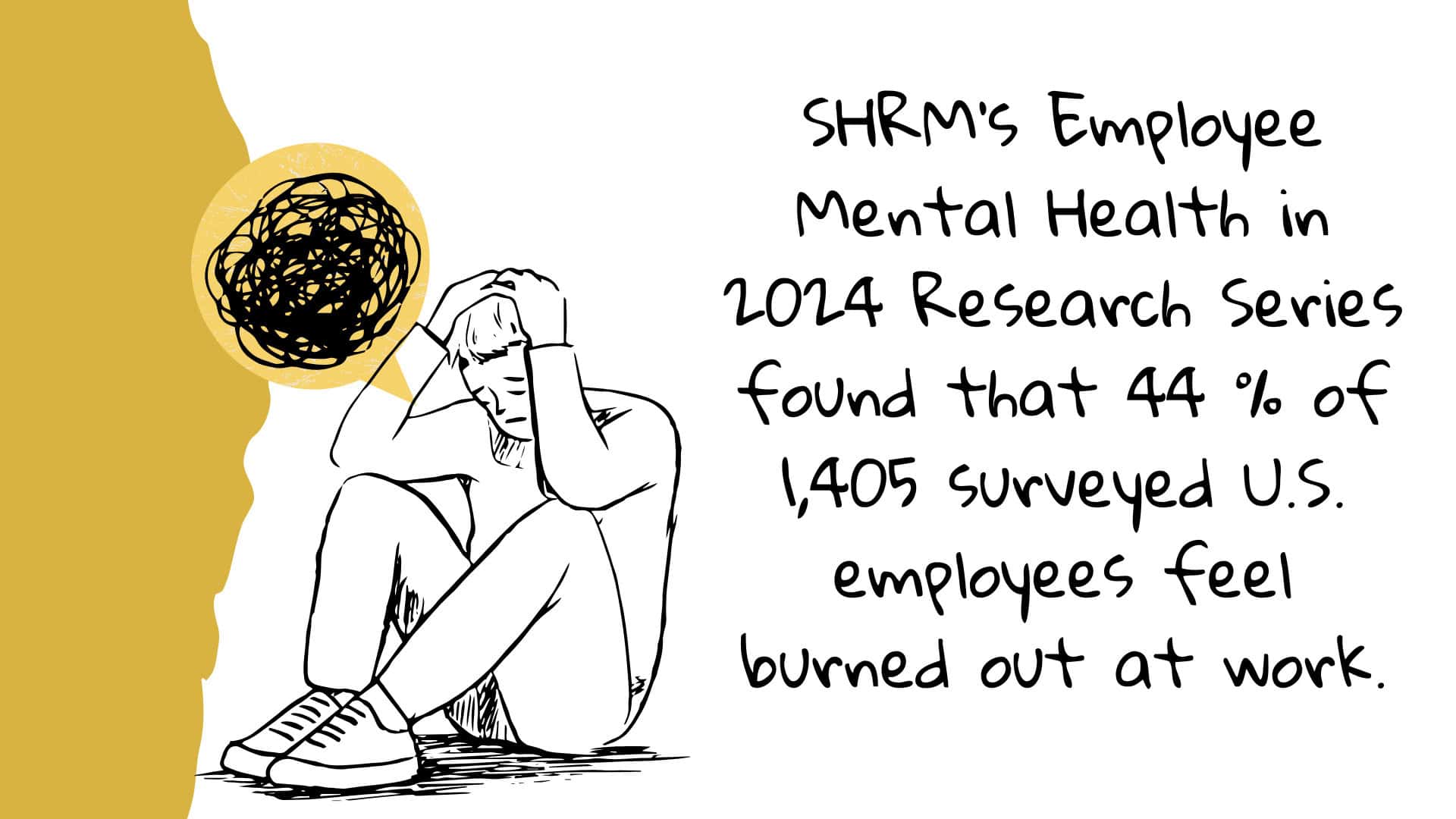
Burnout is the invisible cost of the FIRE journey. Pouring relentless effort into wealth accumulation depletes energy in ways that balance sheets do not show. This poster’s high-pressure career is taking a visible toll, which is a big part of why stepping away early has started to look more appealing. As one commenter put it: “FIRE doesn’t work if you die.”
The numbers back up how widespread this problem has become. SHRM’s Employee Mental Health in 2024 Research Series surveyed 1,405 U.S. workers and found that 44% feel burned out at work and 51% feel “used up” at the end of the workday. Workers who report burnout are nearly three times more likely to be actively searching for a new job than those who are not depleted. A separate February 2025 SHRM pulse survey of 1,193 U.S. workers found that nearly 1 in 3 (31%) said their job makes them stressed “always or often.” Financial success matters enormously, but it should never come at the cost of health and personal fulfillment. You are your biggest asset, and protecting that asset has to be part of the plan.
The Math Can Change
When people set a FIRE target, they run the numbers based on what they know at the time. The most common framework is the 4% rule: accumulate 25 times your annual expenses, and a 4% annual withdrawal should sustain the portfolio indefinitely. That benchmark, however, is now being actively debated on multiple fronts.
Bill Bengen, the financial planner who first published the rule in 1994, revised his guidance upward to 4.7% in his 2025 book, “A Richer Retirement: Supercharging the 4% Rule to Spend More and Enjoy More,” after analyzing a broader, seven-asset-class portfolio. He calls the 4.7% figure a “universal safemax,” derived from worst-case historical scenarios using a more diversified mix of U.S. stocks across market caps, international stocks, government bonds, and Treasury bills. Morningstar, by contrast, takes a forward-looking and more cautious view: its 2025 “State of Retirement Income” report recommends a starting withdrawal rate of 3.9% for a new retiree seeking consistent, inflation-adjusted income over a 30-year horizon, up from the 3.7% it recommended in its prior-year edition. Morningstar’s methodology relies on forward-looking return and inflation projections rather than historical data, which explains why its estimate has varied from 3.3% to 4.0% across different editions of the report. For a $2 million portfolio, the difference between a 3.9% and a 4.7% withdrawal translates to roughly $16,000 a year in income.
Beyond the baseline framework, the inputs to any FIRE formula shift over time. Add high-stakes obligations such as preschool tuition, unpredictable medical costs for aging parents, and the possibility of extended caregiving, and a timeline that once looked clear gets redrawn entirely. The poster’s goal of retiring by 40 made sense on paper a few years ago. After achieving real financial success and measuring it against what their family actually needs, the rigid deadline no longer feels necessary. Retirement does not have to be an all-or-nothing decision. A gradual step-down, whether through a less demanding role, part-time consulting, or leaning harder on passive income from the RV park, offers a middle path worth considering.
Expect your goals and target numbers to evolve. As life changes, the financial strategy needs to keep up.
Why Math Alone Is Not Enough: The Advisor’s Role
Please note that this analysis is an opinion piece based on a public forum discussion. Numbers on a spreadsheet can look airtight while the lived reality is far more complicated. Managing the psychological transition from aggressive accumulator to sustainable spender is one of the harder parts of the FIRE journey, and it is precisely where a fee-only fiduciary financial advisor provides real value. A qualified professional can stress-test a plan against evolving family health liabilities, run realistic scenario analyses, and help ensure the portfolio can support unexpected caregiving costs alongside the lifestyle the poster actually wants.
Editor’s note: This pass added context on ChubbyFIRE’s target spending range ($100,000 to $200,000 annually), included Fidelity’s 2024 finding that 66% of Americans prefer a phased approach to retirement over a clean break, expanded RV park industry context with national occupancy rates of 60% to 70% and the sector’s recession-resistant track record, and clarified that Bengen’s 4.7% figure is his “universal safemax” based on worst-case historical scenarios. The article also notes that Morningstar’s estimate has ranged from 3.3% to 4.0% across different editions of its annual report, reflecting its forward-looking methodology.
Contact [email protected] for any questions or corrections.
Kristin Hitchcock is a financial expert who has been writing on topics related to retirement for over eight years. Her knowledge spans a wide range of areas, including navigating the complexities of Social Security, developing sustainable investment strategies, and helping individuals achieve their retirement goals.
Throughout her career, she has written for various platforms, including several retirement communities, to ensure that seniors have access to clear and actionable financial advice.
Kristin is also an active investor with more than ten years of experience in a diverse range of investment strategies, including short-term trades, dividend stocks, and options. She enjoys simplifying complex trading concepts by writing easy-to-follow guides that help readers meet their investment goals.