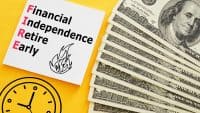
I’m being forced to retire early and not sure if I should take it or not because I’m 40% away from my financial goal of retirement
Finding yourself in an early, unexpected retirement situation, what some call "forced" Financial Independence, Retire Early (FIRE), can feel overwhelming. More than half of workers retire earlier than planned according to 2024 research from the Transamerica Center for Retirement Studies,…

This post may contain links from our sponsors and affiliates, and Flywheel Publishing may receive compensation for actions taken through them.

Finding yourself in an early, unexpected retirement situation can feel overwhelming. Some call it “forced” Financial Independence, Retire Early (FIRE), and it is far more common than most people realize. More than half of workers (58%) retire earlier than they planned, usually because of unforeseen circumstances, according to 2024 research from the Transamerica Center for Retirement Studies in collaboration with the Transamerica Institute. Of those who retired early, 46% pointed to health-related reasons and 43% to employment issues. The median age Americans actually stop working is 62, three years before the traditional retirement age of 65. A separate 2023 survey by Edward Jones found that 40% of financial advisors said their retiree clients were “forced into” retirement. More recently, the 2026 Retirement Confidence Survey from the Employee Benefit Research Institute (EBRI) and Greenwald Research found that worker confidence in having enough for a comfortable retirement dropped to just 61%, a six-point decline from the prior year and the lowest reading since 2017, while retirees’ confidence fell five points to 73%. Nearly half of current retirees also said they left the workforce earlier than planned.
A Reddit post in the ChubbyFIRE community captures this situation well. The poster shares a story many people will recognize: being close to retirement goals, only to have circumstances change and push FIRE forward before reaching the target number. Losing a job close to retirement can feel both freeing and incredibly stressful at the same time.

Here is my advice for this poster and others on a similar path. As always, this is my advice, not financial advice.
1. Reassess Your Target Number and Spending Needs
The poster planned on hitting a specific financial goal before retiring. The more important question is whether that number is truly necessary. A forced exit from the workforce is a natural moment to step back, separate what retirement actually requires from what would simply be nice to have, and ask whether the target was ever grounded in reality or just a round number that felt safe.
The original goal might be out of reach now, and that could turn out to be fine. Consider whether you are on track to retire and whether a few more working years would make a meaningful difference to long-term security. For many people in this position, the answer is far less obvious than it first appears. Scrutinize actual spending needs rather than anchoring on an arbitrary number.
2. Explore New Work Possibilities
Because the poster’s role was eliminated, there is now an opening to find lower-stress work or shift into a field that provides more fulfillment, even if that means taking a few extra years to reach the original goal. The additional income can meaningfully boost the savings rate and also create room to revise the retirement number downward to fit the new situation.
For someone with an executive background, consulting or advisory roles can offer genuine flexibility without the pressure of a demanding corporate position. Part-time work is another avenue worth exploring. It often cuts stress considerably while providing enough income to bridge a retirement gap, and the extra years of contributions give existing savings more time to compound. The goal is to find something sustainable that keeps money flowing without draining your energy, not to replicate the old career.
3. Consider Alternative Investment Strategies
The poster mentions using a securities-backed line of credit (SBLOC) to reinvest in real estate or business opportunities. This approach can generate extra cash flow without requiring asset sales, though it carries real risk, particularly for those less familiar with real estate markets or the collateral requirements that can trigger forced liquidations.
Beyond taking on debt, there are ways to generate immediate yield from assets already held. Conservative options strategies, such as selling covered calls or cash-secured puts, can produce supplemental income from an existing equity portfolio without selling the underlying holdings. Shifting a portion of the portfolio toward dividend-yielding stocks or fixed-income assets can also create more predictable monthly cash flow. Any strategy with higher return potential carries higher risk, so develop a solid grasp of the mechanics before committing capital, and consider working with a financial advisor who specializes in this area.
4. The Healthcare Bridge Challenge
Losing employer-sponsored health coverage is one of the most immediate and costly consequences of forced early retirement. Before Medicare begins at 65, healthcare can easily become the largest monthly expense a retiree faces. That reality became sharper in 2026 when the enhanced premium tax credits in place since 2021 expired at the end of 2025, triggering the steepest disruption in the individual insurance market since the ACA Marketplaces launched.
The cost impact has been significant. According to the Kaiser Family Foundation (KFF), the expiration was projected to more than double average annual premium payments for subsidized enrollees who stayed in the same plan, from about $888 in 2025 to $1,904 in 2026. In practice, many people bought down to lower-cost bronze plans to soften the blow, so the actual average monthly premium payment rose about 58%, from $113 to $178. That trade-off came at a price, however: average deductibles jumped 37% to a record $3,786, up from $2,759 in 2025, the steepest single-year increase in ACA history. KFF projects that effectuated enrollment could fall from 22.3 million in 2025 to roughly 17.5 million by year-end 2026, reflecting how many people could no longer afford coverage at the new prices.
COBRA continues your former employer plan for up to 18 months after a job loss, though you pay the full premium plus up to a 2% administrative fee, making it one of the pricier bridge options. Leaving a job with coverage is a qualifying life event that opens a 60-day special enrollment window for ACA Marketplace plans, and if your income falls within the subsidy-eligible range, an ACA plan may still be manageable. Alternatively, part-time work chosen specifically for its health benefits (sometimes called “Barista FIRE”) can provide a vital safety net while keeping overall stress levels low. Mapping out a healthcare strategy before leaving employment is essential, not an afterthought.
5. Navigating Sequence of Returns Risk
When forced to retire unexpectedly, the biggest threat is not simply the size of the nest egg but the market conditions during the first few years of drawing it down. Poor returns in those early years are far more damaging than the same losses later, because retirees are selling holdings to cover living expenses at depressed prices and forfeiting the compounding that would have followed. This danger is known as Sequence of Returns Risk, and it deserves serious attention before anyone decides to stop working entirely.
Several strategies can reduce this exposure. Maintaining a two-to-three-year cash reserve lets you cover living expenses during downturns without selling investments at a loss. A “bond tent” works along similar lines: increase bond holdings in the years leading up to and through early retirement, then gradually reintroduce equities as the portfolio stabilizes. A balanced 60/40 allocation carries meaningfully lower sequence risk than a heavily equity-weighted portfolio, particularly in the years immediately after retirement begins. The order of returns matters just as much as the average return over a long horizon.
6. Consider Lifestyle Adjustments
Sometimes, reducing spending is more practical than hunting for new income. The poster has expressed reluctance to cut back, which is understandable. Even modest adjustments can go a long way when combined with part-time income. Taking one fewer vacation a year or dining out less frequently can free up meaningful cash flow without requiring any dramatic change to the quality of daily life.
The exercise is worth taking seriously. Audit recurring expenses and ask which ones genuinely add value. Many people discover they are funding subscriptions, memberships, or habits that receive little attention. Small cuts, layered together, can meaningfully close a retirement gap. The real question is what you are protecting: a sustainable retirement that does not require selling assets at the worst possible moment.
7. The Psychological Shift of Losing Your Career Identity
The financial math is only half the battle. A forced FIRE event often triggers a deep sense of identity loss, especially for someone transitioning from a high-powered career to a suddenly empty calendar. This is normal. The 2026 EBRI survey underscores how widespread the anxiety is: retirement confidence among workers has hit its lowest level since 2017, driven by concerns over healthcare costs, inflation, and uncertainty about Social Security and Medicare. Those pressures hit harder when retirement arrives ahead of schedule.
Protecting mental wellbeing is just as important as protecting the portfolio. Give yourself a decompression phase of three to six months to process the job loss, rediscover hobbies, and establish a new daily routine before making any drastic, permanent financial decisions. Anxiety, anger, sadness, and even relief are all normal responses to an abrupt career ending. Many people find that the initial panic subsides once a structured daily schedule replaces the void left by the job, and that what felt like an emergency gradually becomes an opportunity.
8. Address Potential “Windfalls”
It can be tempting to factor in a possible inheritance or other financial windfall when stress-testing a retirement plan. The better approach is to plan as if those events will not occur and treat any actual windfall as a bonus when and if it arrives. A retirement strategy that depends on someone else’s generosity or life circumstances is a fragile foundation for long-term security.
A solid plan stands on its own. Any windfall that does materialize simply accelerates progress or expands options rather than rescuing a plan that was never independently viable. That distinction matters because circumstances outside your control should never be the deciding factor in whether you can afford to retire.
Editor’s note: This revision added the EBRI finding that retiree confidence also fell five points to 73% in 2026, and sharpened the healthcare section with KFF’s confirmed post-expiration figures: average deductibles rising from $2,759 in 2025 to a record $3,786 in 2026, a 37% jump representing the steepest single-year increase in ACA Marketplace history.
Contact [email protected] for any questions or corrections.
Kristin Hitchcock is a financial expert who has been writing on topics related to retirement for over eight years. Her knowledge spans a wide range of areas, including navigating the complexities of Social Security, developing sustainable investment strategies, and helping individuals achieve their retirement goals.
Throughout her career, she has written for various platforms, including several retirement communities, to ensure that seniors have access to clear and actionable financial advice.
Kristin is also an active investor with more than ten years of experience in a diverse range of investment strategies, including short-term trades, dividend stocks, and options. She enjoys simplifying complex trading concepts by writing easy-to-follow guides that help readers meet their investment goals.