Here’s How Much Bigger You Can Expect Your First Social Security Check to Be in 2025
If you receive Social Security checks, you may already know that your 2025 payments are going to be larger than the amount you were collecting in 2025. Retirees typically receive an annual Cost of Living Adjustment, which is often referred…

This post may contain links from our sponsors and affiliates, and Flywheel Publishing may receive compensation for actions taken through them.
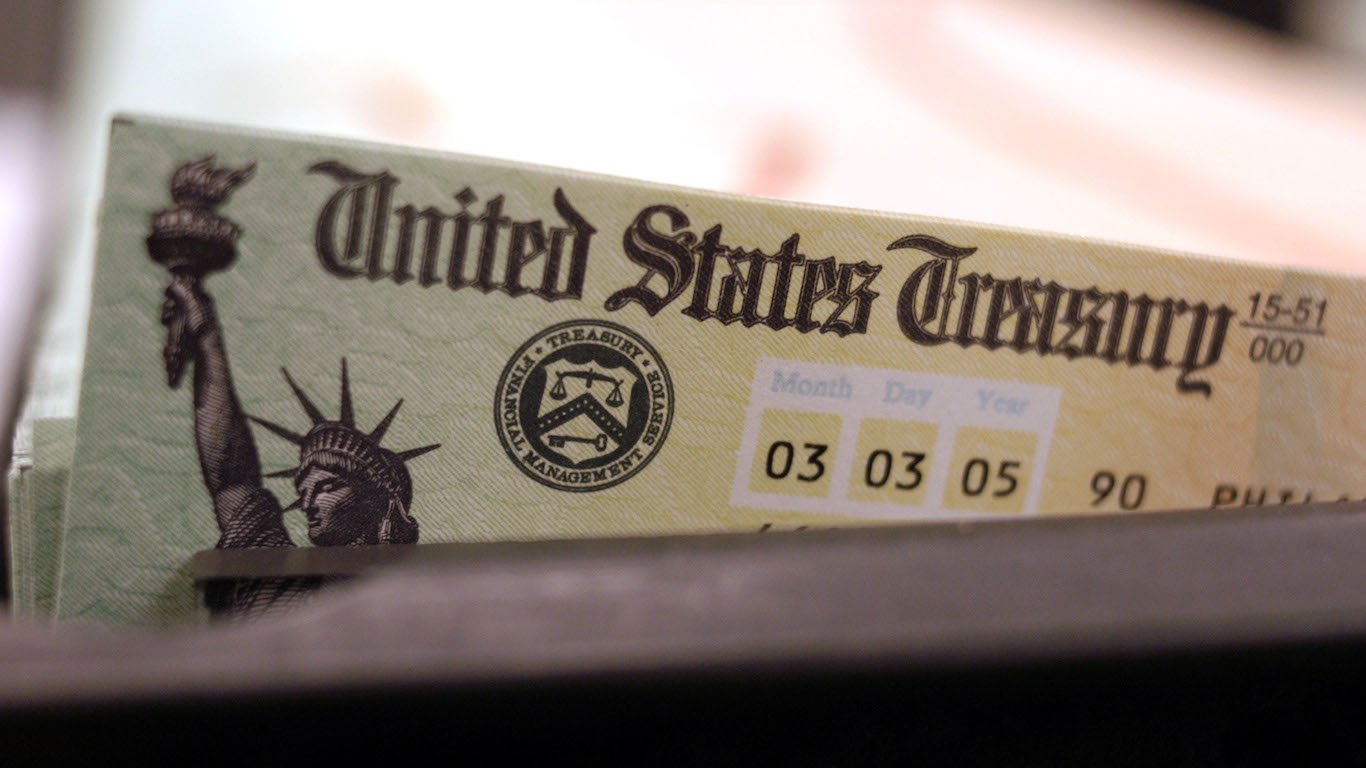
If you receive Social Security checks, you may already know that your 2025 payments are going to be larger than the amount you were collecting in 2025. Retirees typically receive an annual Cost of Living Adjustment, which is often referred to as a Social Security raise. These COLAs help retirees avoid losing buying power as prices increase over time.
24/7 Wall St. Key points:
- Retirees will receive a bigger check next year from Social Security.
- Payments are increasing by 2.5% due to the Cost of Living Adjustment for 2025.
- Medicare premiums will reduce the amount of the raise seniors receive in their checks.
- Also: Take this quiz to see if you’re on track to retire (Sponsored)
The big question you may have, though, is just how much larger will your payments be next year? Here’s what you need to know to figure out how much extra money you’ll get starting in 2025.
This is how much bigger your checks will be next year
Social Security’s Cost of Living Adjustment was announced in October. It’s calculated based on the Consumer Price Index for Urban Wage Earners and Clerical Workers (CPI-W). Each year, the average CPI-W is calculated during the third quarter of the year. If changes to the CPI-W show a year-over-year price increase, retirees get a benefits bump.
In 2025, the COLA or benefits increase is equal to 2.5%, according to the Social Security Administration. The exact process by which this raise is applied to your benefit can be a little bit complicated because your increase is actually calculated by applying your COLA to your primary insurance amount or standard benefit (the amount you’d get if you filed for benefits at your full retirement age). Then, that amount is either increased or decreased based on whatever early filing penalties or delayed retirement credits may have impacted your standard benefit depending on when you first filed for benefits.
For most people, though, the easiest way to estimate your benefits increase is to simply multiply your current benefit by 2.5%. This won’t give you an exact number, but it will be pretty close. So, if you’re currently receiving a $1,900 monthly Social Security benefit, next year you’d get a $47.50 increase and your new payment would come up to $1,947.50.

Don’t forget the impact of Medicare premiums
Simply calculating your benefits increase isn’t going to give you an accurate picture of how your monthly Social Security payments will change next year. That’s because you also must consider the impact of Medicare premiums.
Typically, Medicare Part B premiums are directly withdrawn from Social Security payments. For most people, those premiums totaled $174.70 in 2024 (some high earners pay more). They’ll be increasing to $185.00 next year, which means seniors will pay $10.30 more for coverage. A retiree receiving a $47.50 raise, therefore, would see their checks increase only by $37.20 after accounting for the premium increase.
Obviously, this isn’t nothing. However, it isn’t a whole lot of money for retirees who have been struggling with the effects of rising inflation for years during the post-pandemic era. There’s ample evidence to suggest that COLAs aren’t really helping seniors keep up, including the fact that raises are calculated based on a price index tracking expenses of urban wage earners who don’t tend to spend as much on healthcare and housing. The Senior Citizens League has also estimated that benefits have lost 36% of their buying power since 2000.
With this year’s raise the smallest since 2021, and Medicare premium increases reducing its impact further, seniors may find they end up falling further behind even though the COLA is supposed to prevent that from occurring. So, you will get a bigger check — and you now know how much larger — but just keep in mind that it may not stretch as far as you’d think.
Contact [email protected] for any questions or corrections.
Christy Bieber has been a personal finance and legal writer since 2008. She has a JD from UCLA School of Law and a BA in English, Media and Communications with a certification in business from the University of Rochester.
Christy has been published by a wide variety of sites, including WSJ Buy Side, Forbes, Kiplinger, Fox Business, Credit Karma, Insurify, and Annuity.org. In addition to writing for the web, she has also ghostwritten textbooks on business and law and served as a subject matter expert for course design.