





High-yield savings accounts are an awesome place to put your money. You can generally earn around 9 to 10 times the average savings account rate if you invest in a HYSA. You can also find an account that is insured by the FDIC so you can’t lose the money you invest, even if the bank you put your money into fails – as long as you stay under the FDIC-insured limit of $250,000 per person per account held with each institution.
Risk-free returns aren’t the only advantage either. Many of the best high-yield savings accounts are offered by online banks, which means they make it effortless to sign up for an account online. You’re also very unlikely to pay fees with a reputable high-yield savings account, and you may be able to access special member benefits some online banks offer to their customers for opening a savings account — such as discounts on other financial products.
With so many great features, you may be wondering what the catch is when it comes to online savings accounts. Are these accounts too-good-to-be-true?
Is there a catch when it comes to high-yield savings accounts?
 The good news is, there really is no catch or no surprise hidden fine print associated with HYSAs that should cause you not to invest in one. That’s not to say there are no downsides because there are. In fact, the biggest disadvantages are:
- Variable rates: Your account rate is not fixed or guaranteed, so it can change over time, including declining. Still, even if the HYSA rate does decline, the high-yield account will almost always still pay more than other safe, liquid investments. If the high-yield account rates decline, rates on traditional savings accounts most likely will go down as well. And while CDs don’t have variable rates and you don’t have to worry about your rate dropping during the CD term, you also can’t take your money out until the CD matures without penalty. Many people would prefer an account with a variable rate to being unable to access their funds.
- Lower returns than the stock market could offer: High-yield savings accounts are also going to provide a lower ROI than might be available by investing in the market. Of course, the trade-off is that there is a risk to investing in the market even if you make sound investments. The S&P 500, for example, has consistently produced 10% average annual returns over time, but has also had some years when the nominal return was -38.49% or worse. If you can’t afford to risk losing your money, and can’t wait to invest for the long term to minimize the risk of buying stocks, you’re better off accepting the more reasonable guaranteed ROI that a HYSA can offer.
Neither of these are catches since you’ll know up front that your account comes with a variable rate and that the rate can only go so high. But, it’s still worth thinking about what your goals are for the money.
If you won’t need the funds for a long time and want to maximize returns while taking on a little more risk, then investing in the stock market is the better choice. If you can tie up the money and want your rate locked in, a CD may be a better fit. But if your goal is to keep your funds accessible and earn the most competitive yields you can with no risk, a high-yield savings account is right for you.

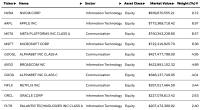









 Top Gaining Stocks
 Top Losing Stocks