I make $80,000 a year and Dave Ramsey told me this is why I’m staying broke
Recently, a caller to the Dave Ramsey Show asked about a purchase he was hoping to make. The caller said he makes $80,000 per year and is currently maxing out his 401(k) and IRA. He is also debt-free. He was…

This post may contain links from our sponsors and affiliates, and Flywheel Publishing may receive compensation for actions taken through them.

A caller to the Dave Ramsey Show recently sparked a pointed conversation about cars, wealth, and what it actually means to earn a solid income. The caller was Micah, a 24-year-old earning $80,000 per year. He maxes out both his 401(k) and IRA and carries zero debt. His question was simple: he has $30,000 in cash and wants to put it toward a 2019 Nissan 370Z as a weekend car, but he wonders whether investing the money instead would serve him better long-term.
Ramsey’s response was blunt. He distilled the entire debate down to a single principle that anyone serious about building wealth should internalize.
What Ramsey Says Will Stop You From Building Wealth
Ramsey told Micah directly that buying the sports car was a poor choice for anyone trying to get rich. He acknowledged his own love of cars, mentioning he had driven to the studio in his Raptor that morning, before landing on his core point: “If you’re going to build wealth, you have to keep as small an amount as possible going into things that go down in value.” In Ramsey’s framework, cars are the textbook example of a wealth-eroding purchase, and his own research backs that view. A Ramsey Solutions study of more than 10,000 millionaires found that 84% credited avoiding car payments as a key factor in building their wealth. Separately, 8 out of 10 millionaires in that same study reported buying their vehicles with cash outright.
The depreciation math makes Ramsey’s case for him. According to Kelley Blue Book, most vehicles lose roughly 20% of their value in the first year alone and close to 60% within five years. Applied to a $30,000 purchase, that trajectory leaves the car worth roughly $12,000 half a decade later. Ramsey also applies a practical rule of thumb: the combined value of every vehicle you own should not exceed half your annual take-home pay. For someone earning $80,000, that ceiling sits at $40,000 total, inclusive of any car Micah already drives.
Ongoing ownership costs compound the problem further. AAA’s 2025 “Your Driving Costs” study put the average annual cost of owning and operating a new vehicle at $11,577, covering fuel, maintenance, insurance, depreciation, and financing. AAA’s newly released 2026 study, published September 15, found that figure has climbed to $12,863 per year, or about $1,072 per month, driven by higher fuel prices, depreciation, and finance charges. The 2025 study had identified depreciation as the single largest ownership expense at an average of $4,334 per year, a figure that underscores just how quickly a new vehicle sheds value.
Financed buyers carry an even heavier burden. According to Experian’s Q1 2026 State of the Automotive Finance Market, the average new-car monthly payment reached $770. Edmunds puts it slightly higher: its Q1 2026 data shows the average payment on a financed new vehicle hit a record $773, up from $741 a year earlier. About 20% of new-car buyers are now committing to payments of $1,000 or more per month, and extended loan terms have reached record territory as well, with 84-month or longer loans making up 22.9% of all financed new-car purchases. Americans collectively owed $1.71 trillion in auto loan debt as of Q2 2026, according to the Federal Reserve Bank of New York. For anyone trying to build long-term wealth, attaching a large monthly payment to a depreciating asset is one of the fastest ways to undercut that goal.
Ramsey’s standing advice is to avoid car loans entirely and to buy reliable used vehicles with cash whenever possible. The logic is straightforward: paying interest on something that loses value every month is a double loss, and the longer the loan term stretches, the deeper that hole becomes.
Is It Ever OK to Splurge?
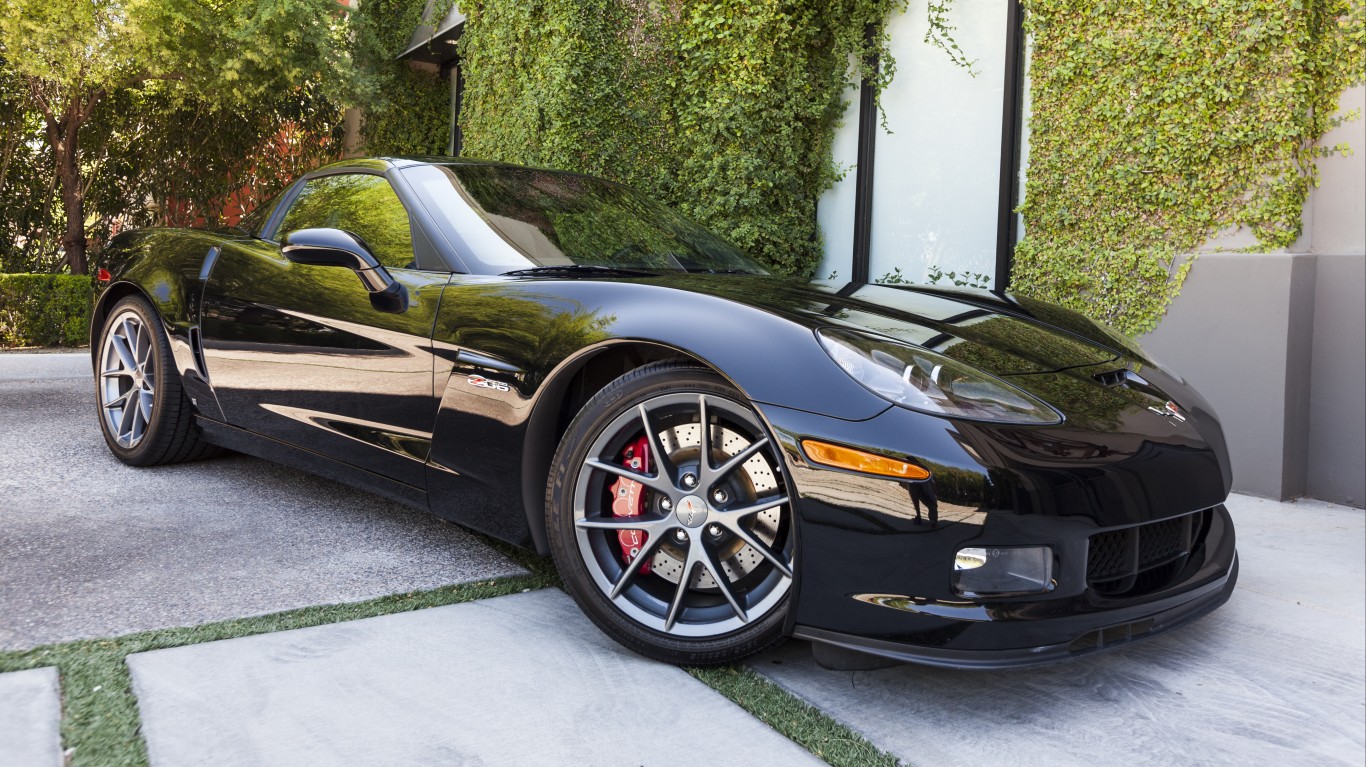
Ramsey’s core argument about cars eroding wealth is well-founded. A sports car is an expense, not an asset, and any financial plan that treats it otherwise is built on shaky ground. Micah’s specific situation, though, deserves a closer look, because the details matter quite a bit.
Micah is already doing things that most people in their twenties are not. He maxes out his retirement accounts, carries no debt, and has saved $30,000 in cash to cover the purchase outright with no financing needed. That profile looks nothing like the average American committing to a $773 monthly payment on a loan that may now stretch seven years or longer.
On a pure numbers basis, investing that $30,000 for compound growth or applying it toward a home down payment would likely produce more wealth over time. Even so, there is a meaningful difference between advising someone piling up debt on a car they cannot afford and counseling someone who has already built a disciplined financial foundation. The real question for Micah is whether he can sustain his good habits after the purchase.
If he can keep funding his retirement accounts, stay out of debt, and comfortably cover insurance and maintenance on a weekend sports car, buying it in cash is a defensible call. Wealth-building is a long game, and treating every discretionary purchase as a moral failure is a reliable path to burnout. The approach that actually keeps people on track is simpler: save first, invest consistently, and pay cash for the things you enjoy without breaking the plan that got you there.
Editor’s note: This article was updated to reflect AAA’s September 2026 “Your Driving Costs” study showing the average annual cost of new vehicle ownership has risen to $12,863, up from $11,577 in 2025. The Federal Reserve Bank of New York’s auto loan debt figure was also updated to $1.71 trillion as of Q2 2026, and the Ramsey Solutions finding that 8 out of 10 millionaires buy their cars with cash was added for additional context.
Contact [email protected] for any questions or corrections.
Christy Bieber has been a personal finance and legal writer since 2008. She has a JD from UCLA School of Law and a BA in English, Media and Communications with a certification in business from the University of Rochester.
Christy has been published by a wide variety of sites, including WSJ Buy Side, Forbes, Kiplinger, Fox Business, Credit Karma, Insurify, and Annuity.org. In addition to writing for the web, she has also ghostwritten textbooks on business and law and served as a subject matter expert for course design.