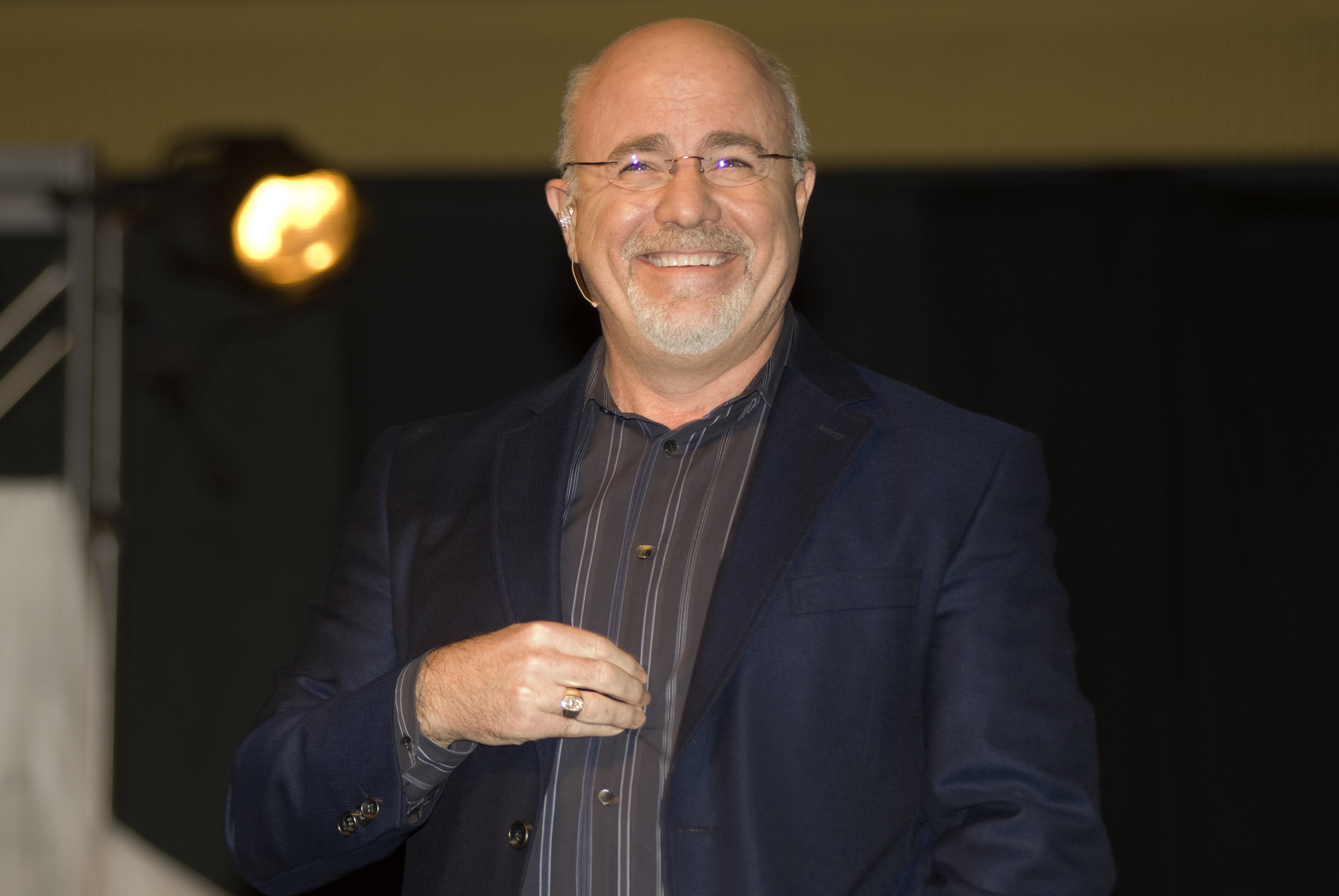
Dave Ramsey says this is what you need to do in order to retire off of a $3 million nest egg
Dave Ramsey is a well-known American personal finance mentor, author, and radio host famous for his strict, no-nonsense approach to money management. He built his reputation on encouraging debt elimination, living within one's means, and using cash in day-to-day life.…

This post may contain links from our sponsors and affiliates, and Flywheel Publishing may receive compensation for actions taken through them.
Dave Ramsey is a well-known American personal finance mentor, author, and radio host, famous for his strict approach to money management. He built his reputation on encouraging debt elimination, living within one’s means, and using cash in day-to-day life. The centerpiece of his media empire is The Ramsey Show, a radio program where listeners call in for advice on everything from debt and budgeting to retirement planning and investing. The show blends practical guidance with genuinely personal stories, and that combination keeps it compelling even for listeners who push back on some of Ramsey’s conclusions.
This piece reacts to a recent caller who brought an impressively large nest egg to the conversation, along with real anxieties about whether it would last.
The Call
The caller wants to retire at 58, four years before the earliest age to collect Social Security benefits. Ramsey’s verdict was clear: with a net worth of $3 million and counting, the soon-to-be retiree has more than enough cushion. That assessment seems right. Accounting for unexpected expenses, whether a steep medical bill, a long-term care situation, or a rough patch in the markets, is always prudent. But Ramsey’s instinct to push back on over-indexing those scenarios is reasonable here.
Low-probability, high-impact events are real, and a smart retiree will have contingency plans for them. Letting those possibilities dominate the mental picture, though, can distort a perfectly sound financial reality. A $3 million nest egg is a genuinely strong position, and most people in that situation face a very small chance of running dry under normal spending patterns.
Retiring in one’s 50s does require extra care. A healthy 58-year-old should plan for a retirement lasting 25 to 30 years, and reaching the centenarian mark is no longer the rarity it once was. A longer runway means more years for the portfolio to absorb volatility and for living costs to compound upward.

A $3 million nest egg: what is there to worry about?
Someone with $3 million does not need to panic about running out of money, provided their lifestyle stays grounded. In this caller’s case, they currently earn $300,000 a year. Spending habits built around that income level could erode even a large nest egg if they carry straight into retirement unchanged. The good news is that the caller has no intention of spending lavishly.
If annual retirement spending runs in the $50,000 to $60,000 range, a $3 million portfolio has real staying power. Wedding costs and college tuition could spike spending in certain years, but Ramsey does not treat those outliers as particularly alarming. Given the size of the nest egg, that position seems defensible. The actual red flag would be unchecked spending in the so-called “go-go” years: the early phase of retirement when energy is high and the temptation to travel and spend freely is strongest. That is precisely when a financial adviser earns their fee.
Based on how the caller described their plans, excessive spending does not appear to be a near-term concern. The closer they get to age 58, the more that measured approach will serve them well.
The math battle: Ramsey’s 8% assumption vs. the research
The annual income a $3 million portfolio can sustain depends heavily on the withdrawal philosophy behind it. Ramsey has publicly dismissed the conventional 4% rule as “absolutely wrong” and “ridiculous,” arguing that long-term stock market returns of 10% to 12% justify pulling as much as 7% to 8% annually from an all-equity portfolio. On a $3 million balance, that math produces up to $240,000 in first-year income.
Most academic research lands in a very different place. Morningstar’s December 2025 “State of Retirement Income” report pegged the safe starting withdrawal rate for 2026 at 3.9%, assuming a 90% probability of funds lasting through a 30-year retirement. That figure applies to a balanced portfolio holding 30% to 50% in equities and is a modest improvement over the 3.7% Morningstar estimated for 2025, reflecting slightly better capital markets assumptions. At 3.9%, a $3 million portfolio supports around $117,000 in first-year income, roughly half of what Ramsey’s math implies. Morningstar also found that retirees willing to flex their spending with market conditions could push their starting withdrawal rates to as high as 5.7%, using a “guardrails” approach that adjusts annual draws when portfolio values shift materially.
Financial personality Suze Orman has gone further in the other direction, recommending that retirees leaving the workforce in their 60s withdraw no more than 3% per year. Orman’s argument is that unpredictable markets, persistent inflation, and rising American life expectancies have made the conventional 4% rule dangerously stale. The gap between Ramsey’s 8% and Orman’s 3% illustrates just how much retirement outcomes hinge on this single variable.
William Bengen, the financial planner who originated the 4% rule in 1994, revised his own estimate upward to 4.7% in his August 2025 book “A Richer Retirement: Supercharging the 4% Rule to Spend More and Enjoy More,” published by Wiley. His updated figure rests on a more diversified allocation that includes mid-cap, small-cap, and international stocks alongside bonds and cash. Bengen describes 4.7% as a worst-case safe maximum, not a universal target. Even so, it falls well short of Ramsey’s 8% figure.
Historical simulation data makes the gap more concrete. An 8% withdrawal from an all-equity portfolio has historically succeeded over a 30-year retirement horizon in only about 37% of scenarios. Over a 25-year period, the success rate climbs to roughly 50%. For someone retiring at 58 and potentially facing a retirement of more than 30 years, those odds are uncomfortably low. Sequence of returns risk, the danger that a bear market early in retirement permanently impairs the portfolio before it can recover, is what drives those failure rates. Ramsey’s framework largely sidesteps this concern.
The good news for this caller is that a modest spending target of $50,000 to $60,000 annually represents a withdrawal rate well under 2% on a $3 million base. At that level, the debate between 4% and 8% is largely academic.
Navigating the age 58-65 bridge years and healthcare logistics
Retiring at 58 creates real administrative hurdles, because the caller is years away from two major federal benefit milestones. A “bridge strategy” is essential to cover the seven-year gap before Medicare eligibility at 65. Without employer-sponsored coverage, private health insurance can become one of the largest line items in the retirement budget.
The healthcare landscape shifted sharply at the start of 2026. The enhanced Affordable Care Act premium tax credits that had been in place since 2021, originally passed under the American Rescue Plan Act and extended through the Inflation Reduction Act, expired at the end of 2025. The so-called subsidy cliff has returned. Under current rules, households with income above 400% of the federal poverty level receive zero premium assistance. According to KFF analysis, average monthly marketplace premiums rose by 58% for enrollees in 2026, climbing from $113 to $178 per month. The increase, while still steep, came in below KFF’s initial projection of a 114% spike because many households shifted to higher-deductible bronze plans or dropped coverage entirely. Average deductibles also surged, rising 37% to a record $3,786 per person in 2026, up from $2,759 the prior year, making the true out-of-pocket exposure considerably higher than premium figures alone suggest.
The enrollment consequences have been substantial. Effectuated ACA marketplace enrollment fell from 22.1 million in early 2025 to 19.2 million by February 2026, a 13% drop and the largest since the marketplaces launched in 2014, according to federal data. KFF projects average enrollment could fall further over the course of 2026, potentially settling between 16.5 million and 17.5 million as more enrollees miss premium payments they can no longer afford. The steepest drops are concentrated among households just above the 400% FPL threshold, who made up a disproportionate share of those exiting the market. Managing income carefully below that threshold is therefore more important than ever during the pre-Medicare years.
Traditional 401(k) and IRA withdrawals before age 59.5 typically trigger a 10% early withdrawal penalty as well. Early retirees generally need to draw on taxable brokerage accounts, access Roth contributions (which can be withdrawn penalty-free at any age), or structure distributions under IRS Section 72(t) to generate income without unnecessary tax drag. Getting that sequencing right before retirement begins is one area where professional advice pays clear dividends.
Ramsey thinks staying invested is a smart choice in retirement
Every personal finance situation is different, and this one is no exception. A conversation with a fiduciary financial adviser would give the caller a personalized read on their specific numbers. The cost of that advice is trivial relative to the nest egg in question, and even if it simply confirms what the caller already suspects, the peace of mind alone is worth it.
Ramsey’s core advice was to stay invested, favor a diversified mix of growth-oriented mutual funds, and resist the urge to rotate heavily into bonds or other lower-return assets just because retirement has begun. That guidance reflects a reasonable concern: playing it too safe has its own costs, and a retiree with a 30-year horizon still needs their portfolio to grow.
The appropriate level of equity exposure in retirement is genuinely a function of individual risk tolerance and spending needs. For someone withdrawing less than 2% annually, a more conservative allocation is entirely viable. For someone leaning on aggressive withdrawal assumptions, heavy concentration in equities carries real sequence-of-returns exposure that should not be underestimated.
The bottom line
Ramsey’s overall verdict for this caller seems well-founded. A $3 million net worth, paired with modest spending intentions, puts this soon-to-be retiree in a strong position. The real work ahead involves navigating a more expensive healthcare landscape before Medicare kicks in, managing early withdrawal rules, and building a sensible drawdown strategy with a trusted adviser. Done right, those are solvable problems. With a nest egg this size and realistic spending expectations, running out of money is not the likeliest story.
Disclaimer: This article is for educational and informational purposes only and does not constitute explicit tax, legal, or investment advice. Individual financial situations vary greatly; always consult with a licensed fiduciary financial advisor or CPA before adjusting your retirement or investment strategy.
Editor’s note: This pass added KFF data showing the average ACA marketplace deductible surged 37% to a record $3,786 per person in 2026, updated effectuated enrollment figures to reflect the confirmed 13% drop (from 22.1 million to 19.2 million by February 2026), and refined Ramsey’s withdrawal range to “7% to 8%” in line with his published guidance.
Contact [email protected] for any questions or corrections.
Joey is a 24/7 Wall St. contributor and seasoned investment writer whose work can also be found in publications such as The Motley Fool and TipRanks. Holding a B.A.Sc in Computer Engineering from the University of British Columbia (UBC), Joey has leveraged his technical background to provide insightful stock analyses to readers.
Joey's investment philosophy is heavily influenced by Warren Buffett's value investing principles. As a dedicated Buffett disciple, Joey is committed to unearthing value in the tech sector and beyond.