3 Reasons Retirees Should Not Enroll in Medicare Advantage for 2026

This post may contain links from our sponsors and affiliates, and Flywheel Publishing may receive compensation for actions taken through them.

Open enrollment season is forcing a hard rethink for retirees this year. In 2026, more than half (55%) of eligible Medicare beneficiaries, or 35.2 million out of 64.2 million, are enrolled in Medicare Advantage plans. But the 2026 plan year looks different from any that came before it. Hospitals are walking away from contracts at a record pace, insurers are leaning on AI to deny claims, and millions of seniors have already been pushed out of plans they counted on.
If you are weighing your 2026 options right now, the math has shifted.
What Retirees Are Actually Facing in 2026
The pitch for Medicare Advantage has always been straightforward: low or zero premiums, dental and vision perks, an out-of-pocket cap, and a single ID card. The trade-off was a narrower network and the insurer’s right to require prior authorization on care.
That trade-off is now deteriorating visibly. Medical inflation is running roughly 3% year-over-year, compared with about 2% for general goods, and private insurers are responding by tightening networks, automating denials, and exiting unprofitable counties. The numbers paint a sobering picture.
- Average MA premium: $15 per month
- Median out-of-pocket maximum: $5,900, up $900 from two years ago
- Forced disenrollment rate in 2026: 10%, affecting about 2.9 million seniors
- States allowing Medigap medical underwriting after initial enrollment: 46
The Core Tension
Strip everything else away and the decision hinges on provider access versus sticker price. A $0 premium looks like a bargain right up until your specialist goes out of network or a post-surgical rehab stay gets denied.
When a trusted hospital terminates its MA contract, an out-of-network procedure can cost anywhere from 30% to 100% of the total service bill. On a $40,000 hospitalization, that is potentially the entire bill landing on your kitchen table. Premium savings can vanish in a single admission.
The broader economic environment adds another layer of pressure. Services inflation has stayed above 3% year-over-year throughout the past year, and consumer confidence has weakened sharply. The University of Michigan’s sentiment index decreased to 51.7 in August 2026, falling 6.5% from July’s final reading of 55.2. The index slipped further, to 48.1, in September 2026. Older consumers and those on lower or middle incomes have shown the steepest declines, and retirees on fixed budgets have far less cushion to absorb a surprise hospital bill than they did two years ago.
Reason 1: Hospital Networks Are Fracturing
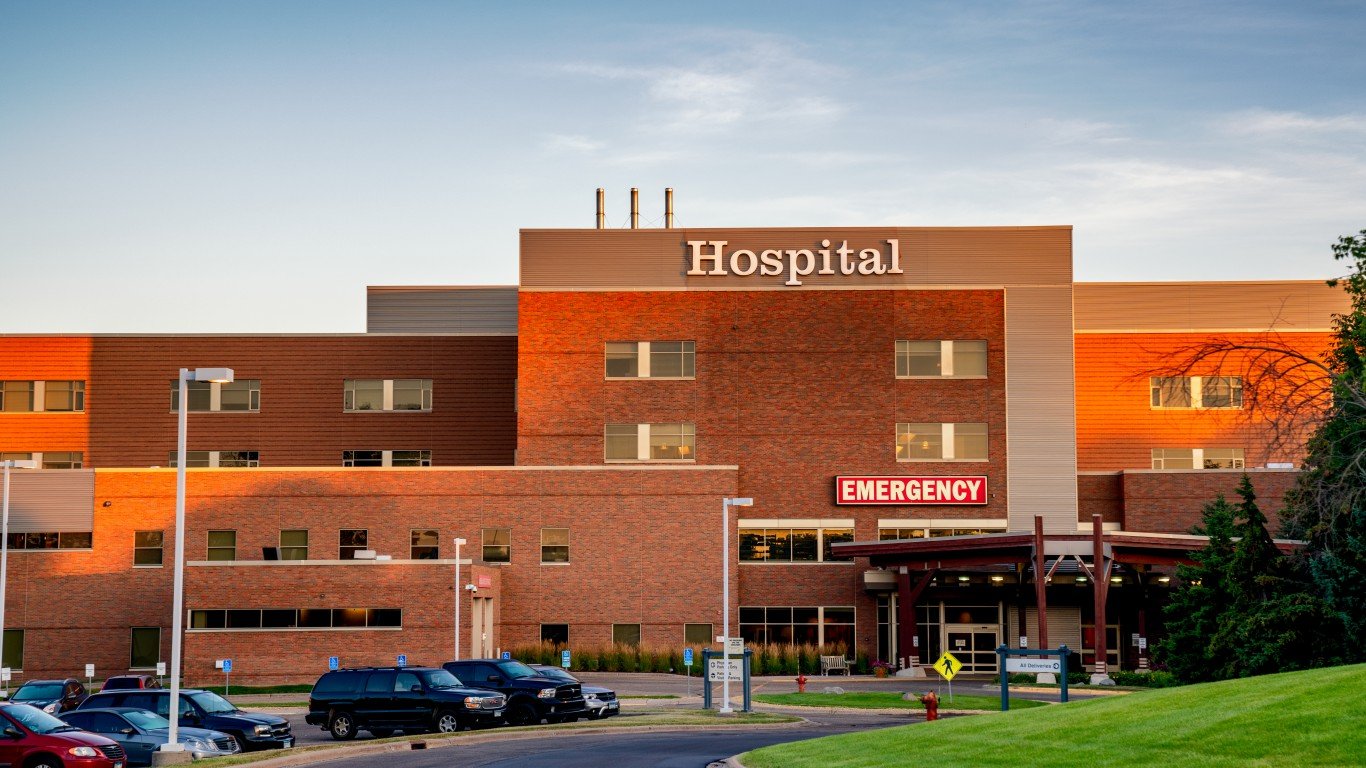
Networks are breaking outright, and the pace of departures has accelerated sharply. In a defining moment for the 2026 plan year, Mayo Clinic went out-of-network for individual Medicare Advantage plans from UnitedHealth Group (NYSE:UNH | UNH Price Prediction) and Humana (NYSE:HUM) across Minnesota, Wisconsin, and Iowa. In the Pacific Northwest, MultiCare dropped all non-group Medicare Advantage PPO plans. NewYork-Presbyterian went out of network with UnitedHealthcare MA for 2026, and UNC Health dropped Humana, WellCare, and Health Care Service Corp MA plans the same year. Mass General Brigham, Scripps Health, and Lehigh Valley Health Network each made similar moves. Becker’s Hospital Review tracked 32 health systems that dropped MA contracts in 2024 and 40 more in 2025, a combined 72 systems in two years.
If your cardiologist or oncologist practices at one of these systems, the plan you renew today may not cover them in January. The Congressional Budget Office projects that the share of all Medicare beneficiaries enrolled in Medicare Advantage will rise to 63% by 2034 and remain at that level through at least 2036, but that long-term growth trajectory sits in tension with the financial pressures pushing providers out of the program. Between 2025 and 2026, Medicare Advantage enrollment increased by approximately 1.1 million beneficiaries, representing a 3% growth rate, the slowest pace in roughly two decades. The One Big Beautiful Bill Act, signed into law on July 4, 2025, could deepen this divide further. Because the law is projected to increase the deficit, the CBO projects it would trigger about $500 billion in mandatory reductions in Medicare spending between 2026 and 2034, including a 4% reduction in payments to hospitals, unless Congress takes action to circumvent them.
Reason 2: Algorithmic Gatekeeping on Care
Prior authorization has gone from a hurdle to a wall. A Senate Permanent Subcommittee on Investigations report found that the three largest insurers — UnitedHealth, CVS Health (NYSE:CVS), and Humana — used AI tools to systematically reject prior authorization requests for post-acute care such as nursing home stays and rehab, at rates far exceeding their overall denial rates.
The numbers were striking. In 2022, Humana’s prior authorization denial rate for post-acute care ran 16 times higher than its overall denial rate, while UnitedHealthcare and CVS ran at about three times their overall rates. UnitedHealth’s post-acute denial rate climbed from 8.7% to 22.7% between 2019 and 2022, a period during which the company was actively deploying automated review tools. As recently as July 2026, a bipartisan Senate inquiry pressed all three companies to produce records showing exactly how algorithms factor into coverage decisions today.
Nearly 53 million prior authorization requests were submitted to Medicare Advantage insurers on behalf of enrollees in 2024, of which 4.1 million (7.7%) were denied. Just 11.5% of denied prior authorization requests were appealed to Medicare Advantage insurers in 2024, though 80.7% of those appeals were partially or fully overturned. That combination of low appeal rates and high overturn rates is precisely what makes attrition such an effective cost-containment tool for insurers. The volume and the denial share are both rising.
Reason 3: Plan Cancellations and the Medigap Trap
For the first time in program history, the risk of your plan disappearing is a double-digit event. The 2026 forced disenrollment rate hit 10%, affecting roughly 2.9 million seniors enrolled in non-employer HMO and PPO plans. The pain is geographically concentrated: in 12 states, more than one in five enrollees lost their plan, and Vermont’s situation was extraordinary by any measure.
About 92% of Vermont’s MA enrollees were forcibly disenrolled after insurers exited their county. Blue Cross Blue Shield of Vermont discontinued all Vermont Blue Advantage plans, affecting approximately 26,000 members, while UnitedHealthcare ended Medicare Advantage coverage in 14 Vermont counties, impacting around 7,800 members. Together, these plans covered the large majority of the more than 51,600 people insured by Medicare Advantage plans in Vermont, leaving Humana as the only insurer offering individual MA plans in the state, and only in select counties. When MA plans exited the state in 2025, their unprofitable members transitioned to the remaining plans, potentially hurting those plans’ profits enough that they had to exit for 2026. Wyoming, South Dakota, Idaho, and Maryland each saw forced disenrollment rates of 40% or more.
The trap is what happens next. Try to switch back to traditional Medicare and add a Medigap policy, and in 46 states, Medigap insurers can use medical underwriting to deny coverage based on pre-existing conditions. You can be priced out or rejected outright at the exact moment supplemental coverage matters most. Beneficiaries who are forced out of a plan do receive a federal guaranteed-issue window of 63 days, but that protection expires quickly, and most enrollees are unaware it exists.
The Realistic Paths Forward
- Traditional Medicare plus Medigap plus a standalone Part D plan. Higher monthly cost, but broad provider access and predictable bills. Best for retirees with chronic conditions, established specialist relationships, or who travel between states.
- Stay in Medicare Advantage, but verify everything. Pull your plan’s 2026 provider directory, confirm every doctor and hospital you use is in-network, and read the prior authorization rules for any treatment you anticipate. Best for healthy retirees in stable urban markets with strong MA competition.
- Switch to traditional Medicare now, while your health still passes underwriting. If you are healthy today, this may be your last clean window to lock in a Medigap policy before a future diagnosis closes the door.
What to Do This Week
Look up your plan’s 2026 Annual Notice of Change and confirm your primary hospital system is still in-network. Check your state’s Medigap rules as well: a handful of states offer guaranteed-issue protections year-round, and your flexibility there is much greater than elsewhere.
The most expensive mistake retirees make is treating MA enrollment as a routine renewal rather than a fresh coverage decision. The plan you are renewing for 2026 is a different product from the one you bought in 2022. Read it fresh, because in most meaningful ways, it is a new product with new risks.
Editor’s note: This article has been updated to reflect the University of Michigan’s confirmed final August 2026 consumer sentiment reading of 51.7 and the subsequent September 2026 reading of 48.1 from FRED, replacing the prior year-over-year comparison figure; MA enrollment growth of 3% for 2026 (the slowest in roughly two decades) has been added per KFF’s 2026 enrollment update; and the CBO’s most current projection of 63% MA market share by 2034, drawn from the February 2026 CBO Medicare Baseline, replaces earlier projection language.
Contact [email protected] for any questions or corrections.
Don Lair writes about options income, dividend strategy, and the kind of boring-but-durable investing that actually funds retirement. He's the founder of FITools.com, an independent contributor to 24/7 Wall St., and a former writer for The Motley Fool.