John Bogle’s Retirement Portfolio Was So Simple, Wall Street Hated It

This post may contain links from our sponsors and affiliates, and Flywheel Publishing may receive compensation for actions taken through them.
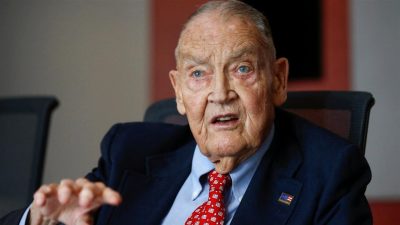
In 1976, John Bogle asked everyday investors to accept market returns instead of chasing market-beating ones. His first index fund raised a little more than $11 million, a launch Bogle himself called “an abject failure,” and critics labeled it Bogle’s Folly. Half a century later, that idea can ground a retirement with just two funds.
Why Wall Street Mocked a Fund That Just Owned Everything
Wall Street’s business ran on expensive managers, frequent trading and complex strategies. An index fund that simply holds the whole market for a tiny fee threatened every part of that model. Detractors argued that nobody would settle for “average” returns.
Bogle drew on economist Burton Malkiel’s call for an index fund in his 1973 book A Random Walk Down Wall Street. In The Little Book of Common Sense Investing, Bogle later made the core argument simply: Costs come straight out of returns, so the lowest-cost owner of the market keeps more of what the market delivers. Indexing went on to reshape the industry, forcing fee cuts across fund companies and inspiring the Bogleheads community built on three rules: Own the market, minimize expenses, stay invested.
Two Funds That Cover Thousands of Securities
Vanguard Total Stock Market’s Admiral Shares (NASDAQ:VTSAX) tracks the CRSP US Total Market Index, covering large, mid and small U.S. companies. Its expense ratio (the annual fee taken from fund assets) is 0.04%, or $400 a year on a $1 million balance. One tradeoff: its top 10 holdings are dominated by megacap technology names, so the biggest companies drive a large share of results.
Vanguard Total Bond Market’s Admiral Shares (NASDAQ:VBTLX) tracks the Bloomberg U.S. Aggregate Float Adjusted Index, a mix of investment-grade Treasury, corporate bonds and mortgage-backed securities. Both Admiral funds have historically required a $3,000 minimum.
Here is what each fund delivered on a dividend-adjusted basis through November 17, 2026. These figures reflect each fund’s own returns:
- VTSAX: 4.75% year to date, 10.08% over one year, 45.92% cumulative over five years and 223.96% over 10 years.
- VBTLX: -4.41% year to date, -4.60% over one year, -16.99% over five years and -13.11% over 10 years.
3 Ways to Split $1 Million
Consider a hypothetical retiree with $1 million. These example mixes reflect Bogle’s philosophy; Bogle never prescribed these specific splits.
| Allocation | VTSAX (Stocks) | VBTLX (Bonds) |
|---|---|---|
| Conservative | $400,000 | $600,000 |
| Balanced | $600,000 | $400,000 |
| Growth-Oriented | $700,000 | $300,000 |
More stock means more long-term growth potential and bigger swings. More bonds mean steadier interest income and smaller losses. The past month shows the buffer at work: VTSAX fell 6.53% while VBTLX rose 0.32% between Oct. 20 and Nov. 20.
Simplicity Pays Off When Withdrawals Begin
Two funds are easy to track, easy to rebalance and hard to tinker with during a panic. Owning thousands of companies removes dependence on any single stock.
Bonds still carry risk. VBTLX’s negative five-year figure reflects the rate shock that hit bonds in 2022, a reminder that diversification buffers losses without preventing them. The bigger danger for retirees is sequence-of-returns risk: a steep decline early in retirement, while withdrawals continue, forces selling shares at low prices and can permanently shrink the portfolio. A bad market in year one does far more damage than one in year fifteen, which is the whole subject of our free guide to defending the first five years.
Rebalancing helps. Once a year, or when an allocation moves several points off target, selling the winner to top up the loser keeps risk in line. Pulling withdrawals from bonds after a stock slump gives equities time to recover.
Who Bogle’s 2-Fund Approach Fits
Retirees and near-retirees with a 10-plus-year horizon who value low costs and minimal maintenance may find this pairing matches their priorities, especially in IRAs and Vanguard accounts. Those looking for international stocks, inflation-protected bonds or someone else handling rebalancing have alternatives to consider researching. Rival brokerage firms may also charge transaction fees to buy Vanguard mutual funds.
Contact [email protected] for any questions or corrections.
Joel South covers large-cap stocks, dividend investing, and major market trends, with a focus on earnings analysis, valuation, and turning complex data into actionable insights for investors.
He brings more than 15 years of experience as an investor and financial journalist, including 12 years at The Motley Fool, where he served as an investment analyst, Bureau Chief, and later led the Fool.com investing news desk. He has also co-hosted an investing podcast and appeared across TV and radio discussing market trends.