Stop Saving $1,000 for Emergencies: Here’s the 1-3-6 Method Financial Advisors Say Actually Works
The $1,000 starter emergency fund has been gospel in personal finance circles for two decades. Andrew, host of The Personal Finance Podcast, thinks it sets people up to fail. On a recent episode titled How to Manage Your Money (and…

This post may contain links from our sponsors and affiliates, and Flywheel Publishing may receive compensation for actions taken through them.
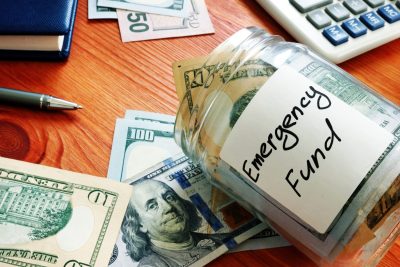
The $1,000 starter emergency fund has been gospel in personal finance circles for two decades. Andrew, host of The Personal Finance Podcast, thinks it sets people up to fail. On a recent episode titled How to Manage Your Money (and Still Enjoy Life), he said: “If you’re trying to pay off debt and you only have $1,000 in an emergency fund, you’re never going to get anywhere, especially if you have a lot of debt.”
The stakes are concrete. A single transmission repair, an ER copay, or a furnace replacement blows through $1,000 in an afternoon. The card comes back out. The debt grows. And the household that thought it had a financial cushion is back to square one with higher interest charges than before. With the U.S. personal savings rate sitting at just 4% in Q1 2026, down from 6% in Q1 2024, this matters more than it did even two years ago.
The verdict: the 1-3-6 method is the better framework
Andrew’s proposal replaces the static $1,000 target with four expense-based phases. I’ve been following the personal finance podcast space for several years, and this is one of the cleaner reframes I’ve seen. Here’s how it works.
Phase 1: One month of expenses. Save a full month before touching debt. If your bare-bones monthly nut is $4,200, you save $4,200 first. That covers the realistic emergencies that wreck $1,000 funds.
Phase 2: Kill high-interest debt. Anything above 6% gets attacked aggressively. Credit cards, personal loans, buy-now-pay-later balances.
Phase 3: Build to three months, while investing. Andrew says this level “protects you against most things except for job loss.” You also start investing here beyond any 401(k) match: “Some money is going towards your emergency fund, some of it’s going towards your investments.”
Phase 4: Six months. Full protection against “the ultimate emergency, which is job loss.”
The math on a real household
Take a household spending $4,500 a month and carrying $8,000 in credit card debt at 24%. Under the old rule, they stop at $1,000 and throw everything at the card. A $2,800 car repair in month two forces them to recharge the card. They now owe more than when they started.
Under 1-3-6, they save $4,500 first. The same car repair hits the savings, not the card. Then they attack the 24% debt with the same intensity. The difference is whether one bad month restarts the entire cycle.
The three-month target for this household is $13,500. The six-month target is $27,000. Those numbers also adjust automatically with inflation, which matters when Core PCE has climbed from 125.79 in May 2025 to 129.28 in March 2026. A static $1,000 buys less every year. An expense-based fund recalibrates by design.
The variable that flips the calculation: your debt’s interest rate
The 6% line is the hinge. Above it, you’re losing more to interest than any savings account or index fund will reliably return. Below it, the math reverses.
A credit card at 24% costs you $1,920 a year on an $8,000 balance. No emergency fund earns that. Pay it off first, after the one-month buffer.
A federal student loan at 4.5% is different. A 52-week Treasury bill currently yields 3.8%, and a high-yield savings account benchmarked to short-term Treasuries pays close to the 3.7% range on 4-week and 13-week bills. A long-run S&P 500 return historically clears that 4.5% comfortably. Splitting cash between investing and the emergency fund makes more sense than overpaying the loan.
Why six months, not three
Unemployment is currently 4%, and initial jobless claims are running at 200,000 a week, near a 52-week low. The labor market looks fine in aggregate. But consumer sentiment sits at 53.3, which is pessimistic territory, and the median job search for a displaced worker still runs several months. Three months of expenses doesn’t cover that. Six does.
What to do this week
- Add up your bare-minimum monthly expenses: rent, utilities, groceries, insurance, minimum debt payments, transportation. That number is your Phase 1 target.
- List every debt by interest rate. Anything above 6% goes on the attack list after Phase 1 is funded.
- Open a high-yield savings account benchmarked near current T-bill yields in the 3.7% to 3.8% range. Park the emergency fund there so it earns yield while staying liquid.
- Once high-interest debt is gone, split new savings between the emergency fund and a taxable brokerage until you hit six months.
The $1,000 rule was a starting line designed for a different decade. Tie your safety net to what you actually spend, and one bad month stops being the thing that resets your entire financial life.
Contact [email protected] for any questions or corrections.
Don Lair writes about options income, dividend strategy, and the kind of boring-but-durable investing that actually funds retirement. He's the founder of FITools.com, an independent contributor to 24/7 Wall St., and a former writer for The Motley Fool.