Social Security Gets Taxed Once Provisional Income Crosses $34,000. Most Single Retirees Miss It
A single retiree, age 70, drawing $24,000 a year in Social Security, pulling $30,000 from a traditional IRA, and collecting a few thousand in dividends from a taxable brokerage account presents a comfortable middle-class retirement on paper. On the tax…

This post may contain links from our sponsors and affiliates, and Flywheel Publishing may receive compensation for actions taken through them.
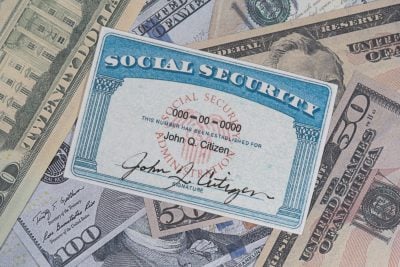
A single retiree, age 70, drawing $24,000 a year in Social Security, pulling $30,000 from a traditional IRA, and collecting a few thousand in dividends from a taxable brokerage account presents a comfortable middle-class retirement on paper. On the tax return, it triggers a rule almost nobody plans for: a chunk of those Social Security checks becomes taxable income.
This scenario appears constantly in retiree forums. Someone posts that they did their own taxes for the first time after claiming Social Security and discovered 85% of their benefit landed on the taxable line. They had simply crossed a threshold that has not moved in four decades.
The threshold that quietly catches single retirees
The IRS uses provisional income to decide how much of your Social Security gets taxed. The formula is straightforward: your adjusted gross income, plus any tax-exempt interest (think municipal bonds), plus half of your Social Security benefit.
For a single filer, two cliffs matter. Once provisional income tops $25,000, up to 50% of your benefit becomes taxable. Once it crosses $34,000, up to 85% of the benefit is taxable. Both numbers were written into law in 1984 and have never been indexed to inflation.
The Consumer Price Index sits at 332.4 against a 1982 to 1984 baseline of 100, meaning prices have risen roughly 232% since these thresholds were set. A $34,000 income in 1984 was solidly upper-middle class. Today it describes a retiree with a modest IRA and an average benefit.
Walking through the math
Back to our retiree. Half of the $24,000 benefit is $12,000. Add the $30,000 IRA withdrawal, and provisional income lands at $42,000. That is well past the $34,000 line, so up to 85% of the $24,000 benefit, or about $20,400, gets pulled onto the taxable side of the 1040.
At a 12% federal bracket, that adds roughly $2,450 to the tax bill that would not exist if provisional income had stayed under $25,000. The take-home portion shrank, even though the gross benefit check stayed the same.
Per capita disposable income has climbed from $63,638 in early 2024 to $68,359 in the first quarter of 2026, while the taxation thresholds have not budged a dollar.
How the rest of the retirement picture interacts
The traditional IRA is usually the lever. Every dollar pulled from a pre-tax account counts toward provisional income. Once required minimum distributions begin (currently at age 73 under current rules), that lever gets harder to control, creating the so-called Social Security tax torpedo.
Three moves change the math:
- Roth withdrawals. Money pulled from a Roth IRA does not count toward provisional income, so a retiree blending Roth and traditional withdrawals can keep AGI low enough to stay below a threshold while still spending the same amount.
- Qualified charitable distributions. A QCD sends IRA money directly to a charity and satisfies the required minimum distribution without raising AGI. For charitably inclined retirees, this is the cleanest way to shrink the taxable Social Security problem.
- Timing Roth conversions and capital gains. Doing conversions in lower-income years (often the gap between retirement and claiming Social Security) reduces the size of future RMDs that would otherwise push provisional income over the line.
One newer wrinkle helps on the back end: a $6,000 senior deduction can offset part of the additional tax for those who qualify. It softens the bite but does not move the underlying thresholds.
What to do with this
The hardest mistake to undo is letting a traditional IRA grow untouched into your 70s. By the time RMDs arrive, the withdrawal size is set by the account balance, not by what keeps you under $34,000. A few partial Roth conversions in your 60s, even small ones, can keep future provisional income manageable for the rest of your life.
If you are already past that window, focus on the order of withdrawals. Pulling from Roth or taxable accounts in the years you need extra funds keeps AGI flat and protects more of the benefit you already earned.
Every tax situation has its own quirks, and a single state tax rule or pension detail can shift the answer. The point is to recognize that these thresholds exist, that they are not moving, and that small choices about which account you tap first can quietly add up to thousands of dollars over a retirement.
Contact [email protected] for any questions or corrections.
I am a long time investor and student of business, and believe finding good companies that can become great investments is the best game on earth. After 20 years of writing and researching the public markets it is clear that individuals have never had more tools and information to take control of their financial lives. From ETFs and $0 commissions to cryptos and prediction markets there has never been a greater democratization of access to investing.
I write to help people understand the investments available to them so they can make the best choice for their portfolio, whether they're starting out or looking for income in retirement.