





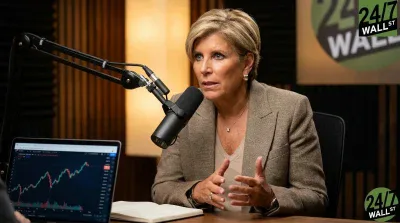
On the June 11, 2026 episode of Suze Orman’s Women & Money, titled “Caution, Caution, Caution!”, a 54-year-old caller laid out a problem many pre-retirees face. She has $600,000 to invest: $400,000 in a Roth IRA and $200,000 in a traditional IRA. She is weighing two firms, Fisher and TMG Marketing, both charging a 1.5% advisory fee, against managing the portfolio herself. Her words: “I’m too old to be starting over. Help, please.”
Orman’s reply cut to the bone: “Nobody ever asks a question like this that they don’t know the answer to. So before you hand over this money to somebody that you really maybe don’t know, why don’t you give it a try on your own?”
The stakes of a 1.5% fee at age 54
A 1.5% annual advisory fee on a $600,000 portfolio compounds against the saver every year until the money is spent. With about a decade until traditional retirement age, that fee structure has real time to bite. The SPDR S&P 500 ETF Trust (NYSEARCA:SPY) charges a net expense ratio of 0.000945%. Orman’s caller would be paying her advisor roughly 1,500 times what an S&P 500 index fund charges, before the advisor even proves they can beat the market.
The verdict: do it yourself, and here is the test
Orman’s position was direct. “You could easily do this on your own… Many of the ETFs that I’ve talked to you about. Many of the individual stocks, you can start by dollar-cost averaging.” She then gave the only benchmark that justifies paying anyone 1.5%: “It is not the firm… It is the advisor… What is their track record?… Has the advisor made at least 5% more a year than the Standard & Poor’s 500 Index after fees? All of that is important with anything, otherwise you are just better off in an ETF that’s the Standard & Poor’s 500 Index.”
SPY returned about 23% over the past year and about 74% over the past five years. To clear Orman’s bar, an advisor would have had to deliver roughly 28% net over the last 12 months after the 1.5% fee. That is top-decile hedge fund manager territory. Most retail advisors charging 1.5% allocate across the same index ETFs the caller could buy in a Fidelity or Schwab account herself.
The fee drag, in plain numbers
The variable that decides this question is the gap between the fee and the value added. On $600,000, every 1% in annual fees pulls $6,000 a year out of the portfolio regardless of performance. The 1.5% structure pulls $9,000 in year one and grows with the account. Over a decade, that is retirement income transferred from saver to advisor for work an index fund replicates for almost nothing.
Compare a lower assumed return against what a 0.000945% expense ratio leaves on the table. The difference is the cost of outsourcing.
Why Orman urged the caller to go slow
Orman added a timing layer. With uncertainty around Iran and broader market jitters, she told the caller to dollar-cost average in rather than deploy the full $600,000 at once. SPY is down about 3% over the past week, and the 10-year Treasury yield sits near 4.5%, near a 12-month high. A money market or short Treasury parking spot pays real yield while the caller eases into equities in monthly slices.
What to do this week
- Ask any prospective advisor for audited net returns over five and ten years, then subtract the S&P 500’s total return over the same window. If the gap is not at least 5% per year in the advisor’s favor after fees, you are paying for nothing an index fund cannot deliver.
- Open or keep self-directed Roth and traditional IRAs at Fidelity, Schwab, or Vanguard. Both firms would custody at Fidelity or Schwab anyway. The custodian is already free; the 1.5% buys only the allocation decision.
- Set a monthly dollar-cost-averaging schedule into a broad index ETF rather than lump-summing during a jittery market. Park the uninvested balance in a money market fund earning yield close to the 10-year Treasury.
- Write down your fee budget in dollars, not percentages. “1.5%” sounds small. “$9,000 a year out of my retirement” is the number that should drive the decision.
Orman’s read of the caller was that she already knew the answer. The math agrees: unless an advisor can prove a 5% annual edge over the S&P 500 after fees, the index is the better hire.
Contact [email protected] for any questions or corrections.











 Top Gaining Stocks
 Top Losing Stocks