‘You Can Have Your Cake and Eat It Too’: Suze Orman to 55-Year-Old Torn Between 457(b) and Roth 401(k)
A 55-year-old caller called into Suze Orman’s Women & Money podcast episode “Caution, Caution, Caution!” published June 11, 2026, with a question that paralyzes a lot of late-starting savers. Her employer matches both her 457(b) and her Roth 401(k) up…

This post may contain links from our sponsors and affiliates, and Flywheel Publishing may receive compensation for actions taken through them.

A 55-year-old caller called into Suze Orman’s Women & Money podcast episode “Caution, Caution, Caution!” published June 11, 2026, with a question that paralyzes a lot of late-starting savers. Her employer matches both her 457(b) and her Roth 401(k) up to 4%. Which one should she fund? She admitted on the air, “I have to admit, I’m a latecomer to your podcast, and at the age of 55, I feel so overwhelmed.”
Orman’s answer was blunt: stop choosing. “You can have your cake and eat it too, and you should, because a 457, everybody, is an account that you put money in before taxes.” She laid out a three-step sequence the caller could run starting with her next paycheck.
The stakes for a saver who started late
This question matters because the average 401(k) balance for someone age 55 to 59 sits at roughly $244,900, and Fidelity’s milestone for a 50-year-old is six times salary, rising to eight times by age 60. A caller who feels behind has roughly a decade before traditional retirement age to close that gap. Picking the wrong account, or worse, freezing and picking neither, costs real money in match dollars that disappear every pay period they go unclaimed.
Why Orman’s verdict is correct
Orman is right, and the math is not close. Her sequence works like this:
- Capture both matches first. “Why not contribute to both up to the point of the match because that’s a guaranteed 4% on your money.” An employer match is an instant return on contribution that no market investment can promise. Leaving either match on the table is a pay cut the caller is volunteering for.
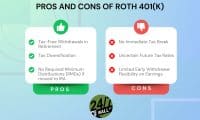
- Then max the Roth 401(k). “I personally would then be maxing out my Roth 401(k).” Roth contributions go in after tax and grow tax-free, which matters when the saver expects tax rates to rise or wants flexibility over taxable income in retirement.
- If money remains, return to the 457(b). The 457(b) is a pre-tax plan typically offered to government and nonprofit employees, and its withdrawal rules are unusually friendly. Distributions are not subject to the 10% early-withdrawal penalty once you separate from service, regardless of age.
Run the numbers for 2026. The standard employee deferral limit is $24,500, and the catch-up for workers age 50 to 59 is an additional $8,000, taking total elective deferrals to $32,500. If the caller earns $80,000 and routes 4% to each plan to grab both matches, that is $3,200 in her 457(b) and $3,200 in her Roth 401(k), plus $3,200 from her employer in each account. She has captured $6,400 of free money and used $6,400 of her own elective deferral cap. She can still push another $26,100 into her Roth 401(k) before hitting the $32,500 ceiling.
The variable that flips the order
The one factor that can rearrange Orman’s sequence is the SECURE 2.0 Roth catch-up rule. Starting in 2026, workers age 50 and older who earned more than $150,000 in FICA wages in 2025 are required to direct catch-up contributions into a Roth account. For a caller above that threshold, the $8,000 catch-up is no longer optional pre-tax money. The New York Times illustrated the cost: a 55-year-old in the 24% bracket making the maximum $8,000 catch-up would have cut their federal tax bill by about $1,900 under the old rules. Under the new rules, that $8,000 is taxable income today.
For a saver below the wage threshold, Orman’s order holds cleanly. For one above it, the Roth bias is already baked into the catch-up, which strengthens the case for putting any remaining dollars into the 457(b) to preserve a pre-tax bucket and keep some tax diversification.
What to do this week
Three concrete moves:
- Log into your benefits portal and set deferral elections so both the 457(b) and the Roth 401(k) hit the full match percentage on the next pay run.
- Check Box 3 of your 2025 W-2. If wages cleared $150,000, your plan administrator will route catch-up dollars to Roth automatically; if not, you keep the pre-tax option.
- Build a tax-bucket worksheet listing balances in pre-tax, Roth, and taxable accounts. The goal is having enough in each to control your tax bill in retirement.
Orman’s cake-and-eat-it advice is the cleanest way to grab every match dollar, lock in tax-free growth, and still keep a pre-tax lever for the years between now and retirement.
Contact [email protected] for any questions or corrections.
I am a long time investor and student of business, and believe finding good companies that can become great investments is the best game on earth. After 20 years of writing and researching the public markets it is clear that individuals have never had more tools and information to take control of their financial lives. From ETFs and $0 commissions to cryptos and prediction markets there has never been a greater democratization of access to investing.
I write to help people understand the investments available to them so they can make the best choice for their portfolio, whether they're starting out or looking for income in retirement.